









If you have just opened a tube and by the second session the ball already seems to «not bounce», it is not you: the internal pressure of a padel ball drops with every hit, and each model is designed to last a different number of matches before you notice it. In our padel balls category we carry the 7 references in this guide, from approved match tubes to training tubes designed to last more sessions.
In this guide we compare the 7 models using real data from our product pages (reference, tube format and recommended use), so you can choose depending on whether you play league or tournament matches, train several times a week or are just starting out.
Summary
- Approved match balls: Adidas Speed RX World Cup 2026, Bullpadel FIP Next and Alacrán Nitro Pro are the three designed for league and tournament play.
- Training and club: Alacrán Nitro, Bullpadel Tournament Pro and Bullpadel Premium Pro last more sessions before losing pressure.
- Special format: Wilson Triniti is sold in a tube of 4 (the rest come in tubes of 3), handy if you play in big groups.
- If a reference runs out of units, its product page shows «Coming soon» and «Notify me» instead of disappearing from the post.
The padel ball that suits you best depends on two things: whether you play competitively or for fun, and whether your court is indoor or outdoor; a match ball loses pressure sooner than a training ball, but bounces better from the first point.
Why balls are not all alike↑ menu
A padel ball differs from a tennis ball in its internal pressure (slightly lower) and in the size of the felt (slightly smaller), but among padel balls the main difference is how long that pressure lasts. Match balls approved by the federation (such as the Bullpadel FIP Next, with the FIP seal on the tube) are calibrated for a specific bounce from the first hit, designed for tournament matches where balls are changed every few games. Training balls use a felt and a core designed to last more sessions before feeling «dead», even if the initial bounce is a little less lively.
The court matters too: on an indoor court (no wind or direct sun) any ball lasts longer; on an outdoor court, sun and humidity speed up the loss of pressure and you should replace the tube more often.
The 7 balls in this guide↑ menu
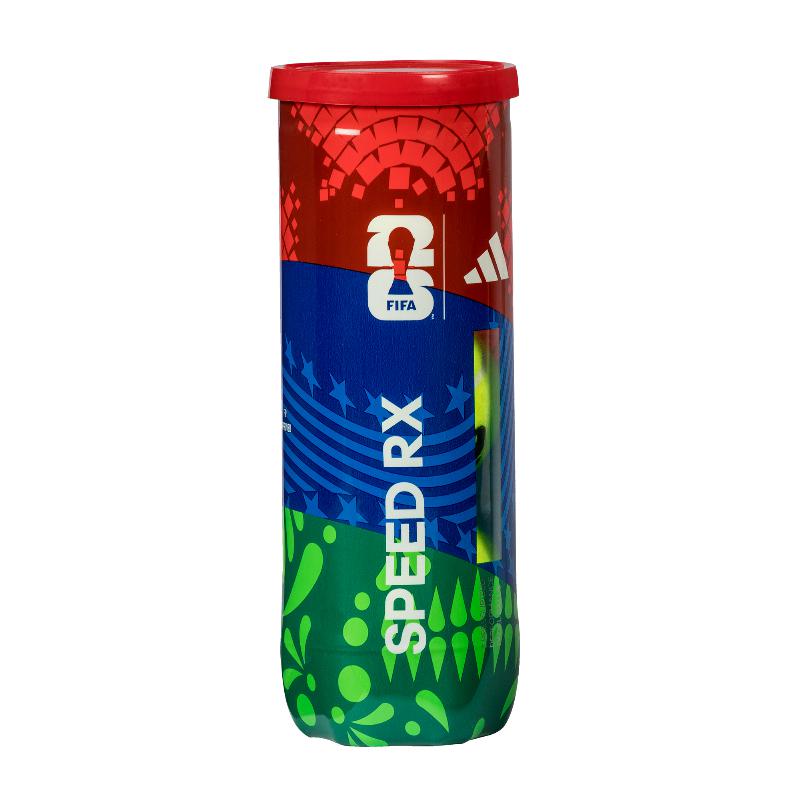
Adidas Speed RX World Cup 2026
- Format: tube of 3 balls
- Use: competition, World Cup edition
- Brand: Adidas
- Shop ref.: 204268
We recommend it for league and tournament play: it is Adidas’s competition edition for 2026, designed for a consistent bounce from the first point.
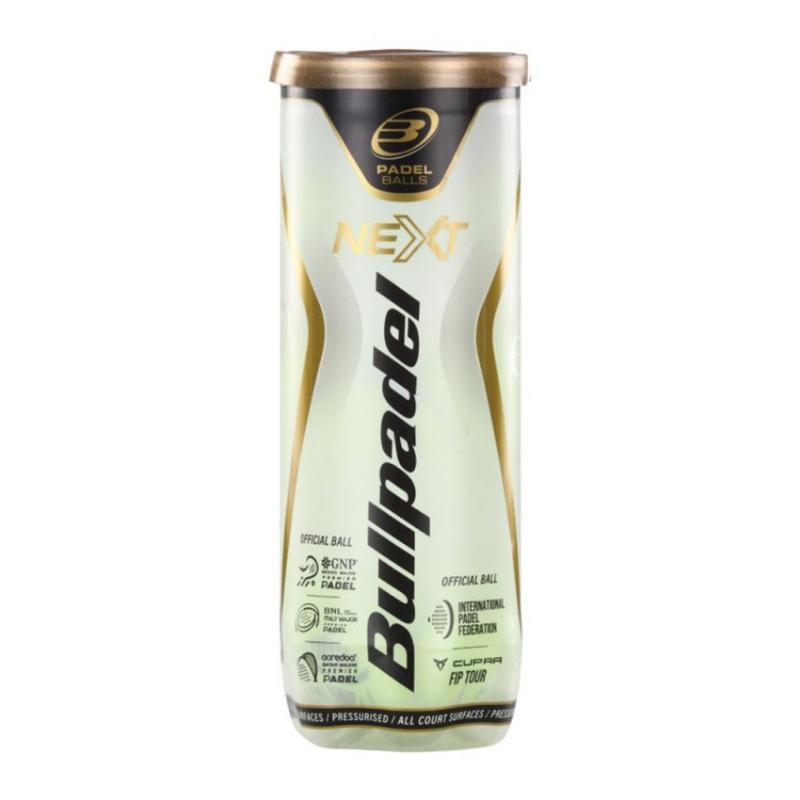
Bullpadel FIP Next
- Format: tube of 3 balls (also a pack of 3 tubes and a case of 72)
- Use: competition, official FIP ball
- Brand: Bullpadel
- Shop ref.: 135473
It carries the seal of the International Padel Federation (FIP): we pick it for anyone who plays approved tournaments or wants the same ball used in official competition.
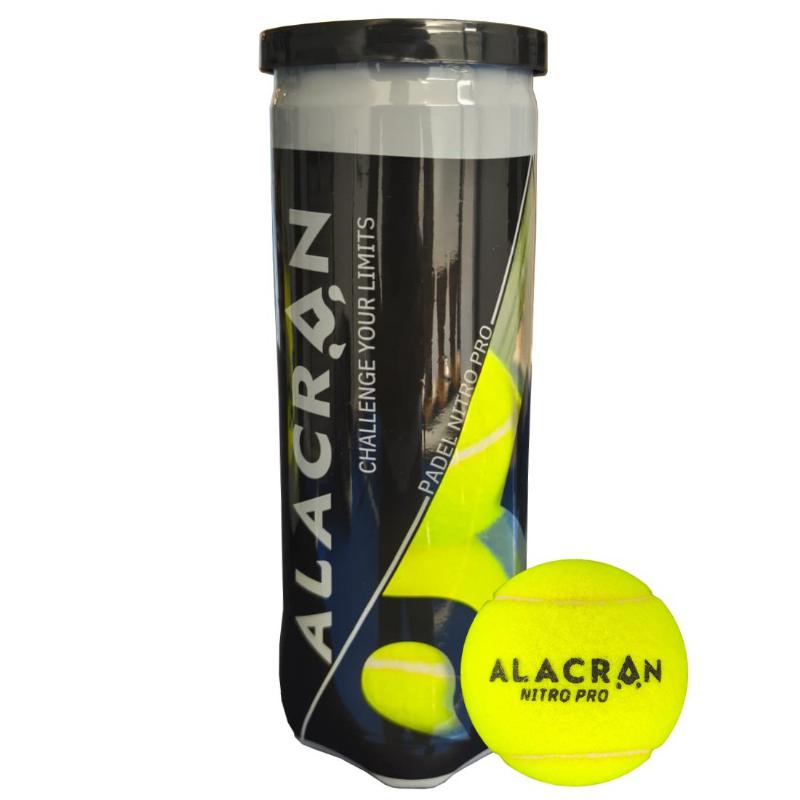
Alacrán Nitro Pro
- Format: tube of 3 balls (also a pack of 3 tubes and a case of 72)
- Use: competition
- Brand: Alacrán
- Shop ref.: 202091
Alacrán’s competition version: we recommend it for anyone who wants a lively tournament ball without moving up to the special editions of the big brands.
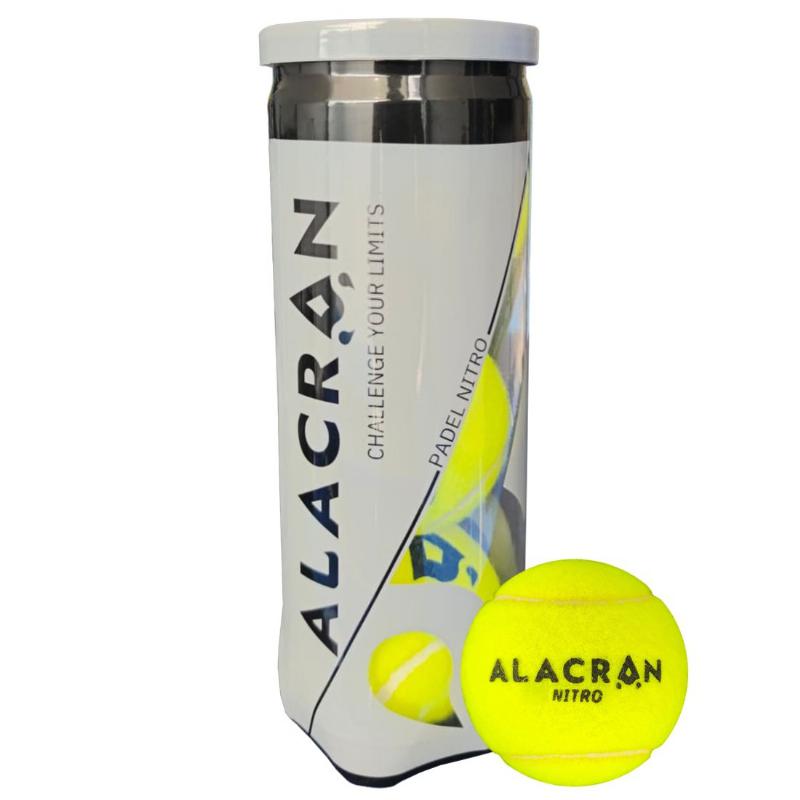
Alacrán Nitro
- Format: tube of 3 balls (also a pack of 3 tubes and a case of 72)
- Use: training and club, all-round
- Brand: Alacrán
- Shop ref.: 202090
Alacrán’s training version: designed to last several club sessions without feeling «dead» straight away; it is the one we recommend most for playing two or three times a week.

Bullpadel Tournament Pro
- Format: single tube, tube of 3 and pack of 3 tubes (case of 72)
- Use: amateur tournaments and club
- Brand: Bullpadel
- Shop ref.: 08409
Designed for club tournaments and amateur leagues: a step below the FIP Next in match precision, but with a longer-lasting bounce.

Bullpadel Premium Pro
- Format: tube of 3 balls
- Use: training and beginners
- Brand: Bullpadel
- Shop ref.: 02516
The longest-lasting option from Bullpadel: ideal if you are starting out or train every day and prefer to change tubes less often.
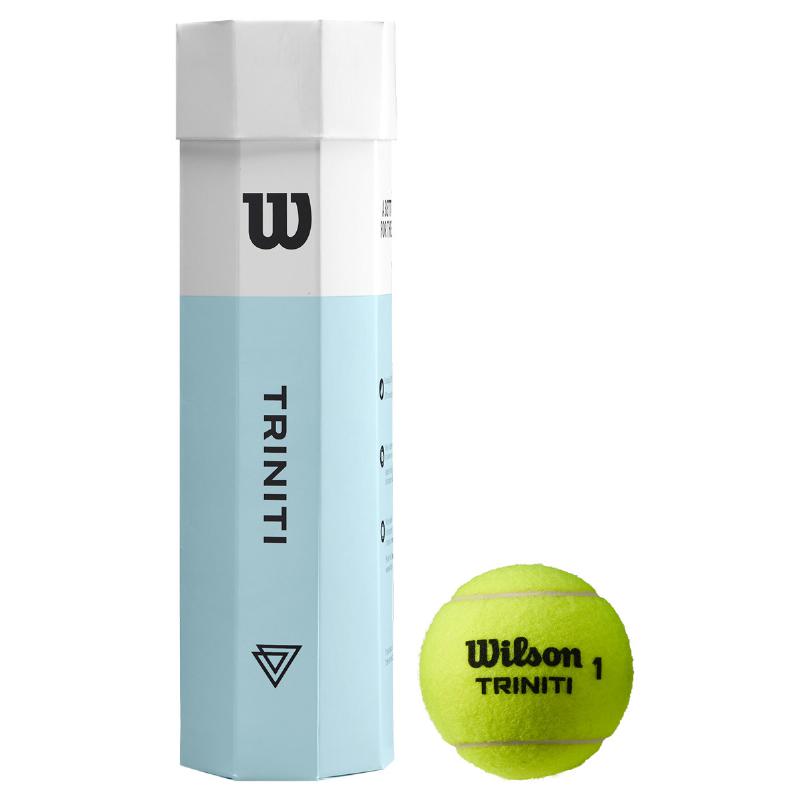
Wilson Triniti
- Format: tube of 4 balls (also a pack of 3 tubes of 4)
- Use: club and recreational
- Brand: Wilson
- Shop ref.: 170531
The only tube in this guide with 4 balls instead of 3: if you play in a group and want more balls per tube, this is Wilson’s option.
Quick comparison↑ menu
| Ball | Format | Recommended use |
|---|---|---|
| Adidas Speed RX World Cup 2026 | Tube of 3 | Competition |
| Bullpadel FIP Next | Tube of 3 / pack / case | Official FIP competition |
| Alacrán Nitro Pro | Tube of 3 / pack / case | Competition |
| Alacrán Nitro | Tube of 3 / pack / case | Training and club |
| Bullpadel Tournament Pro | Single tube, tube of 3 or case | Amateur tournaments and club |
| Bullpadel Premium Pro | Tube of 3 | Training and beginners |
| Wilson Triniti | Tube of 4 / pack of 3 tubes of 4 | Club and recreational |
Format and reference checked on each product page at tiendapadelpoint.com on 22 October 2026.
Which one for my game?↑ menu
What our customers ask↑ menu
Is it worth buying the case of 72 balls instead of a single tube?
If you play at a club with several players or train often, yes: the case spreads the cost per tube and stops you running out of balls halfway through the season.
Can I use the same ball on indoor and outdoor courts?
Yes, none of these 7 balls is exclusive to one type of court; what changes is how soon you notice it losing pressure, faster outdoors because of sun and humidity.
Our shop fact↑ menu
Tienda Padelpoint fact: each ball product page in our shop shows the real format we sell (single tube, pack of tubes or case of 72); if a reference runs out, its page switches to «Coming soon» with a «Notify me» option instead of disappearing, so what you read in this post matches what you see when you come to buy.
Frequently asked questions↑ menu
How long does an opened tube of padel balls last?
It depends on the model: match balls (Adidas Speed RX, Bullpadel FIP Next, Alacrán Nitro Pro) tend to feel «dead» sooner than training balls (Alacrán Nitro, Bullpadel Premium Pro), which are designed to last more sessions.
What is the difference between an FIP-approved ball and a normal ball?
An approved ball (like the Bullpadel FIP Next) meets the rules of the International Padel Federation and is the one used in official competition; a training ball does not need that seal because its aim is to last more matches, not to meet tournament rules.
Are padel balls and tennis balls interchangeable?
No: a padel ball has lower internal pressure and a slightly different felt; using a tennis ball in padel changes the bounce and is not what any manufacturer in this guide recommends.
Why does the Wilson Triniti tube contain 4 balls instead of 3?
It is the format in which Wilson sells this model in our shop; the other tubes in this guide (Adidas, Bullpadel and Alacrán) are sold in tubes of 3.
Glossary↑ menu
- FIP-approved ball
- is the ball that meets the rules of the International Padel Federation and is used in official competition.
- Bounce
- is the height a ball rebounds to after being dropped from a fixed height; a «lively» ball bounces higher than one that has lost pressure.
- Felt
- is the fabric covering the rubber core of the ball and determines grip and wear from rubbing on the court.
- Indoor court
- is a covered court, without wind or direct sun, where the ball loses pressure more slowly.
- Outdoor court
- is an open-air court, where sun and humidity speed up the ball’s loss of pressure.
- Tube (can)
- is the pressurised container in which padel balls are sold, usually with 3 balls (4 in the case of the Wilson Triniti).
Our verdict↑ menu
Of the 7 references, for most club players we recommend starting with the Alacrán Nitro (training, good balance of lifespan and bounce) and keeping a tube of Bullpadel FIP Next aside for a serious match or an approved league.
Sources: tiendapadelpoint.com product pages for each model (linked on their cards) and the Padel Balls category, consulted in October 2026.
We ship across Spain and Portugal; the exact delivery time and return conditions for each order are shown at checkout before you pay. For competitions in Great Britain (LTA), check the ball required by your event rules.
You may also like↑ menu
 How to clean a padel racket without damaging the surface
 New Alacrán rackets: Dune Pro and Venom, power and control made in Spain