








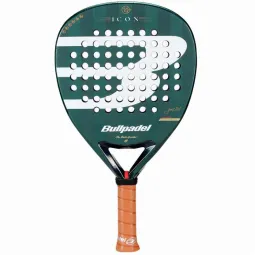
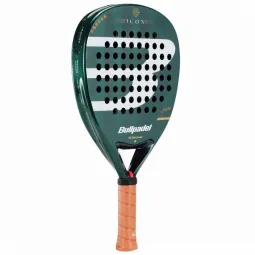
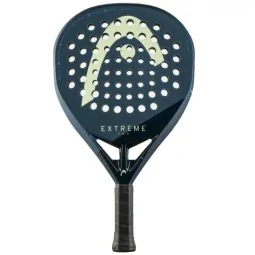
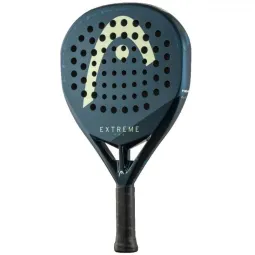




Before choosing among our padel rackets, it helps to know the 2026 rule changes. Every season the International Padel Federation (FIP) tweaks something in the rulebook, and the 2026 season brings several changes that affect how a point is scored, how a delay is penalised and how players warm up before a match. None of them change the game itself (the court, the racket, the ball all stay the same), but they do change very specific in-match decisions.
We have cross-checked every change against at least two independent sources (specialist press and, where possible, the FIP official rules PDF) so we do not repeat rumours. If a change you have heard about is not listed here, it is because we could not confirm it with a second source.
What changes in the 2026 rules?
- Cord and dropped racket: if the safety cord breaks or comes loose, or the racket falls from the hand during a point, it is now a direct loss of that point.
- Time between points (20 s): the 1st time it is exceeded, it is a warning; the 2nd time, the server loses the first serve, or the receiver loses the point outright.
- Coaching instructions: 1st verbal infringement, a warning; 2nd infringement, direct expulsion of the coach.
- Warm-up: goes from 5 to 3 minutes at the start of the match.
- Serve: only one foot now needs to stay fixed behind the service line, not both.
- Tie-break: no changes for 2026 (do not confuse it with the Star Point at deuce, a separate rule).


What changes in padel rules for 2026? ↑ index
8 specific points of the FIP rulebook change: a broken cord and a dropped racket now cost the point directly, the time between points and coaching instructions carry stricter, staged penalties, the warm-up shortens from 5 to 3 minutes and the serve now allows a single foot fixed behind the line. The tie-break does not change for 2026.
None of these changes affect the court dimensions, the racket or the ball: they are rules about play and refereeing, not equipment. All of them came into force on 1 January 2026.
Source: FIP Rules of Padel 2026 (padelfip.com, in Spanish); for the previous rules, the FIP Rules of the Game 2021 (revision of 28/05/2021). Cross-checked with specialist press (padeladdict.com, pala-hack.com, padelspain.net, canal26.com, ellitoral.com).
If you are competing this season, check out our padel accessories section to always carry a spare safety cord.
Why has the FIP updated the padel rulebook for 2026? ↑ index
To cut down on dead time during a match and make it clearer which penalty applies in each situation, instead of leaving it to each referee's judgement.
The safety cord and dropped racket were already banned, but the penalty was not always applied the same way in practice. The time between points and coaching instructions had a margin that stretched matches out. With tighter rules, the referee has less room for interpretation, and the player knows in advance what happens if they run over time or their coach insists too much.
The 8 padel rule changes for 2026, one by one ↑ index
From most to least direct: first the two that lose the point on the spot, then the staged penalties, and finally the two that don't penalise but change the pace of the match.
Safety cord broken or loose during a point: direct loss of that point. Before, the rule only said play couldn't continue with a broken cord; now the penalty is explicit and automatic.
Racket dropped from the hand during a point: also a direct loss of the point, same criterion as the cord.
Time between points (20 seconds): the 1st time a player goes over it, it's a warning. The 2nd time: if they are serving, they lose the first serve and serve directly from second; if they are receiving, they lose the point on the spot.
Coaching instructions: the 1st verbal infringement is a warning. The 2nd is direct expulsion of the coach from the match; before 2026 there was an intermediate step of losing a point before reaching expulsion.
Warm-up time: goes from 5 to 3 minutes at the start of the match. If the match is interrupted, the warm-up on resuming is also shorter: 1 minute if the interruption lasts between 5 and 20 minutes, and 3 minutes if it goes over 20.
Serve: before, both feet had to stay fixed behind the service line when serving; from 2026, just one foot fixed behind the line is enough, without stepping into the service box. The racket must still strike the ball behind the service line.
Tie-break: no changes for 2026. Several press sources mention it only to explicitly rule it out, because it gets confused with the change at deuce.
Star Point (deuce): this is the one that changes the scoring the most, and it has its own guide: golden point, advantage and Star Point in padel.
Besides these 8 changes, one rule remains in force that isn't new for 2026 but gets mistaken for one: playing the ball outside the court (going through the gate to return it), which depends on whether the court has authorised outside play.
Padel rules: before vs. from 2026 ↑ index
The table sums up the 6 changes that actually modify a penalty or a requirement (it leaves out the tie-break, which doesn't change, and the Star Point, which has its own guide).
| Rule | Before 2026 | From 2026 |
|---|---|---|
 Safety cord | No sanction was clearly defined for continuing to play with a broken cord | Direct loss of the point if it breaks or comes loose during the point |
 Dropped racket | Banned, with no explicit automatic penalty | Direct loss of the point |
 Time between points | 20 seconds, penalty poorly defined | 1st time, warning; 2nd time, loses serve or point depending on serving or receiving |
 Coaching instructions | 1st warning, 2nd loss of point, 3rd expulsion | 1st warning, 2nd direct expulsion of the coach |
 Warm-up | 5 minutes at the start of the match | 3 minutes at the start; 1 or 3 minutes after an interruption, depending on its length |
 Serve | Both feet fixed behind the service line | One foot fixed behind the line is enough, without stepping into the service box |
For deuce and the Star Point, not included in this table since it has its own guide, you'll find every detail in golden point, advantage and Star Point in padel.
Where do these changes apply: professional and amateur? ↑ index
These are official FIP rules, so they apply automatically in Premier Padel and on the CUPRA FIP Tour from 1 January 2026. In amateur padel, they are not automatic: it's up to each national federation and each club.
Premier Padel and the CUPRA FIP Tour: all 8 changes apply automatically from January 2026, with a referee and chair umpire on court.
National and regional federations: each one decides whether to adopt the FIP 2026 rulebook in its own competitions, and when. In Great Britain, padel competition sits under the Lawn Tennis Association (LTA), so check with them or your club which rulebook applies.
Club leagues and tournaments: many amateur matches are self-refereed by the players, with no fixed umpire. There, these changes are more of a fair-play reference than a real penalty, unless the club applies them expressly.
Common mistakes about the padel rules for 2026 ↑ index
Almost all the confusion comes from mixing up these 8 changes with the Star Point, which is a separate rule. Here are the four most common ones:
"The tie-break changes too in 2026." No. Several sources mention it expressly only to clarify it stays the same; what does change is deuce, with the Star Point (separate guide).
"The time between points was already penalised the same way before." The delay itself isn't new, but before 2026 there wasn't such a clear scheme of a warning first and a lost serve or point second.
"You still need both feet behind the line to serve." Not any more: from 2026, one foot fixed behind the service line is enough, though the ball still has to be struck behind that line.
"If my racket falls by accident, nothing happens." It does: if the racket falls from the hand during a point, it's a direct loss of that point, whether intentional or not.
Padel rules 2026: our advice ↑ index
Check your racket's safety cord before every serious match: with the new rule, it breaking mid-point is no longer just an annoyance, it's losing that point.
We have been in padel since 2003, with a physical shop in La Nucía (Alicante), and the safety cord is one of the first things we check when someone brings us a racket to look at: it's cheap, takes a minute to replace, and with the 2026 rule a worn cord can now cost you a point outright. Our advice: always carry a spare in your bag, just like an overgrip.
And if you compete in a league or tournament, ask the umpire beforehand exactly which rulebook applies: not every amateur competition adopts the FIP's 8 changes at the same time. Need a spare cord? We ship to the United Kingdom and Ireland; the UK is outside the EU, so orders may be subject to customs duties, and costs and delivery times are on our shipping page.
Our customers ask: safety cord and rulebook ↑ menu
Two counter questions we get at Tienda Padelpoint about the 2026 rules, with the answer we give: why carry a spare safety cord and where to read the full official rulebook.
«Why do you tell me to carry a spare safety cord?» Because under the 2026 rule a cord that breaks in the middle of a point loses you that point. Replacing it is cheap and takes a minute, so the best idea is to keep a spare in your bag, just like an overgrip.
«Where can I read the full official rulebook?» The International Padel Federation publishes it as a PDF on its website: FIP Padel Rules. It is the text used by Premier Padel and the CUPRA FIP Tour.
Frequently asked questions about padel rules 2026 ↑ index
What changes in padel rules in 2026?
8 points: a broken cord and a dropped racket become a direct loss of the point, the time between points and coaching instructions get clearer staged penalties, the warm-up drops from 5 to 3 minutes and the serve allows a single foot fixed. The tie-break doesn't change.
What happens if the racket's cord breaks during a point in 2026?
That point is lost directly and automatically, whatever the score.
What happens if your racket falls from your hand in padel?
If it happens during a point, it's a direct loss of that point, same as with the cord.
How much time is there between points in padel in 2026?
Still twenty seconds. What's new is the penalty: the 1st time it's exceeded, a warning; the 2nd time, the server loses the first serve, or the receiver loses the point directly.
Does the tie-break change in the 2026 padel rulebook?
No. Several press sources mention it only to rule it out explicitly; what changes is deuce, with the Star Point rule.
How long is the warm-up in a padel match in 2026?
3 minutes at the start of the match (it used to be 5). If the match is interrupted, the warm-up on resuming is 1 minute if the pause lasts between 5 and 20 minutes, or 3 minutes if it goes over 20.
How many feet need to be behind the line when serving in padel?
From 2026, one foot fixed behind the service line is enough, without stepping into the service box. The ball still has to be struck behind that line.
Do these changes apply in amateur padel?
Not automatically. They are compulsory in Premier Padel and on the CUPRA FIP Tour; in amateur leagues and tournaments it's up to each national federation and each club.
Glossary of the 2026 padel rulebook ↑ index
Our verdict on the 2026 rule changes ↑ index
We think these are common-sense changes: they close interpretation gaps that were already causing arguments on court, without touching the game itself.
The cord and the dropped racket are the ones the everyday player will notice most: until now the penalty wasn't always clear, and now it is. It's worth checking your cord before every match, just like you'd check your overgrip.
For the amateur player, the key thing is not to assume your league or club already applies all 8 changes: you need to ask, because it isn't automatic outside Premier Padel and the CUPRA FIP Tour.
Related padel rules guides ↑ index
For the change that affects the scoreline the most, deuce, we have a dedicated guide:
Golden point, advantage and Star Point in padel: differences and rules — How deuce is decided and what changes with the FIP's Star Point.