




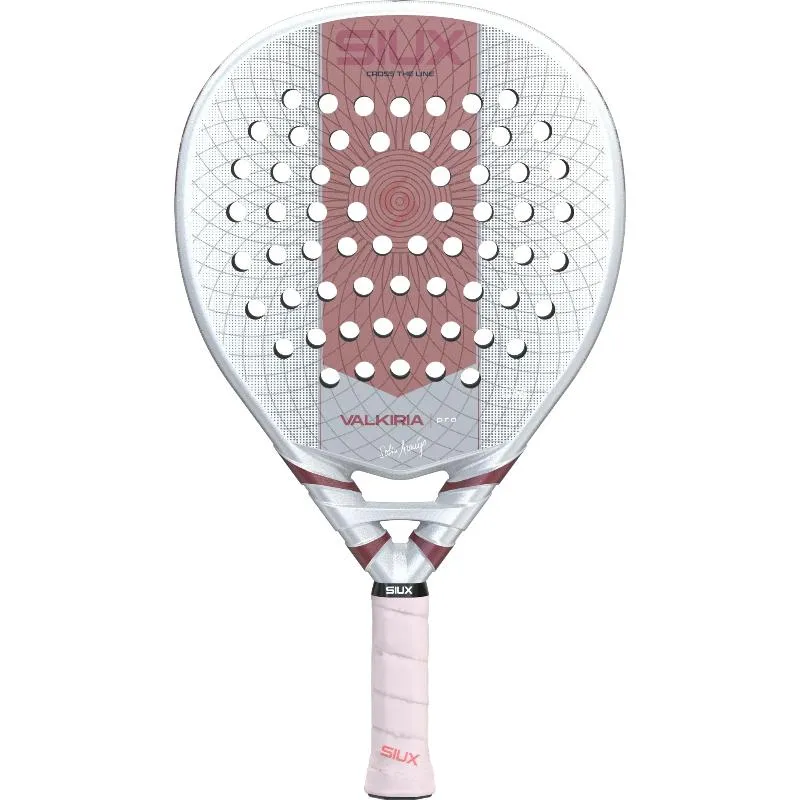
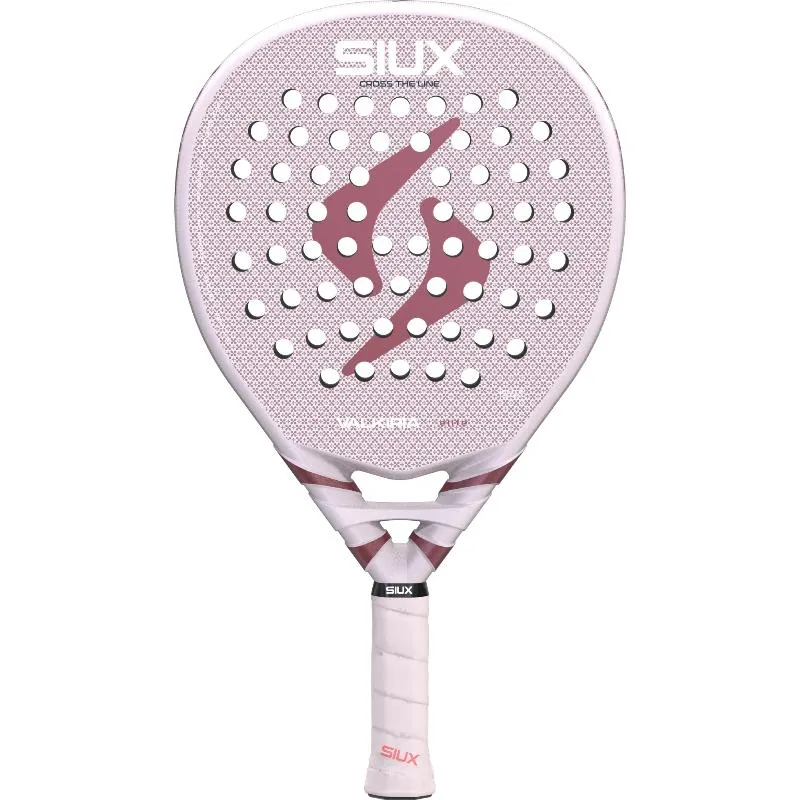
































Before choosing among our padel rackets, it helps to know how 40-40 is counted. Every season the FIP tweaks something in the rules, but few rules change the rhythm of a match as much as this one. The Star Point does not replace advantages: it limits them. And in practice that changes how every 40-40 is played: the rule has been in force since 1 January 2026, and Premier Padel has played it since 9 February 2026.
It is a hybrid between traditional advantage scoring, where 40-40 can be repeated with no limit, and the golden point, where 40-40 is decided straight away with a single point.
What is the Star Point in padel?
- What it is: the deciding point played at 40-40 once two advantages have been played and neither has ended in the game.
- How it is scored: 40-40, first advantage; if it is lost, back to 40-40 and second advantage; if that is lost too, Star Point: a single point that closes the game.
- Who chooses the side: on the Star Point, the receiving pair decides whether to receive on the right side or on the backhand side.
- Since when: since 1 January 2026, under a rule of the International Padel Federation (FIP).
- Where it is compulsory: in Premier Padel and on the CUPRA FIP Tour. In amateur leagues and tournaments, each federation and each club decides.
Star Point in padel: what it is and how it works (2026) ↑ index
The Star Point is the deciding point played in padel when, after reaching 40-40, two advantages are played and neither of them is converted into the game. Instead of going back to 40-40 again, a single point is played and whoever wins it takes the game. It is the International Padel Federation (FIP) rule in force since 1 January 2026.
Official source: FIP Padel Rules, 1 January 2026 (scoring, «Method 2: Star Point»; the PDF is published in Spanish).
Put another way: the Star Point does not get rid of advantages, it puts a limit on them. At 40-40 you can come back once, and again, but not indefinitely. Once both advantages have been lost, the game is decided on a single point, just like with the golden point.
FIP rule in force since 1 January 2026: up to two advantages at 40-40 and then a deciding point. Compulsory in Premier Padel and on the CUPRA FIP Tour.
Is your next tournament played with the Star Point? Get your gear ready in our padel accessories section or have a look around the whole padel shop.
Why has the FIP created the Star Point in 2026? ↑ index
To make matches shorter without taking away padel's chance to come back from 40-40.
A 40-40 with unlimited advantages can drag a game out for several minutes. The traditional golden point, direct and with no advantages, cuts it short in one go, but removes the chance to turn the score around. The Star Point looks for the middle ground: the option to come back with an advantage stays, but twice at most. The gear you train and compete with for every one of those points is in our padel accessories section.
How a Star Point is scored in padel, step by step ↑ index
Four moments, always in the same order, from 40-40 to the point that closes the game.
The score reaches 40-40. It is the tie at three points, what has always been called forty-all or deuce.
First advantage. If the pair with the advantage wins the point, they take the game. If they lose it, the score goes back to 40-40.
Second advantage. Same mechanism: if they win it, the game goes to that pair. If they lose it, there is no third return to 40-40.
Star Point. A single deciding point is played. The receiving pair chooses the receiving side, right or backhand, and whoever wins that point wins the game, no exceptions.
If either of the two advantages ends in the game, there is no Star Point: the game ends there, as always.
In mixed doubles, the Star Point is received by the player of the same sex as the server. And in any match, the receiving pair chooses the side but cannot change positions to receive that point, according to the FIP Padel Rules (Method 2).
Star Point, golden point, advantage: 2026 differences ↑ index
The difference lies in how many advantages are played before the deciding point: none with the golden point, two at most with the Star Point and as many as it takes with traditional advantage scoring.
| System | What happens at 40-40 | Maximum advantages | How the game ends |
|---|---|---|---|
 Traditional advantage | The advantage is played; if it is lost, the score goes back to 40-40 | No limit | By winning two points in a row from 40-40 |
 Golden point | A deciding point is played straight away | None | With that single point |
 Star Point (FIP 2026) | Up to two advantages are played before the deciding point | Two | With an advantage won or, if both are lost, with the Star Point |
If you want to go deeper into the two earlier systems, we have a dedicated guide to the golden point and advantage in padel.
Where is the Star Point used in 2026? ↑ index
The Star Point has been compulsory in Premier Padel and on the CUPRA FIP Tour since the start of the 2026 season. In amateur padel it is not automatic: each national federation and each club decides.
Premier Padel: it has been played with the Star Point since the Riyadh Season P1 (9 February 2026), according to the official FIP announcement.
CUPRA FIP Tour: it has used the Star Point since its first event of 2026, the FIP Bronze Melbourne Padel Open.
Federations, leagues and clubs: each national federation decides whether to bring it into its competitions, and each club into its leagues and tournaments. In Great Britain, padel competition is run under the LTA (Lawn Tennis Association), so check with it or your club. Tienda Padelpoint ships padel gear to the UK from La Nucía (Alicante).
Common mistakes about the Star Point in padel ↑ index
Almost all the confusion comes from mixing up the Star Point with the golden point. These are the four most common mistakes:
"It is the same as the golden point". No. The traditional golden point is played straight away at 40-40, with no advantages. The Star Point first allows up to two advantages.
"It already applies in every tournament, club ones included". It is compulsory in Premier Padel and on the CUPRA FIP Tour. In amateur or federated competition, each federation and each club decides.
"Nothing changes on the deciding point". Who serves does not change, but who chooses does: the receiving pair decides whether to receive on the right side or on the backhand side.
"It replaces the usual advantages". It only comes into play if 40-40 uses up both advantages. If either of them ends in the game, there is no Star Point.
The Star Point in your league or tournament: our advice ↑ index
Before playing a tournament or a league, ask which system decides 40-40: traditional advantage, golden point or Star Point.
We have been in padel since 2003, with a physical shop in La Nucía (Alicante), and in that time we have seen the way of scoring change: first the traditional advantage, then the golden point and now the Star Point. That is why our advice is simple: read the tournament rules or ask the referee before the first match. Knowing whether you have two advantages left or a single point changes how you play every 40-40.
And talk it over with your partner: on the Star Point, the receiving pair chooses the receiving side, so it pays to have decided in advance who receives that point.
Common questions: the Star Point on court ↑ menu
Two common questions about the Star Point, with the answer we give at Tienda Padelpoint: how to prepare the deciding point with your partner, and whether the server changes when both advantages are used up.
«How do my partner and I prepare before going on court?» Agree beforehand who will receive the deciding point. In the Star Point the receiving pair chooses the receiving side, so it is best to have it decided in advance rather than improvise it at 40-40 with both advantages already used up.
«If both advantages are used up, does the server change?» No. The player due to serve serves; what changes is that the receiving pair chooses the receiving side for that point.
Frequently asked questions: the Star Point in padel ↑ index
What is the Star Point in padel?
It is the single deciding point played when, at 40-40, two advantages have been used up without either of them being converted into the game. Whoever wins that point takes the game.
How does the Star Point work in padel?
First, up to two normal advantages are played. If both are lost, a single deciding point is played, and the receiving pair chooses the side they receive from.
What is the difference between the golden point and the Star Point?
The traditional golden point is played straight away at 40-40, with no advantages. The Star Point first allows up to two advantages, and only if neither decides the game is the single point played.
Since when has the Star Point been used in padel?
Since 1 January 2026, the date on which the International Padel Federation (FIP) rule came into force. Premier Padel has played it since 9 February 2026.
Is the Star Point used in amateur tournaments?
Not automatically. It is compulsory in Premier Padel and on the CUPRA FIP Tour; in amateur or federated competition it is decided by each national federation and each club.
Who chooses the receiving side on the Star Point?
The receiving pair, who can ask to receive on the right side or on the backhand side.
Why did the FIP create the Star Point?
To make matches shorter without completely removing the chance to come back from 40-40 with an advantage.
Glossary of the Star Point and padel scoring ↑ index
Tienda Padelpoint's verdict on the Star Point ↑ index
We think it is a sensible rule: it does not kill the excitement of the advantage, it just puts a limit on it.
For amateur players, the key thing is not to assume it is already played this way in their league or club. It is not automatic: it depends on each federation and each organiser, so you have to ask.
And for anyone who follows professional padel, the Star Point explains why some 40-40 games suddenly end after two lost advantages: it is not a scoreboard error, it is the 2026 rule.
Related guides on padel scoring ↑ index
To properly understand the other two scoring systems, we have a separate guide:
Golden point or advantage in padel: differences and rules — How each system works and what changes in the game.