





















































































All you need to remove the protector from a padel racket is a hairdryer, a plastic card and a cloth with isopropyl alcohol. Nothing else. The trick is the order: heat first, then one end, then peel slowly. And if you are fitting a new one, you will find replacements in our racket protectors category.
What really matters is the why: a protector's adhesive is made to take knocks against the floor and the walls, and when it is cold it grips the frame paint so hard that, if you pull hard, it takes the paint with it. Heat softens it without touching the paint. That is the whole difference between a clean edge and a chipped one.
A warning before you start: if your racket is still under warranty, check its terms before applying heat, because heat damage may not be covered. Always use the low setting, 10-15 cm away and without stopping on one spot.
How do you remove the protector without damaging the frame?
- How: a hairdryer or heat gun on low, 10-15 cm from the edge for 30-40 seconds, one end lifted with a fingernail or a plastic card, then peel it off pulling parallel to the frame.
- If it resists: more heat, not more force. Warm that area again for 10-15 seconds and carry on.
- Leftover glue: a cloth with isopropyl alcohol, tested first on a small hidden spot.
- Never: a screwdriver, a craft knife or anything metal against the frame, or neat acetone without testing.
- Before the new protector: five minutes of drying so the adhesive grips from the very first point.


Removing a racket protector without damaging the frame ↑ index
A padel racket protector is removed by warming the adhesive first: a hairdryer or heat gun on low, 10-15 cm from the edge and never still on one spot, for 30-40 seconds. Then lift one end with a fingernail or a plastic card and peel it slowly and parallel to the frame. If it grips again, warm that area once more.
If the protector does not come away with a gentle pull after heating, it needs more heat, not more force: forcing it cold can lift the frame paint along with the protector.
Why does a racket protector stick so hard to the frame? ↑ index
The protector sticks so hard to the frame because it uses a high-strength adhesive, designed to take knocks and rubbing against the floor and walls without coming loose. Cold, that glue also grips the paint; 30-40 seconds of gentle heat softens it and the protector comes off without taking the paint.
Edge protectors are made to withstand constant rubbing against the floor and walls of the court (above all when digging out low balls just above the ground and when playing off the back glass close to the wall), so they use a high-strength adhesive that does not come loose with play. That is exactly what makes them hard to remove: the same glue that stops them lifting during a match is what fights the pull. That is why it pays to soften the glue with heat before peeling. If yours is already cracked or lifting at the edges, our Padel Racket Protectors category has clear and coloured models from the usual brands.
They do not all come off the same way. It depends on the type of protector and its material:
Simple adhesive protector (tape type): grips the paint hard. It is the one most likely to lift paint if forced when cold.
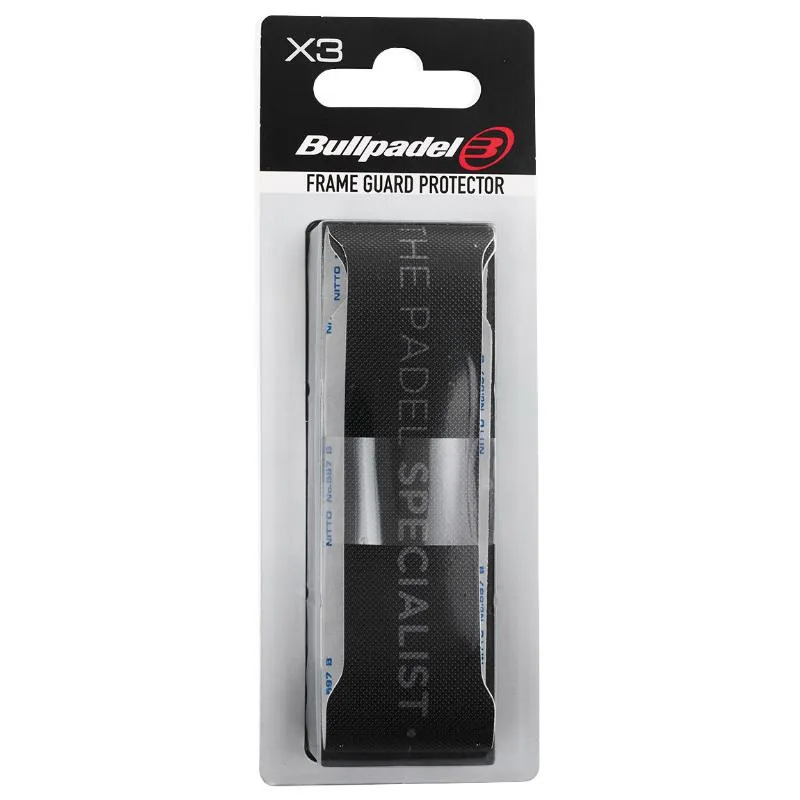
Rigid frame guard protector: dense, textured polyurethane (like the Bullpadel Frame Guard), tougher. It usually peels off more cleanly without taking the paint.
Carbon protector: a thin, stiff strip, less common than polyurethane ones.
TPU or PVC protector: a flexible, durable polymer with a good balance between absorbing impacts and resisting wear.
Clear protector: a thin film that lets the racket design show through; it mainly protects against scuffs and scratches.
The heat and plastic-lever method works for all of them. The only thing that changes is how much patience each one needs.
We have been selling padel equipment since 2003, with a physical shop in La Nucía (Alicante). The replacement protectors you will see below are the ones we sell for this job, with the price always up to date on each product page.
Removing the protector step by step in about 10 minutes ↑ index
Removing the protector step by step takes about ten minutes and only needs a hairdryer, a plastic card and a cloth with isopropyl alcohol. There are five steps: warm the edge, lift one end, peel parallel to the frame, clean off the glue residue and let it dry before fitting the new protector.
Warm the edge (30-40 seconds). Move the hairdryer or heat gun on low about 10-15 cm from the protector, never stopping on one spot so the heat is not concentrated. With a heat gun, always use the lowest setting: it gets far hotter than a hairdryer. The edge should end up warm, so you can touch it without burning yourself.
Lift one end (10 seconds). With a fingernail or a piece of plastic (an old card or a plectrum, never a screwdriver or a craft knife), lift the tip of the protector at whichever end is loosest.
Peel it off parallel to the frame, not outwards (1-2 minutes). Work slowly towards the other end. If the adhesive grips again, stop and warm that area for another 10-15 seconds.
Remove the leftover glue (2-3 minutes). With a cloth and isopropyl alcohol, rub the edge along the frame until no sticky patch is left. Test first on a small hidden spot in case the frame has a decorative vinyl.
Let the frame dry (5 minutes). If you are fitting a new protector, the edge must be clean and dry so the adhesive grips from the very first point. The old protector can’t be stuck back on: peeling it off takes away part of the adhesive and usually leaves it stretched.
If you have no hairdryer, a cloth soaked in hot (not boiling) water resting on the edge for a few minutes also works: it takes longer, but the adhesive softens too.
What to use and avoid to remove a racket protector ↑ index
To remove the racket protector, use gentle heat from a hairdryer, a plastic card to lever it up and isopropyl alcohol for the glue residue. Do not use a screwdriver, a craft knife or anything metal, do not pull it cold and in jerks, and do not use neat acetone untested: they scratch or lift the frame paint.
| Do use | Why |
|---|---|
| A hairdryer or heat gun on low | Softens the adhesive without damaging the paint or the frame vinyl. |
| A piece of plastic (card, plectrum) as a lever | It does not scratch the paint the way metal can. |
| Isopropyl alcohol, tested first on a small area | Dissolves leftover adhesive without attacking normal finishes; the test avoids surprises on frames with graphics. Only on the edge: the hitting face is cleaned with water alone. |
And the other half of the answer, the part hardly anyone writes about: what each tempting tool does to the frame.
| Do not use | What it does to the frame |
|---|---|
| A screwdriver, craft knife or any metal tool | Scratches or lifts the paint at the first slip. |
| Pulling it cold and hard | It can take part of the paint off together with the protector. |
| Strong solvents without testing (neat acetone, for example) | They can attack the lacquer or the stickers on the frame. |
You do not need any special “protector remover” either: heat and isopropyl alcohol cover everything.
Bullpadel racket protectors to fit the new one ↑ index
Once the old protector is off, the sensible thing is to fit a new one before the next match. These are the two Bullpadel packs we sell for the job:
Bullpadel Frame Guard Black protector
REF 208191 · EAN 8447552011702- Type: Racket protector
- Brand: Bullpadel
- Model: Frame Guard
- Units: 3 per pack
- Colour: Black

Polyurethane protector with a high-density rough texture, designed for players who train or compete often. The pack of three lets you replace it as soon as it wears without having to reorder. It fits most rackets. If you want your racket’s design to stay visible, go for the clear one.
Bullpadel Frame Guard Clear protector
REF 208190 · EAN 8447552011719- Type: Racket protector
- Brand: Bullpadel
- Model: Frame Guard
- Units: 3 per pack
- Colour: Clear

The same polyurethane Frame Guard, in clear: it protects the frame without changing how the racket looks. For those who want the original design on show. Pack of three, suitable for most rackets.
Our customers ask about racket protectors ↑ index
In our La Nucía shop, when someone takes home a new protector, two questions come up often: will it change the weight of the racket, and will it fit their model. These are the answers we give at the counter.
“Will a new protector change the weight or balance of my racket?” A little, because it sits on the top of the frame, where it is most noticeable. That is why, if balance matters to you, a thin, light protector is the better choice; according to its product page, the Bullpadel Frame Guard is light and designed not to affect the racket’s balance or performance.
“Will any protector fit my racket?” The Bullpadel Frame Guard fits most rackets (its product page says any racket). Before sticking it on, make sure the edge is clean and dry; if you are unsure about your model, write to us and we will confirm it.
FAQ: removing a padel racket protector ↑ index
Can you remove a racket protector without a hairdryer?
Yes, a racket protector can come off without a hairdryer, but it is harder and the risk of damaging the paint goes up: without heat the adhesive is at its strongest. If you have no hairdryer, rest a cloth soaked in hot (not boiling) water on the edge for a few minutes before peeling.
Does the protector take the frame paint with it when you remove it?
A protector mainly takes the frame paint with it when it is forced cold. With heat and peeling slowly from one end, the paint normally stays where it was.
Is removing an adhesive protector the same as a rigid frame guard?
Removing an adhesive protector and a rigid frame guard is not quite the same: simple adhesive grips the paint harder and is riskier if forced; the rigid kind usually peels off more cleanly. The heat and plastic-lever method works for both.
What do I do if sticky glue is left after removing it?
Glue left on the edge comes off by rubbing it with a cloth and isopropyl alcohol until it is no longer sticky, testing first on a small spot if the frame has graphics or a decorative vinyl. It is the same step Tienda Padelpoint recommends before sticking on any new protector.
Can I fit a new protector right after removing the old one?
Yes, a new protector can go on almost straight away: let the frame dry for about five minutes after cleaning it with alcohol, because the new adhesive grips better on a dry surface than on one still damp with alcohol.
Which protector should I fit after removing the old one?
Tienda Padelpoint sells two Bullpadel replacement protectors: the Frame Guard in black and in clear, both made of polyurethane and sold in packs of three. Choose the black one for a dark, discreet edge, or the clear one if you want your racket’s design to stay visible; the other models are in the protectors category, with live stock on each product page.
Glossary of the padel racket protector ↑ index
- Padel racket
- Solid, stringless bat with holes used to hit the ball. In the UK it is simply a “padel racket”; in Spain it is called “pala”; in Argentina and much of South America, “paleta”.
- Edge protector
- Adhesive or rigid strip stuck on the top edge of the frame to take the knocks against the floor and walls. Also called a frame protector.
- Frame guard
- Common name for rigid protectors, normally made of polyurethane, tougher than simple adhesive tape.
- Frame
- Outer edge of the racket, usually carbon or fibreglass. It is the area the protector covers.
- Isopropyl alcohol
- Mild solvent used to clean adhesive residue and prepare the edge before sticking on a new protector.
- Decorative vinyl
- Printed film some frames carry as part of the design. A strong solvent can damage it just like the paint.
- TPU
- Thermoplastic polyurethane: a flexible, durable polymer used to make many protectors.
- Heat gun
- Tool that blows adjustable hot air. On low it softens the adhesive just like a hairdryer, but it heats faster: keep it moving and never closer than 10 cm to the frame.
Our verdict: changing the padel racket protector ↑ index
If you keep just one idea, make it this: a protector comes off with heat and patience, never with a yank. It is the difference between a clean edge ready for the new protector and a paint chip that cannot be fixed.
Changing the protector is routine maintenance, not an emergency: a racket with a cracked protector plays just the same, but it stops protecting the frame exactly where it takes the most knocks: low balls skimming the floor and scrapes against the walls. That is why it is worth changing as soon as one end lifts; for how often, depending on how much you play, see our guide how often to change the protector and the overgrip.
We have been doing this since 2003 and the conclusion never changes: rackets last when the parts made to be replaced are replaced in time.
The protectors above and the rest of the range are in Padel Racket Protectors. If you are not sure which one suits your racket, message us on WhatsApp and we will help.
We ship to the United Kingdom from our shop in La Nucía (Alicante, Spain): see shipping costs and times and our returns, exchanges and warranty policy. As the UK is outside the EU, there is a minimum order and your parcel may be subject to customs duties or taxes on arrival.
Related guides on padel racket maintenance ↑ index
We have a separate guide for each specific point of racket care: how to clean it, how often to change the protector and the overgrip, and when it is time for a new racket.
How to clean a padel racket without damaging the surface — Warm water and microfibre: the other maintenance habit that extends a racket's life.
How often to change the protector and the overgrip — The two consumable parts that really protect a racket.
When it is time to change your racket — The day maintenance is no longer enough.
Sources consulted (October 2026): the product pages of the black and clear Bullpadel Frame Guard protectors at Tienda Padelpoint, linked above (material, pack of three and fit). For the method, 3M’s technical bulletin on removing polyurethane protective tape (February 2011), which also recommends lifting an edge, softening with heat (steam), using a plastic scraper and cleaning residue with isopropyl alcohol. If your racket is under warranty, its brand’s terms apply.


