

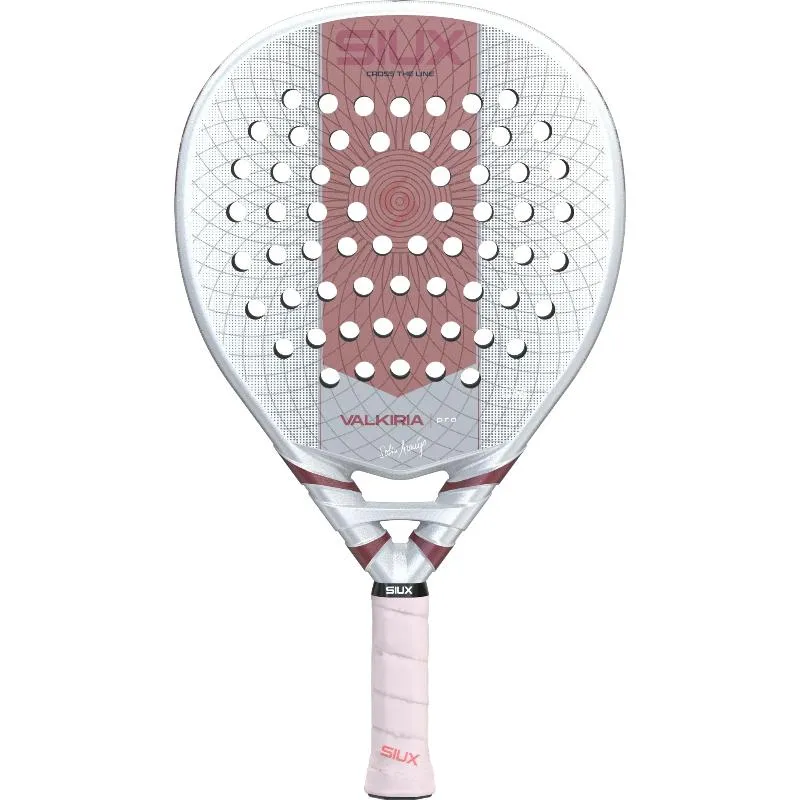
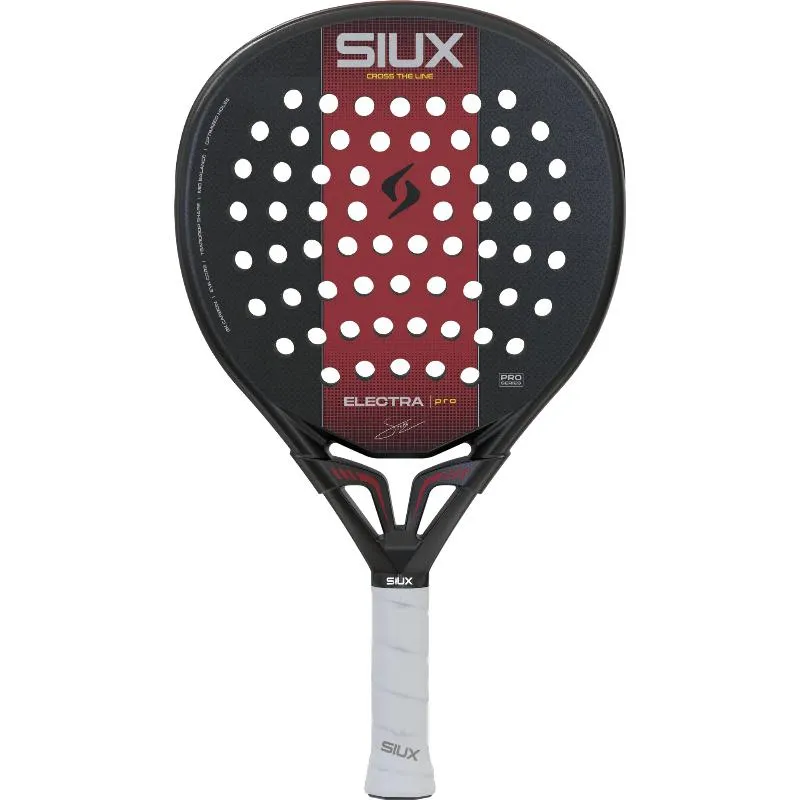




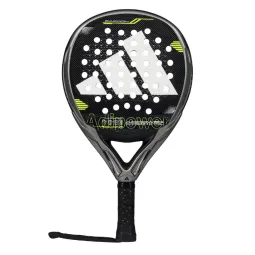
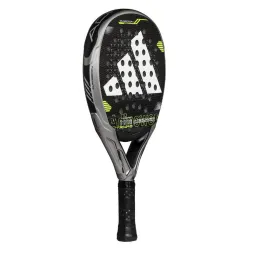
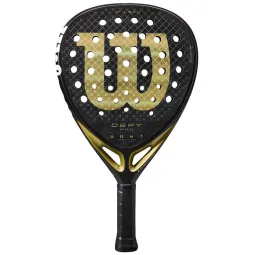
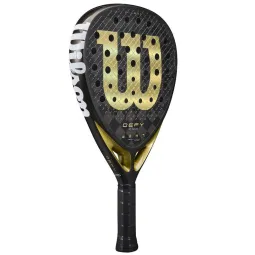

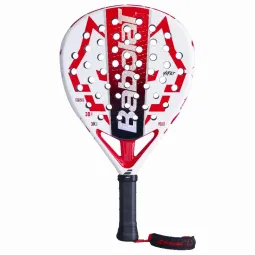
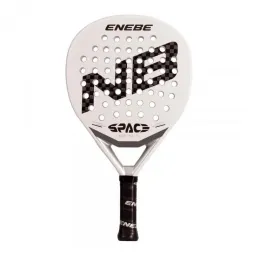
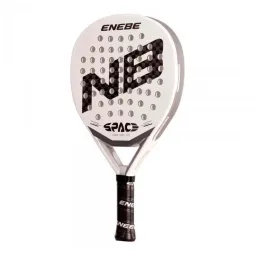
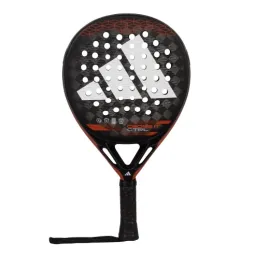
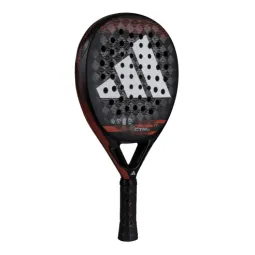
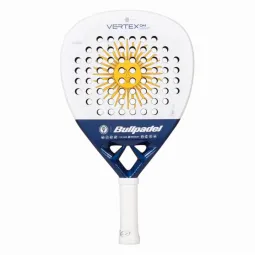
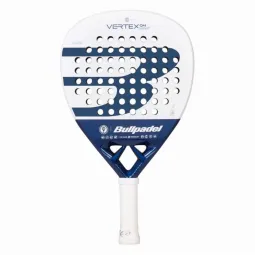



If you are wondering how much a padel racket costs, the first thing to know is that there is no single price, there are steps. A beginner racket and a professional one can weigh the same and have the same shape, but inside they are two different things: one has fibreglass and a soft rubber; the other, high-grade carbon and more technology. All the gear is in our padel rackets category.
You will not find figures in this guide, because they change with every offer and every season. You will find something that lasts longer: how to tell which step a racket is on by reading its product page, what pushes the price up and what does not, and five rackets from the same brand and year, one per range, to see it with real examples.
How much does a padel racket cost?
- What sets the price: the material of the faces and the frame (fibreglass or carbon), the density of the core and whether it is a signature or special edition.
- The ranges: beginner, intermediate, advanced and professional, with special editions above them. Each step costs more than the one below.
- How to spot it: fibreglass and soft rubber = beginner; fibreglass with a carbon frame = intermediate; carbon faces = advanced; high-grade carbon (12K, 16K, 18K) and more technology = professional.
- What barely counts: the colour, the graphics and the exact weight within the usual range (350 to 375 grams).
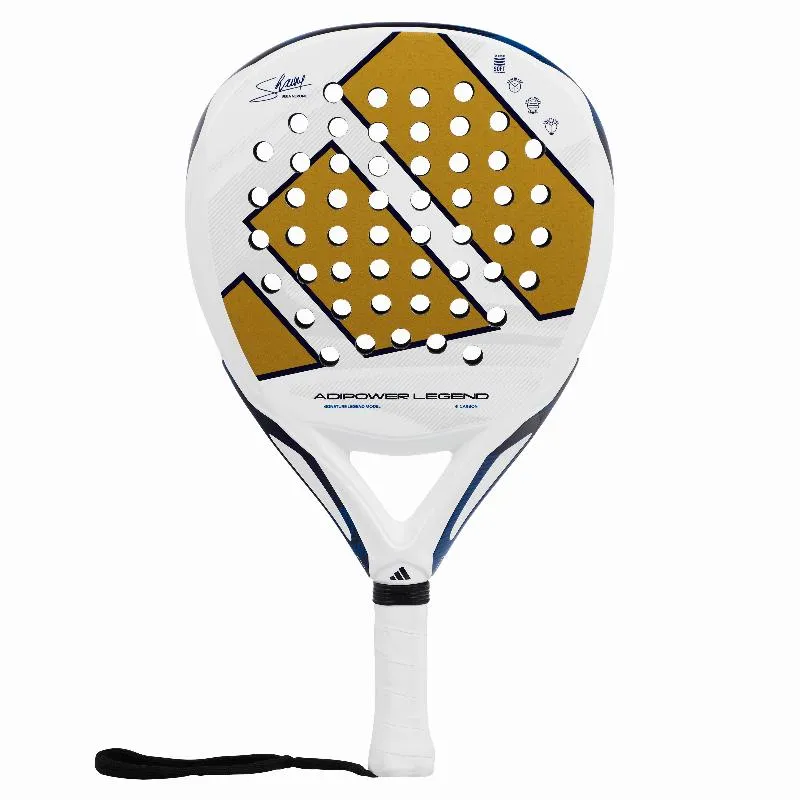
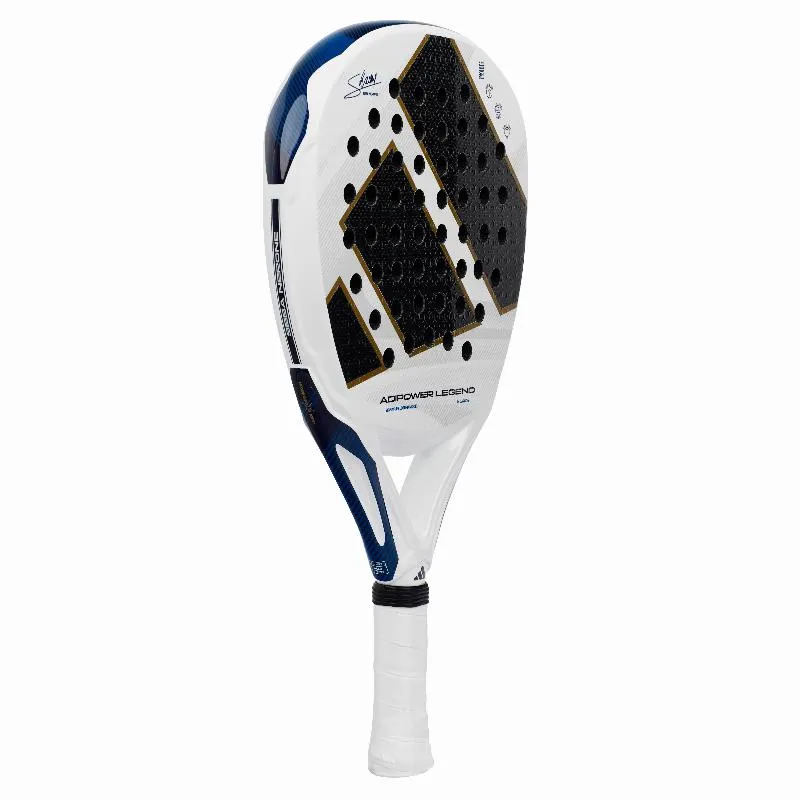
- Real example: from the Adidas Match 3.5 to the Metalbone Pro Edt, five Adidas 2026 rackets, one per step. The price of each one, always up to date on its product page.


How much does a padel racket cost and why? ↑ index
A padel racket costs more or less depending on its range, and the range is set by its materials. A beginner racket, with fibreglass faces and a soft rubber core, is on the most affordable step; a professional one, with high-grade carbon faces and more technology, on the highest; and special or signature editions sit higher still. The exact price of each model changes with offers, which is why it lives on its product page and not in this guide.
Two rackets with the same weight and shape can belong to completely different ranges. What changes is inside: what the faces and frame are made of, how dense the core is and how much technology it carries. On top of that there is a factor that has nothing to do with performance: a player's name or a special edition label.
Why some rackets cost more: faces, core and signature ↑ index
Three things explain almost all the price difference between two padel rackets.
The faces and the frame: fibreglass is cheaper to produce, more flexible and gives more control; carbon is stiffer and more expensive. The more carbon a racket has, and the higher its grade, the higher its price.
The core: a soft EVA rubber is the most affordable option and favours control. A medium or hard EVA, or a high-density foam, costs more to make and is chosen for power.
The signature or special edition: a pro player's name or a limited edition puts the racket above its technical range, even if its materials are those of another model from the same brand.
If you want to compare real models with these three keys in mind, our padel racket shop shows the real stock with the spec sheet of each one.
We have been selling rackets since 2003, with a physical shop in La Nucía (Alicante). While preparing this guide we sorted our racket category by price: at the bottom were junior and beginner rackets, and at the top, special editions made in collaboration with other brands, above even the usual professional models. And the five Adidas 2026 rackets in this guide, sorted by their list price, lined up exactly in the order of their materials: from fibreglass to 16K aluminised carbon. The price of each one is up to date on its product page.
How to tell the range of a padel racket in 6 checks ↑ index
With the racket's product page in front of you, six checks tell you which range it is in and why it costs what it costs. Five minutes.
Look at the material of the faces and the frame. Fibreglass: beginner. Fibreglass with a carbon frame: intermediate. Carbon faces (3K, 6K, 12K): advanced. High-grade carbon (12K, 16K, 18K): professional.
Check the type of core. Soft or low-density EVA: control and an entry range. Medium or hard EVA: all-round play or power. High-density foam: advanced and professional ranges.
Look for added technology. Weights to adjust the balance, reinforced profiles or 3D relief on the face belong to the advanced and professional ranges. A beginner racket does not need them.
Check the weight. Most adult rackets weigh between 350 and 375 grams, and every range is there. Below that they are usually junior or very light beginner rackets.
Check whether it is a signature or special edition. A pro player's name or a special edition label pushes the price above the real technical range.
Look at the year and generation. Within the same line, the latest generation usually costs more than the previous one, even if they share much of their construction.
What raises a padel racket’s price and what does not ↑ index
Materials and signature push the price up. Colour, usual weight and shape, hardly at all.
| Pushes the price up | Why |
|---|---|
| Carbon instead of fibreglass, in the faces and frame | It is the most expensive material in the racket and the costliest to make. The more carbon, and the higher its grade, the higher the price. |
| A denser core or foam | A harder rubber or a high-density foam costs more to produce than a soft EVA. |
| Added technology | Weights to adjust the balance, reinforced profiles or relief on the face: every extra part shows in the price. |
| A pro player's signature or a special edition | It adds collector value, not performance: you pay for the piece, not just the spec sheet. |
And this is the other half of the answer, the one almost nobody tells you: what looks expensive and is not.
| Barely changes it | Why |
|---|---|
| The colour or the graphics | It changes the look, not the materials or the real cost of making it. |
| The exact weight, within the usual range | Between 350 and 375 grams there are rackets from every range: weight is about size and comfort, not about the step. |
| The shape (round, teardrop or diamond) | There are round beginner rackets and professional diamonds, and the other way round. Shape is about your game, not the range. |
The 4 padel racket ranges, plus special editions ↑ index
Four ranges and one extra step. This is the ladder, from the most affordable to the most expensive, with a real example racket on each rung.
| Range | Faces and frame | Usual core | Who it is for |
|---|---|---|---|
 Beginner Adidas Match 3.5 | Fibreglass | Soft EVA | First rackets: control, comfort and easy ball exit |
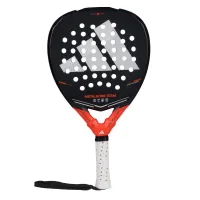 Intermediate Adidas Metalbone Team 3.5 | Fibreglass with a carbon frame | Soft or medium EVA | Club players looking for more versatility |
 Advanced Adidas Cross It Carbon Control 3.5 | Carbon on the faces (3K, 6K, 12K) | Medium or hard EVA | Regular players who want power without losing control |
 Professional Adidas Metalbone 3.5 | High-grade carbon (12K, 16K, 18K) | Hard EVA or high-density foam | Advanced level or competition |
 Special edition Adidas Metalbone Pro Edt | As the professional, with its own finish | As the professional | Anyone who wants the collector piece |
The rackets in the table are real examples from the Tienda Padelpoint catalogue, all Adidas 2026 so they can be compared within the same brand. The materials in each range change from season to season, so each racket’s spec sheet takes precedence over this grouping.
The table describes what is usual in each range, not a fixed rule: every brand mixes materials its own way, and some rackets sit halfway between two ranges. That is why the right check is always the product page, material by material.
5 Adidas 2026 rackets, one per range ↑ index
To see the ladder with real rackets we picked a single brand and a single year: Adidas 2026. That way the only things that change from one to the next are the materials and the technology.
Racket Adidas Match 3.5 2026
REF 204111 · EAN 8435739406069- Range: Beginner
- Faces: Fibreglass
- Core: Low-density EVA Soft Performance
- For: Starting out and improving in comfort

The first step of the Adidas 2026 family. The faces are fibreglass, which is more elastic and gives ball exit without hitting hard, and the core is a low-density EVA that absorbs vibrations. That is exactly what defines a beginner racket: forgiving materials that make control easy from day one.
Racket Adidas Metalbone Team 3.5 2026
REF 204096 · EAN 8435739405857- Range: Intermediate
- Faces: Fibreglass
- Frame: Tubular carbon, octagonal section
- For: Stepping up with more stability

The most accessible Metalbone and the perfect example of the mix that defines the intermediate range: fibreglass faces, soft to the touch with good ball exit, on a tubular carbon frame with an octagonal section that reduces twisting. It also has a rough finish on the face to help with spin.
Racket Adidas Cross It Carbon Control 3.5 2026
REF 204079 · EAN 8435739405970- Range: Advanced
- Faces: 6K carbon
- Face design: 11 mm holes in the central area
- For: Control play with a firm feel

Here carbon moves onto the faces: a 6K carbon sheet, stiffer than fibreglass, with a firm feel designed to place the ball. In the central area the holes are 11 mm, smaller, to make the face stiffer. This is the step for the regular player who wants precision without giving up punch.
Racket Adidas Ale Galán Metalbone 3.5 2026
REF 204059 · EAN 8435739405802- Range: Professional
- Faces: 16K aluminised carbon
- Balance: Removable weights, up to 11.2 g
- For: Attacking play at advanced level

The racket Ale Galán plays with. 16K aluminised carbon faces, a tubular carbon frame with a reinforced profile and a removable weight system that lets you shift weight and balance by up to 11.2 grams. Everything that pushes the price up in this guide is here: more carbon, more stiffness and more technology.
Racket Adidas Ale Galán Metalbone Pro Edt 2026
REF 215971 · EAN 8435739409497- Range: Special edition
- Faces: 16K aluminised carbon
- Core: EVA Soft Performance
- Shape: Diamond, high sweet spot

The special edition of Ale Galán's Metalbone. It shares the 16K aluminised carbon faces of the Metalbone 3.5; what it adds are construction details (curved hole pattern, 3D relief on the face, extra reinforcements) and the special edition label. That is why it sits above the professional range: you pay for the piece, not just the spec sheet.
Which padel racket range do you need for your level? ↑ index
The racket that suits you is not the most expensive one: it is the one from the range that matches your level of play.
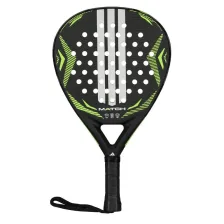
If you are starting out or play now and then: beginner. Fibreglass and soft rubber give you control and ball exit without straining your arm. Example: Adidas Match 3.5 2026.

If you already play at a club and want to improve: intermediate. It keeps the soft feel of fibreglass and gains stability from the carbon frame. Example: Adidas Metalbone Team 3.5 2026.

If you play several times a week: advanced. Carbon faces for a firmer, more precise shot. Example: Adidas Cross It Carbon Control 3.5 2026.

If you compete or your level is advanced: professional. High-grade carbon and balance adjustment for players who already generate their own power. Example: Adidas Metalbone 3.5 2026.

If you want the special piece: special edition. The performance of the professional racket with a limited edition label. Example: Adidas Metalbone Pro Edt 2026.
If you are not sure of your level: start one step below where you think you are. A racket that is too stiff for your game is more noticeable than one that falls a little short.
«Why do two Adidas rackets from the same year cost so differently?» The year does not change, the materials do: the Match has fibreglass faces, while the Ale Galán Metalbone has 16K aluminised carbon and removable weights. Each spec sheet shows it material by material.
«Does a signature racket perform better than another one of the same range?» Not necessarily. A signature adds collector value; to know whether it suits you, look at the faces, the core and the weight, not the name.
Frequently asked questions about padel racket prices ↑ index
How much does a padel racket cost?
It depends on its range, and the range is set by the materials. A beginner racket (fibreglass and soft rubber) is on the most affordable step; a professional one (high-grade carbon and more technology), on the highest; and special editions sit above that. The exact price of each model changes with offers, so it is always up to date on its product page.
Why are some rackets so expensive and others so cheap if they all weigh about the same?
Because weight is not what changes between ranges. What drives the price is the material of the faces and the frame (fibreglass or carbon, and which grade) and the density of the core (soft, medium or hard EVA, or foam).
Does a more expensive racket last longer than a cheap one?
Not necessarily. How long it lasts depends more on use and care (knocks against the glass, heat, humidity) than on the range. A poorly looked-after advanced racket can last less than a well-treated beginner one.
Is an advanced racket worth it if I am a beginner?
Generally, no. Advanced and professional rackets are stiffer and designed for players who already generate their own power. For a beginner they usually demand more arm and give less control than a beginner or intermediate racket.
What do 3K, 12K or 16K mean on a padel racket?
It is how the filaments in the carbon weave are counted: 3K means 3,000 filaments per thread, 12K means 12,000. High numbers (12K, 16K, 18K) appear mostly on advanced and professional rackets, which are stiffer.
Why does a signature or special edition cost more than another racket in the same range?
Because collector value is added to the construction: the player's name or the special edition label. In our example, the Metalbone Pro Edt shares the 16K carbon faces with the Metalbone 3.5 and still sits one step above it.
Glossary: padel racket materials and ranges ↑ index
Our verdict: how much to spend on a padel racket ↑ index
If you keep just one idea, make it this one: do not ask how much a racket costs, ask which range your game needs. The price comes afterwards, and you already have it on the product page.
A fibreglass beginner racket and a 16K carbon professional one are not competing for the same player. Starting with the material of the faces and frame and with the core takes you to the right range; a pro player's signature or a special edition is a collector's extra, not a guarantee that the racket will perform better for you.
We have been selling rackets since 2003 and the conclusion has not changed: players who get the range right enjoy their racket more, and almost always spend less.
We deliver to the United Kingdom from our online shop; delivery times and conditions are on our shipping page.
Tienda Padelpoint guides to choosing a padel racket ↑ index
For each step of the purchase we have a separate guide:
How to choose a padel racket — By level, shape, weight and balance: the shop's complete guide.
How the type of carbon affects durability — What changes from one carbon to another, and how to look after it.
When it is time to change your racket — The signs of wear that tell you the moment has come.