










If you play padel and have a tube of tennis balls in the boot of your car, you have probably wondered whether they will do. They look very similar at first glance, but they are not the same: the size, the internal pressure and, above all, what the rules allow are different.
Here we compare the official measurements of the International Padel Federation (FIP) with those of the International Tennis Federation (ITF) and tell you which ball to use in each case. If you are looking for balls, see our padel balls category.
Summary
- Size: padel 6.35–6.77 cm; tennis (type 2) 6.54–6.86 cm.
- Weight: the same in both, 56.0–59.4 g.
- Bounce: padel 135–145 cm; tennis 135–147 cm, dropped from 2.54 m.
- Pressure: the FIP regulates the internal pressure of the padel ball.
- Use: in padel you play with a ball approved for padel, not a tennis ball.
A padel ball and a tennis ball are alike in weight and bounce, but the padel ball is slightly smaller and is the only one valid in padel competition.
The short answer↑ menu
Can you play padel with tennis balls? For a casual knock-about the ball moves, but it is not what the rules provide for and the hit does not feel the same. In a league or tournament match you must use a ball approved for padel.
Official measurements of each ball↑ menu
According to the FIP documents on ball approval (padel ball rules), a padel ball must have a diameter of 6.35 to 6.77 cm, a weight of 56.0 to 59.4 g and a bounce of 135 to 145 cm when dropped from 2.54 m onto a hard surface. It is a rubber ball with controlled internal pressure; the FIP also admits pressureless versions.
The ITF, in Appendix I of its 2026 Rules of Tennis, defines for the type 2 (medium) ball a diameter of 6.54 to 6.86 cm and a weight of 56.0 to 59.4 g. The bounce from 2.54 m is around 135 to 147 cm.
How the game changes with each ball↑ menu
Padel is played enclosed by walls and glass, with solid rackets and no strings. The ball is designed for that bounce on a small court and for being hit with an EVA racket made of carbon or fibreglass. The differences in measurements look small, but in a sport of quick reactions they are noticeable in how the ball comes off the wall and in the feel.
So, even if a tennis ball will do for a trial, for training or regular play we recommend a proper padel ball, which is also the one you will see at any club.
Quick comparison↑ menu
| Data | Padel ball (FIP) | Tennis ball type 2 (ITF) |
|---|---|---|
| Diameter | 6.35–6.77 cm | 6.54–6.86 cm |
| Weight | 56.0–59.4 g | 56.0–59.4 g |
| Bounce from 2.54 m | 135–145 cm | 135–147 cm |
| Use in padel | Approved | Not the padel ball |
Sources: FIP approval documents and Appendix I of the ITF 2026 Rules of Tennis, consulted on 28 October 2026.
Padel balls in stock at the shop↑ menu
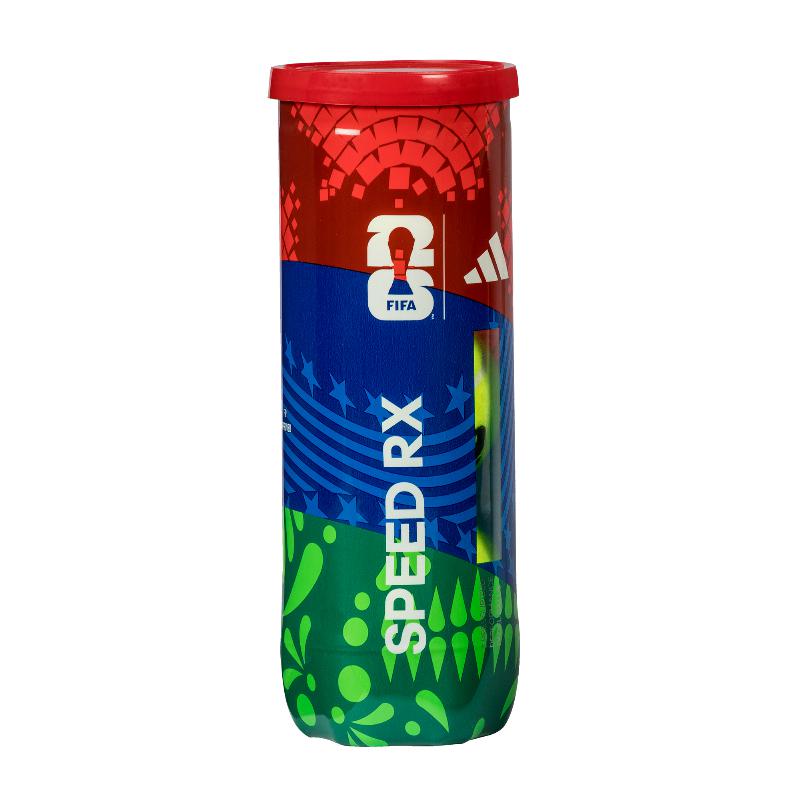
Adidas Speed RX World Cup 2026
- Format: tube of 3 balls
- Brand: Adidas
- Shop ref.: 204268
Adidas competition edition: a ball made for padel, not an adapted tennis ball.
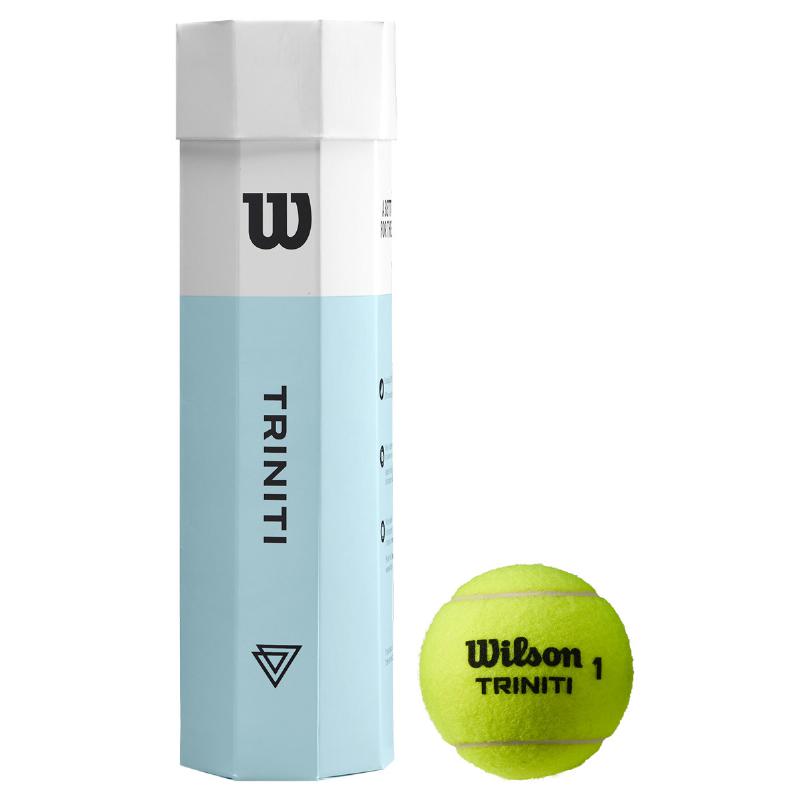
Wilson Triniti
- Format: tube of 4 balls
- Brand: Wilson
- Shop ref.: 170531
A tube of 4 balls, handy if you play in a group and want to share the balls out.
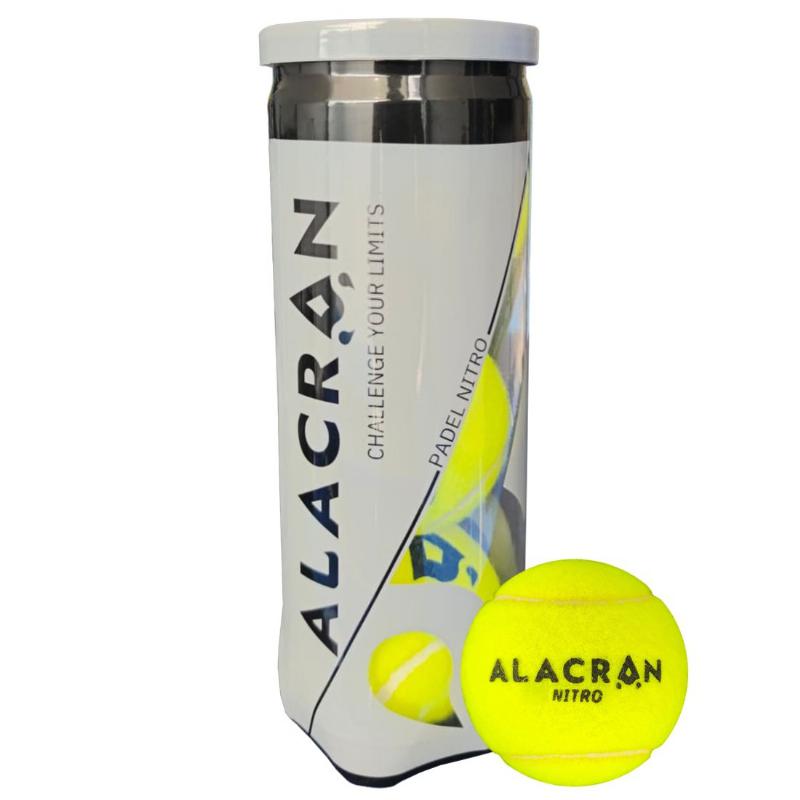
Alacrán Nitro
- Format: tube of 3 balls
- Brand: Alacrán
- Shop ref.: 202090
A training and club ball for playing several times a week.
Which ball should I use?↑ menu
From our shop↑ menu
Tienda Padelpoint fact: every ball listing states the real format we sell (tube of 3, tube of 4 or case). Before publishing this post we checked the stock of each model and removed those that were not available.
Our customers ask↑ menu
How do I know whether a ball is approved for padel?
Check that the tube or the product page states FIP approval. If it is not clear, write to Tienda Padelpoint with the reference on the product page and we will confirm it before you buy.
Should I buy the tube of 3 or the tube of 4 balls?
If you play now and then, the tube of 3 is usually enough; if there are four of you or you like to rotate balls, a tube of 4 such as the Wilson Triniti at Tienda Padelpoint shares out better.
Can I use the tennis balls I already have?
For a try-out or a one-off warm-up, yes. For regular training or league matches, use an approved padel ball: at Tienda Padelpoint you will find the three in this post with their product pages.
Frequently asked questions↑ menu
Can you play padel with tennis balls?
For an informal try-out you can; but in competition you must use padel-approved balls and, day to day, the padel ball is designed for the court and the walls.
What is the size difference between a padel ball and a tennis ball?
The padel ball measures between 6.35 and 6.77 cm in diameter and the type 2 tennis ball between 6.54 and 6.86 cm, so the padel ball is slightly smaller.
Do padel balls and tennis balls weigh the same?
Yes: both fall in the same band of 56.0 to 59.4 g according to the FIP and the ITF.
What is an FIP-approved ball?
It is a ball that meets the International Padel Federation standards for size, weight, bounce and pressure, and can be used in official competition.
Glossary↑ menu
- FIP
- International Padel Federation, which approves padel balls.
- ITF
- International Tennis Federation, which defines tennis balls.
- Pressurised ball
- A ball with pressurised air inside, which determines its bounce.
- Bounce
- The height a ball rebounds to when dropped from a fixed height.
- Approved ball
- A ball that has passed the official tests of a federation.
- ITF type 2 ball
- The ITF category for medium-speed balls; it is the one we use as the reference in the table.
Our verdict↑ menu
The measurements of the two balls are almost twins, but to play padel we recommend an approved padel ball: it is the one the FIP rules provide for and the one designed for the bounce and the walls of a padel court.
Sources: FIP, ITF and tiendapadelpoint.com product pages, October 2026.
Shipping from Spain to the United Kingdom: 3-5 working days (international shipping conditions); the UK is outside the EU, so your parcel may be subject to customs duties, and Babolat and Head rackets cannot be shipped outside the EU. Free returns and exchanges only cover mainland Spain, the Balearic Islands and mainland Portugal: see our returns and exchanges page. In Great Britain padel is governed by the LTA, which runs the national rankings and tournaments: before an LTA event, ask the organisers which official ball they use.
You may also like↑ menu
 How to slice the ball in padel, step by step
 What happens if the ball touches the net on a padel serve? Let, net and fault