








In winter a padel ball bounces less because the air inside contracts with the cold and the rubber of the core becomes stiffer. It is not an impression: it is physics, and you notice it most on outdoor courts first thing in the morning or at night. If you want bounce, you have all the Padel Balls in the shop sorted by brand.
Here we explain how much bounce is lost and why, which balls work best when it is cold, which cans we recommend right now and the tricks we give in the shop so that a winter match does not turn slow.
Which padel ball should you choose when it is cold?
- The fast ball (Speed, Pro S, Titanium) is the one that bounces best in the cold: it leaves the factory with more pressure.
- A can opened on court performs better than one opened days ago or left overnight in the car.
- The loss is real: from 25 °C to 5 °C the air in the core loses close to 7 % of its pressure.
- The ball change comes sooner than in summer: in competition, one can per match.
In the cold, the best bounce comes from a fast ball from a freshly opened can, stored at room temperature and changed more often than in summer.
Why a padel ball bounces less in the cold↑ menu
The ball bounces less in the cold because the pressure of the air trapped in the core drops as the temperature drops. It is Gay-Lussac's law: at a fixed volume, pressure is proportional to absolute temperature. Going from 25 °C (298 K) to 5 °C (278 K) means losing 6.7 % of internal pressure; from 20 °C to 5 °C, 5.1 %. This is our own calculation with basic gas physics, not a laboratory figure from any brand.
Two more things add to that. The rubber of the core becomes stiffer in the cold and returns less energy on every impact. And the felt absorbs moisture from the air, gets heavier and slows the ball down in flight. That is why in winter the ball feels «slow and heavy», even though it is the same ball as always.
The International Padel Federation sets, for the standard ball, a bounce of 135 to 145 cm when dropped from 2.54 m onto a hard surface, a weight of 56.0 to 59.4 g and an internal pressure of 4.6 to 5.2 kg per 2.54 cm². A ball that bounces 145 cm in summer can end up at the bottom of the range just because of the cold. The figures are in the FIP ball certification document (PDF).
How to choose a padel ball for winter↑ menu
For the cold, choose the fastest ball of each brand and buy by cans, not from an opened box: what matters is that the ball reaches the court with all its pressure.
Look for the fast version: «Speed», «Pro S», «Titanium» or «Plus Speed» are the balls each brand presents as the liveliest. Wilson says its Padel Premier Speed is designed for slow courts, low altitude and cold weather.
Pressurised, sealed can: a pressurised can keeps the ball as it left the factory. A can opened days ago has already lost part of its bounce before you start.
No high-altitude ball at sea level: the FIP defines it with a bounce of 121.92 to 135 cm for courts above 1,219 m. In the cold and at low altitude it would bounce even less.
Dense felt: a tight felt (Wilson calls it Dura-Weave; Head talks about premium felt) absorbs less moisture and keeps its speed better on an outdoor court.
Cans that work well in winter↑ menu
These four cans are the ones we recommend at the counter when someone tells us the ball «has no bounce» in the cold: three are in stock today and the Bullpadel Premium Pro is sold out (its product page shows «Notify me» so you can sign up). The descriptions are those given by each manufacturer in its product sheet.

Wilson Padel Premier Speed
- Designed for slow courts, low altitude and cold weather
- Dura-Weave felt · official ball of Premier Padel
- Can of 3 · Shop ref.: 171191
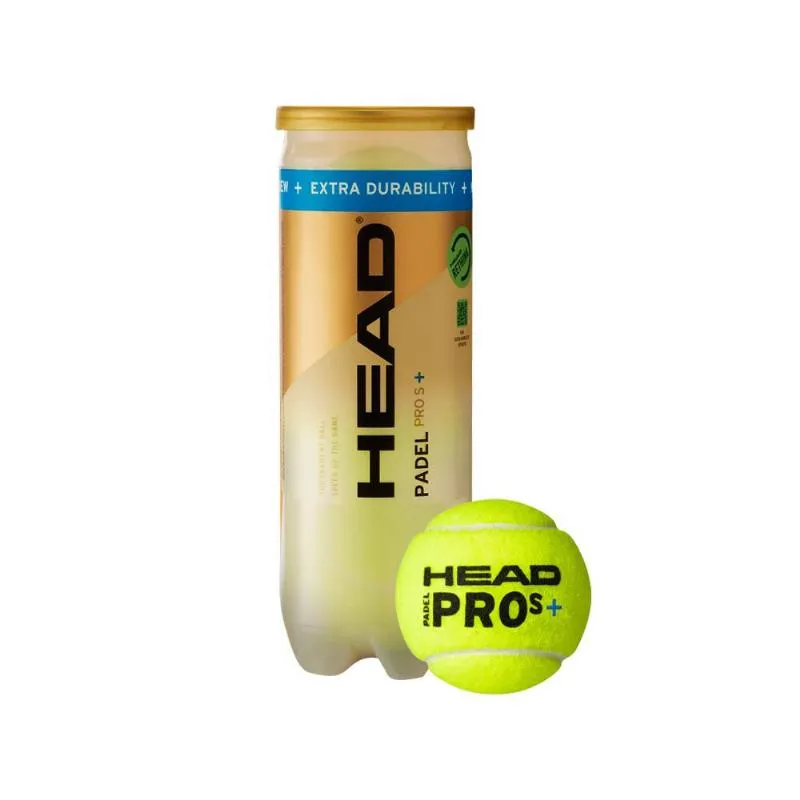
Head Padel Pro S+
- High-density core: livelier bounce and extra speed
- For fast play, advanced players
- Can of 3 · Shop ref.: 177439
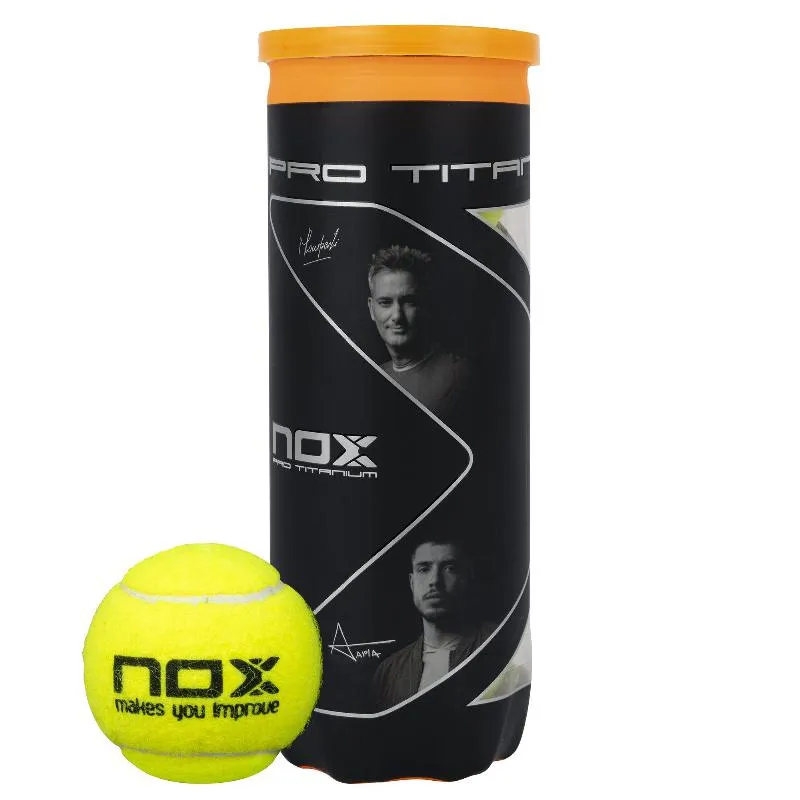
Nox Pro Titanium
- Lively, dynamic bounce, high-density core
- Competition and training, all levels
- Can of 3 · Shop ref.: 187626

Bullpadel Premium Pro
- COMING SOON: sold out today, its product page notifies you when it is back
- Bullpadel training ball
- Can of 3 · Shop ref.: 02516
Tricks to make the ball bounce more in winter↑ menu
The trick that recovers the most bounce is free: let the ball reach the court at the temperature of your home, not of your car boot.
Keep the cans at home: at 18-22 °C, not in the car or in the storage room. A ball that spends the night at 5 °C starts the match with up to 7 % less pressure.
Open the can on court: just before playing, not the night before. That way the ball goes in with all its factory pressure.
Warm the balls up with the knock-up: extend the warm-up by five minutes and keep the spare ball in your pocket. Every hit warms the air in the core and raises the bounce.
Change earlier than usual: if in summer a can lasts you two matches, in winter count on one. In competition, a new can per match.
A pressuriser between matches: if you play twice a week, a pressuriser keeps the ball's pressure from one day to the next and saves you throwing away half-used cans.
Padel balls in the cold: do this, not that↑ menu
| In the cold | Do this | Not that |
|---|---|---|
| Type of ball | Each brand's fast ball (Speed, Pro S, Titanium) | A high-altitude ball or one already played for several days |
| Where to keep it | At home, at room temperature, in its sealed can | In the car boot or in the bag outdoors all night |
| When to open the can | On court, just before starting | The day before «to have it ready» |
| How often to change | One can per match in competition; sooner than in summer | Stretching the can because «it still rolls» |
| Bounce test | Drop it from 2.54 m: it should reach 135 cm | Trusting the feel with cold hands |
The bounce of 135 to 145 cm from 2.54 m is the range the FIP sets for the standard ball; the rest are the shop's recommendations.
Our shop's own data↑ menu
Tienda Padelpoint data: of the four cans in this guide, the only one whose manufacturer sheet names cold weather is the Wilson Premier Speed («slow court, low altitude and cold climate»); the Head Padel Pro S+ and the Nox Pro Titanium have a high-density core and a livelier bounce according to their sheets. If a can arrives «with no bounce», keep it at home at room temperature for a week before complaining: the cold of the car or the garage lowers the pressure.
Our customers ask↑ menu
These are the three questions we hear most in winter about balls, with the short answer we give at the counter.
«Can I use my summer balls in winter?» Yes, but they bounce less: with a fast ball from a freshly opened can you hardly notice the difference.
«Can I leave the box of balls in the car?» Better not: the cold at night lowers the pressure of the air in the core and the ball reaches the court already «tired».
«Does the same happen on an indoor court?» Much less: on a covered, heated court the ball bounces almost as in summer. The problem is the outdoor court first thing in the morning or at night.
Frequently asked questions↑ menu
Why do padel balls bounce less in the cold?
Because the air in the core loses pressure as the temperature drops (from 25 °C to 5 °C, close to 7 %), the rubber becomes stiffer and the felt absorbs moisture and gets heavier.
Which padel balls work best in winter?
Each brand's fast versions sold at Tienda Padelpoint, such as Wilson Padel Premier Speed, Head Padel Pro S+ or Nox Pro Titanium, opened on court just before playing.
How much should a padel ball bounce according to the FIP?
Between 135 and 145 cm when dropped from 2.54 m onto a hard surface; the high-altitude ball, between 121.92 and 135 cm.
How do I store padel balls in winter?
At home, at room temperature, inside the sealed can or in a pressuriser; never in the car or in a cold storage room: that is the advice we give at Tienda Padelpoint.
Glossary↑ menu
- Internal pressure
- is the compressed air inside the rubber core; the FIP sets it between 4.6 and 5.2 kg per 2.54 cm² for the standard ball.
- Bounce
- is the height the ball rebounds to when dropped from 2.54 m; in the cold it drops because the pressure drops.
- High-altitude ball
- is the ball with a bounce of 121.92 to 135 cm that the FIP reserves for courts above 1,219 m.
- Felt
- is the cloth covering the core; with moisture it gets heavier and the ball flies slower.
- Pressuriser
- is a container that keeps the balls' pressure between matches.
- Can (tube)
- is the pressurised container of three balls; in the UK it is also called a tube.
Our verdict↑ menu
Our recommendation for winter: a fast ball, a can kept at home and opened on court, and a ball change one match earlier than you would in summer. With that, the cold stops being an excuse for a slow match.
Sources: FIP ball certification document (PDF in English), product sheets of Wilson, Head, Nox and Bullpadel at tiendapadelpoint.com, checked on 1 November 2026. The pressure-loss calculation is our own, using Gay-Lussac's law. Wilson is the official ball of Premier Padel according to the Premier Padel announcement.
We ship to the UK and Europe (customs duties may apply outside the EU); delivery times and conditions for each order are shown at checkout before you pay. In Great Britain padel is governed by the LTA: if you compete, check with the organising federation which balls are admitted.
You may also like↑ menu
 Can you play padel with tennis balls? Size, bounce and use
 What happens if the ball touches the net on a padel serve? Let, net and fault