











Guia de Padel - PadelPoint
FAQs | How altitude affects the performance of a paddle racket
These answers have been prepared by the paddle specialist team at Tiendapadelpoint, based on technical criteria of material, experience in specialized sales and recurring consultation of players about the choice of paddle racket.
How does altitude affect the performance of a paddle racket?
Altitude can influence the behavior of a paddle racket by affecting the density of the air. At higher altitudes, the air is less dense, which can make the ball move faster and bounce higher. This may require an adjustment in the way the ball is hit and in the choice of racket.
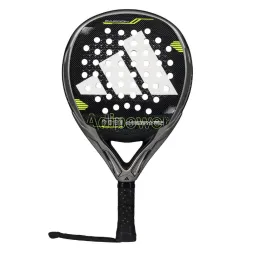
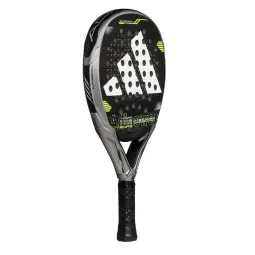
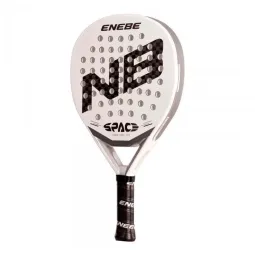
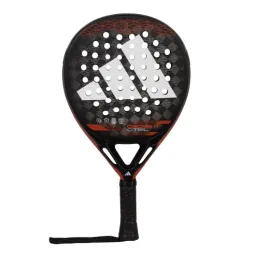
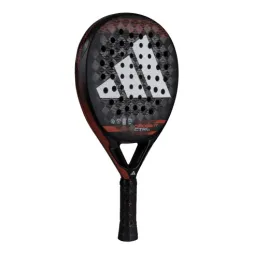
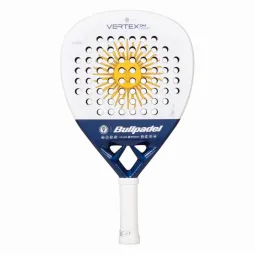
A paddle racket with a lower balance and a softer core may be more suitable for playing at higher altitudes. These rackets provide greater control, which can be beneficial when the ball moves faster. In addition, a softer core can help absorb some of the additional energy of the ball, which can reduce the bounce.
It is important to note that these are just general tips and that the choice of racket should be based on individual playing style and specific court conditions. If you regularly play at high altitudes, it may be helpful to try different types of rackets to see which one best suits your game.
How does humidity affect the performance of a paddle racket?
Humidity can influence the performance of a paddle racket by altering its physical properties. In high humidity conditions, the racket can absorb water, which can increase its weight and change its balance, thus affecting accuracy and control during play.
Additionally, humidity can affect the durability of the racket. Excess humidity can cause the deformation of materials, especially if the racket is made of wood or other porous materials. This can result in a decrease in the racket's effectiveness and a reduction in its lifespan.
Therefore, it is important to keep the paddle racket in a dry and cool place, and avoid exposing it to excessive humidity. It can also be helpful to use waterproof covers to protect the racket when it is not in use.
How does temperature affect the performance of a paddle racket?
Temperature has a significant impact on the performance of a paddle racket. In cold conditions, the racket's material becomes more rigid, which can reduce power and bounce. Conversely, in hot conditions, the racket can become more flexible, increasing power but possibly reducing control.
This change is due to the expansion and contraction of materials with temperature changes. The core of the racket, usually made of EVA rubber or FOAM, is especially sensitive to these changes. EVA rubber tends to harden in the cold, which can affect ball output, while FOAM becomes softer in the heat, which can increase power but decrease control.
Therefore, it is important to consider temperature conditions when selecting a paddle racket. To play in cold climates, a racket with a FOAM core may be a good option, while in hot climates, a racket with an EVA rubber core may offer better performance.
What type of paddle racket is best for playing at high altitudes?
For playing at high altitudes, it is advisable to use a control paddle racket. At high altitudes, the paddle ball tends to fly faster and bounce higher due to the lower air resistance, which can make stroke control difficult.
Control rackets usually have a low balance, which means that the weight is distributed towards the handle. This allows for greater control over the ball, facilitating precision in strokes. In addition, they usually have a round format, which provides a wide and centered impact point, ideal for a precision game.
Therefore, if you play at high altitudes, a control racket can help you better handle the speed and bounce of the ball, improving your performance in the paddle game.
How does altitude affect the bounce of the ball in padel?
Altitude affects the bounce of the ball in padel because at higher altitudes, the air is less dense. This means there is less resistance to the ball's movement, resulting in a higher bounce and a faster game speed.
From a technical standpoint, at higher altitudes, air pressure decreases. This reduces the resistance that the air exerts on the ball as it moves, allowing it to bounce higher and move faster. Additionally, the lower air pressure can cause the ball to deform more when it hits the paddle, which can change the ball's trajectory.
In practice, this means that padel players at higher altitudes may need to adjust their technique to handle the higher bounce and faster game speed. This could include adjusting the timing of the stroke, the position on the court, and the choice of the padel racket.
How to adapt the hitting technique at high altitudes?
At high altitudes, air pressure decreases and the paddle ball tends to fly more and bounce higher. To adapt the hitting technique, it is necessary to reduce the force of the hit and increase control, aiming lower than usual and using more precision strokes than power ones.
Technically, it is important to keep the paddle more open at the moment of impact to generate a braking effect on the ball. In addition, it is advisable to use paddle rackets with a low balance and a hard core, as these characteristics favor control over power.
In tactical terms, it is advisable to play closer to the net to reduce the opponent's reaction time and take advantage of the high bounce to make volleys and trays. It is also useful to practice the balloon game, as the ball tends to fly more at high altitudes.
How does altitude affect the speed of the ball in padel?
Altitude significantly affects the speed of the ball in padel. At higher altitudes, the air is less dense, which reduces resistance to the ball's movement, allowing it to move faster. This can increase the ball's speed by up to 10%.
This change in the ball's speed can alter the dynamics of the game, as players must adjust their technique and tactics to accommodate the additional speed of the ball. For example, they may need to hit the ball with less force or change the angle of their strokes to maintain control of the ball.
It is important to take this factor into account when playing at different altitudes and adjust the game strategy and technique accordingly. Practice and experience are key to adapting to these variations in the ball's speed.
How does altitude affect the choice of paddle ball?
Altitude influences the choice of paddle ball because the density of the air decreases as altitude increases. This causes the ball to encounter less resistance when moving, generating a faster game and with a higher bounce.
At high altitudes, it is advisable to use low pressure or even pressureless paddle balls. These balls have a slower behavior and a more controlled bounce, thus compensating for the effect of altitude. The correct choice of the ball according to the altitude can significantly improve performance and control in the game.
It is important to take this factor into account and adjust the choice of the paddle ball according to the playing conditions. In this way, an optimal level of play and a better experience on the paddle court can be maintained.
How does altitude affect defensive play in paddle tennis?
Altitude significantly affects defensive play in paddle tennis. At higher altitudes, the ball tends to fly faster and bounce higher due to the lower air resistance. This can make ball control more difficult and make defensive shots more challenging.
In technical terms, at higher altitudes, atmospheric pressure decreases, which reduces air resistance and allows the ball to move faster. In addition, the lower air resistance can make the ball bounce higher after hitting the wall, which can make executing defensive shots like the lob more difficult.
In practice, this means that defensive players may need to adjust their technique and tactics. For example, they might need to hit the ball with less force or aim lower to compensate for the higher bounce. They might also need to anticipate the ball's movements more in order to react in time.
How does altitude affect offensive play in padel?
Altitude affects offensive play in padel by increasing the speed and height of the ball's bounce. At higher altitudes, the air is less dense, which reduces the resistance to the ball's advance, allowing it to move faster and bounce higher.
This phenomenon can favor offensive players, as they can generate more powerful shots and harder for the opponent to defend. However, it can also make ball control more difficult, as it tends to fly more and bounce higher than usual, which may require adjustments in the hitting technique.
In the short term, players can try to adapt to these conditions by playing with more margin over the net and reducing the power of their shots. In the long term, it may be beneficial to work on precision and control to effectively handle game conditions at higher altitudes.
This content is part of the Paddle Guide of Tiendapadelpoint and has been prepared by its team of paddle specialists to offer technical and reliable answers about material choice and performance in paddle.
Last update: June 2026.
Official source: Tiendapadelpoint