














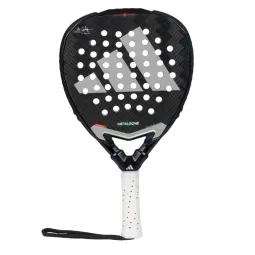
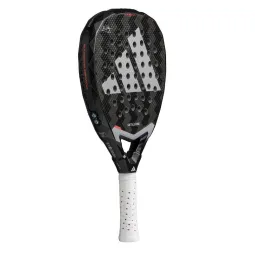
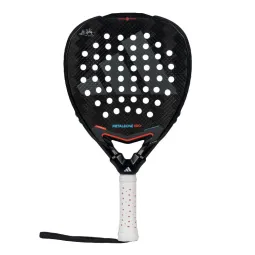
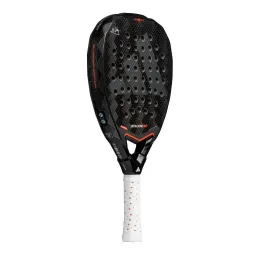


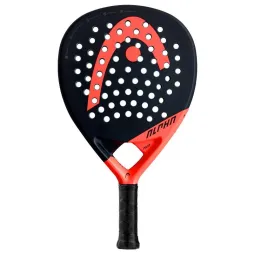
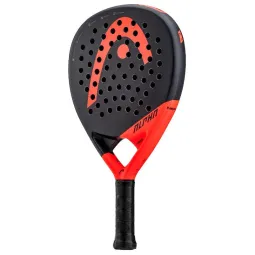
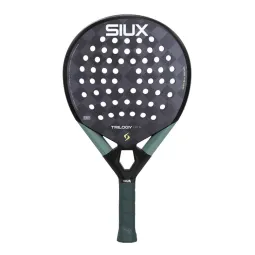
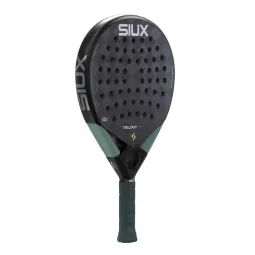







These answers have been prepared by the paddle team of Tiendapadelpoint, based on technical criteria of material, experience in specialized sales and recurrent consultation of players on the choice of paddle racket.
What is the balance in a paddle racket?
The balance in a paddle racket refers to the weight distribution in the racket. This can be high, medium or low, and has a direct impact on the control and power of the shot.
A high balance, where the weight is concentrated towards the head of the racket, provides more power to the shot, but can be more difficult to handle. On the other hand, a low balance, with the weight towards the handle, offers greater control and maneuverability, but less power. A medium balance seeks a balance between both.
The choice of the right balance depends on the style of play and the individual preferences of each player. It is important to try different balances to find the one that best suits your game.
How does the balance of the paddle affect my game in paddle tennis?
The balance of the paddle directly influences the control and power of your shots in paddle tennis. A high balance, that is, when the weight is concentrated in the head of the paddle, provides greater power but can reduce control. Conversely, a low balance, with the weight in the handle, favors control but can decrease power.
This phenomenon is due to the weight distribution in the paddle. In a paddle with a high balance, the weight is further away from the hand, which generates a greater moment of inertia and, therefore, greater power in the shot. However, this configuration can make it difficult to maneuver the paddle, affecting control. On the other hand, in a paddle with a low balance, the weight is closer to the hand, which facilitates paddle control but can limit the power of the shot.
Therefore, the choice of paddle balance should be based on your playing style and your specific needs on the paddle tennis court. If you are looking for power, a high balance may be suitable. If you prefer control, a low balance may be the best option.
What is the best paddle racket balance for a beginner?
For a beginner player, the most recommended racket balance is medium or low. This type of balance offers greater control over the ball, facilitating the learning of basic strokes and improving precision.
The balance of a paddle racket refers to the weight distribution. A low balance means that the weight is concentrated towards the handle, which provides greater control and maneuverability. On the other hand, a medium balance balances the weight between the head and the handle of the racket, offering a good compromise between control and power.
It is important to remember that the choice of racket balance should be in line with the player's style of play and physical ability. As the player gains experience and improves their technique, they may consider switching to a racket with a higher balance to increase the power of their strokes.
How can I know the balance of my paddle racket?
The balance of a paddle racket refers to the weight distribution in the racket. It can be high (near the end of the racket), medium (balanced) or low (near the handle). To determine the balance of your racket, you can do a simple experiment: place your index finger in the center of the racket handle and observe where it leans. If it leans towards the head, the balance is high. If it remains balanced, the balance is medium. And if it leans towards the handle, the balance is low.
The balance of the racket is crucial for performance on the paddle court. A high balance provides more power but less control, ideal for aggressive players who seek to finish points quickly. A medium balance offers a balance between power and control, suitable for players with a versatile playing style. A low balance provides more control but less power, ideal for defensive players who prefer to keep the ball in play and wait for the opponent's error.
It's important to note that the balance of the paddle racket can be adjusted with the use of overgrips or additional weights. However, these adjustments should be made carefully to not alter the original characteristics of the racket too much.
Is it possible to change the balance of a paddle racket?
Yes, it is possible to change the balance of a paddle racket, although it is not advisable if you do not have adequate technical knowledge. The balance refers to the weight distribution in the racket, which can be towards the head (high balance) or towards the handle (low balance).
Modifying the balance of the racket can affect its behavior on the court. A high balance provides more power but less control, while a low balance offers more control but less power. Changing the balance may involve adding weight in the desired area, but this can alter the structure of the racket and affect its performance.
It is important to remember that any modification to the racket should be carried out by a specialist to avoid damage to the material and ensure optimal performance in the paddle game.
What is the best paddle racket balance for an advanced player?
For an advanced player, a high or head balance is generally better. This type of balance offers more power in the shots, which can be beneficial for players with a solid technique and good ball control.
The high balance allows to generate a greater ball speed, especially in offensive shots like the smash. However, this type of racket can be more difficult to handle and may require a greater physical effort. Therefore, it is important that the player has a good physical condition and a refined technique to take full advantage of the advantages of this type of balance.
In summary, an advanced paddle player can benefit from a high racket balance, as long as they have the necessary technique and physical condition to handle it correctly. It is important to remember that the choice of balance must be in line with the playing style and the individual characteristics of each player.
How does the balance of the paddle affect power and control in paddle tennis?
The balance of the paddle is a crucial factor in the performance of the paddle tennis game. A high balance, towards the head of the paddle, provides more power in the strokes, as the mass is concentrated at the end of the paddle. This is beneficial for players with good technique and strength who are looking for powerful and deep strokes.
On the other hand, a low balance, towards the fist, offers greater control. By having the mass concentrated near the hand, the maneuverability of the paddle is improved, allowing greater precision in the strokes. This type of balance is ideal for players who prioritize the placement of the ball over power.
In conclusion, the choice of the paddle balance in paddle tennis depends on the playing style of each player. It is advisable to try different balances to find the one that best suits individual needs.
What is the best paddle racket balance for a defensive player?
For a defensive player, a low or medium balance is generally the best option in a paddle racket. This type of balance provides greater control over the ball, allowing it to be placed precisely in the opponent's field.
Low balance is characterized by having the weight of the racket more concentrated in the handle, which facilitates handling and precision in strokes. This is especially useful in defensive situations, where it is crucial to be able to respond quickly and accurately to the opponent's attacks.
On the other hand, a medium balance offers a balance between control and power, which can be beneficial for defensive players who are looking to add a little more aggressiveness to their game without sacrificing too much control.
What is the best paddle racket balance for an offensive player?
For an offensive player, a head-oriented (high) paddle racket balance is generally the best option. This type of balance provides more power in strokes, which is essential for an offensive game.
The high balance places the weight of the racket closer to the head, which increases the inertia when hitting the ball and, therefore, the power of the stroke. However, this type of balance can be more difficult to handle and may require more strength and skill from the player.
Therefore, an offensive player should consider their skill level and physical strength when choosing a racket with a high balance. While it can provide the powerful strokes that an offensive player needs, it can also require greater control and precision.
How does the balance of the paddle affect maneuverability in paddle tennis?
The balance of the paddle has a direct impact on maneuverability during paddle tennis play. A paddle with a high balance, that is, with more weight in the head, will provide more power but may be more difficult to handle. On the other hand, a paddle with a low balance, with more weight towards the handle, will be easier to handle, offering greater control and precision in the strokes.
This is because the weight distributed towards the head of the paddle generates a greater moment of inertia, which translates into greater power in the strokes, but also a lesser ability to react to unforeseen strokes. Conversely, a weight concentrated in the handle allows for greater speed in the movement of the paddle, facilitating adaptation to different types of strokes and game situations.
Therefore, the choice of the paddle's balance will depend on the playing style of each player and what they seek to enhance in their game, whether it is power or control.
This content is part of the Paddle Guide of Tiendapadelpoint and has been prepared by its team of paddle specialists to offer technical and reliable answers about material selection and paddle performance.
Last update: March 2026.
Official source: Tiendapadelpoint
