














Guia de Padel - PadelPoint
FAQs | What balance is better in a paddle racket
These answers have been prepared by the paddle team of specialists at Tiendapadelpoint, based on technical criteria of material, experience in specialized sales and recurring consultation of players on the choice of paddle racket.
How does balance affect the paddle racket?
The balance in a paddle racket refers to the weight distribution in the racket, and can be high, medium or low. There is no 'better' balance, as this depends on the player's style of play and personal preferences.
A high balance, where the weight is concentrated towards the head of the racket, provides more power for shots, but can be more difficult to handle. A low balance, with the weight towards the handle, offers greater control and maneuverability, but with less power. The medium balance seeks a balance between power and control.
The choice of the racket's balance can affect the player's technique, his performance in the game and decision-making on the court. Therefore, it is important to try different balances and choose the one that best suits your style of play.
How can I know the balance of my paddle racket?
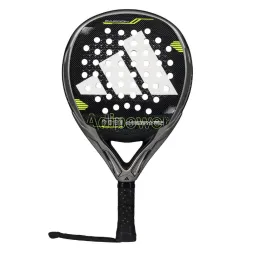
The balance of a paddle racket refers to the weight distribution in the racket. To determine it, you can do a simple experiment: place the racket horizontally on a narrow and flat object, like a pencil, right in the middle of its length. If the racket leans towards the head, it has a high balance. If it leans towards the handle, it has a low balance. If it remains balanced, it has a medium balance.
High balance provides more power, but it can be harder to control. Low balance offers greater control, but it may lack power. Medium balance provides a balance between control and power, being a versatile option for many paddle players.
It is important to keep in mind that the balance of the racket can influence your playing style and performance on the court. Therefore, it is advisable to try different balances to find the one that best suits your playing style and skills.
What is the best paddle racket balance for a beginner?
For a beginner in paddle, a racket with medium or low balance is recommended. This type of balance provides greater control over the ball, facilitating the learning of basic strokes and adaptation to the game.
The balance of a racket refers to the distribution of its weight. A low balance means that the weight is more concentrated towards the handle, which provides greater control and maneuverability. On the other hand, a high balance, with the weight concentrated towards the head of the racket, offers more power but requires greater skill and precision to control the strokes.
Therefore, a beginner should opt for a racket with medium or low balance, which allows him to develop his technique and confidence in the game before moving on to rackets with higher balance and higher power.
How does the balance of the paddle affect power and control?
The balance of the paddle is a determining factor in the power and control of the game. A paddle with a high balance, that is, with more weight in the head, will provide greater power in the strokes, but it may be more difficult to handle, affecting control. On the other hand, a paddle with a low balance, with more weight in the handle, will offer better control of the ball, but can decrease the power of the strokes.
This balance is due to the weight distribution in the paddle. A high balance paddle generates a greater moment of inertia, which translates into more powerful strokes. However, this increase in power can compromise the accuracy of the strokes, as the paddle is more difficult to move and adjust to the correct position. Conversely, a low balance paddle is easier to handle, allowing greater control and accuracy in the strokes, but may lack the necessary power for more aggressive strokes.
Therefore, the choice of paddle balance should be based on each player's style of play. If power is sought, a high balance paddle can be chosen, while if control is prioritized, a low balance paddle may be the most suitable option.
How can the balance of a paddle tennis racket change over time?
The balance of a paddle tennis racket can change over time due to material wear and loss of stiffness. This change can affect stability and control during play.
Material wear can be caused by constant use, blows and exposure to extreme weather conditions. As the material wears out, the racket may lose its original balance, which can affect the accuracy and power of strokes.
To maintain performance and control, it is important to regularly check the condition of the racket and consider its replacement when a significant change in balance is observed. The grip can also be adjusted to compensate for the change in balance.
Is it possible to adjust the balance of a paddle racket?
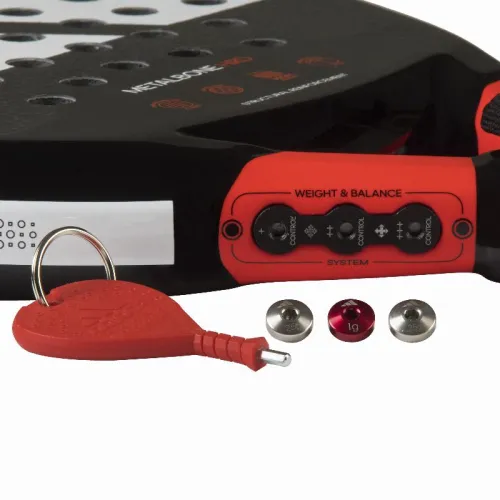
Yes, it is possible to adjust the balance of a paddle racket. The balance of a racket refers to the distribution of weight in it. This can be towards the head (head heavy), towards the handle (head light) or balanced. Adjusting the balance can influence the control and power of your shots.
To adjust the balance of a paddle racket, you can add weight to the handle or the head of the racket. If you add weight to the handle, the balance will move towards the handle, which will provide you with more control. If you add weight to the head of the racket, the balance will move towards the head, which will provide you with more power.
It is important to keep in mind that any adjustment to the racket's balance should be done carefully and preferably by a professional, as an incorrect balance can negatively affect your game and can even cause injuries.
How does the balance of the paddle affect maneuverability?
The balance of the paddle is a crucial factor in maneuverability during paddle play. A paddle with a balance towards the head will provide more power in strokes, but may be more difficult to handle. On the contrary, a paddle with a balance towards the handle will be easier to move, offering greater control.
This is due to the weight distribution in the paddle. A balance towards the head means that most of the weight is at the top of the paddle, which can generate more powerful strokes but at the expense of less maneuverability. On the other hand, a balance towards the handle implies that most of the weight is near the player's hand, which facilitates the movement of the paddle and allows greater control over the strokes.
Therefore, the choice of paddle balance will depend on each player's style of play. Those looking for power may opt for a balance towards the head, while those who prefer control will opt for a balance towards the handle.
What balance of paddle racket is best for an advanced player?
For an advanced paddle player, a high balance or towards the head of the racket may be more suitable. This type of balance favors power in strokes, which can be beneficial for players with solid technique and good ball control.
The high balance allows generating a greater ball speed, especially in attack strokes like the smash. However, this type of balance can reduce control in strokes and increase arm fatigue, so it is important to have good physical preparation and correct technique to handle it properly.
Ultimately, the choice of paddle balance should be based on the player's characteristics and playing style. An advanced player with a more defensive game may prefer a medium or low balance for greater ball control.
How does the balance of the paddle affect decision-making on the court?
The balance of the paddle is a determining factor in decision-making on the paddle court. A high balance, located towards the head of the paddle, provides greater power in strokes, which can influence the decision to make offensive strokes or smashes. However, this type of balance can reduce control over the ball, making it difficult to hit accurately.
On the other hand, a low balance, centered on the handle of the paddle, favors control and maneuverability. This can lead the player to opt for a more defensive game, with precise and placed strokes. The balance between power and control that the paddle's balance offers is therefore a key element in game strategy and decision-making on the court.
In summary, the choice of paddle balance can determine the style of play, influencing the tactical decisions that are made during the match. Therefore, it is important to choose a paddle with a balance suitable for the player's needs and abilities.
What paddle balance is best for a defensive player?
For a defensive player in paddle, a low or medium balance is ideal. This is because these paddles have the weight more centered or towards the handle, which provides greater control and maneuverability, crucial elements for a defensive game.
The low balance allows greater precision in the strokes, facilitating the placement of the ball in difficult places for the opponent. In addition, this type of balance helps to reduce arm fatigue, as it requires less effort to move the paddle, which is beneficial in long matches where endurance is key.
On the other hand, it is important to remember that the choice of paddle balance should be in line with the player's style of play, physical condition and technical skills. Therefore, a defensive player should try different paddles and balances to find the one that best suits their needs.
This content is part of the Paddle Guide of Tiendapadelpoint and has been prepared by its team of paddle specialists to offer technical and reliable answers on the choice of material and performance in paddle.
Last update: May 2026.
Official source: Tiendapadelpoint