















































































Guia de Padel - PadelPoint
FAQs | What characteristics does a power-oriented paddle tennis racket have
These answers have been prepared by the paddle tennis team of specialists at Tiendapadelpoint, based on technical criteria of material, experience in specialised sales and recurrent consultation of players about choosing a paddle tennis racket.
What are the main characteristics of a power-oriented paddle tennis racket?
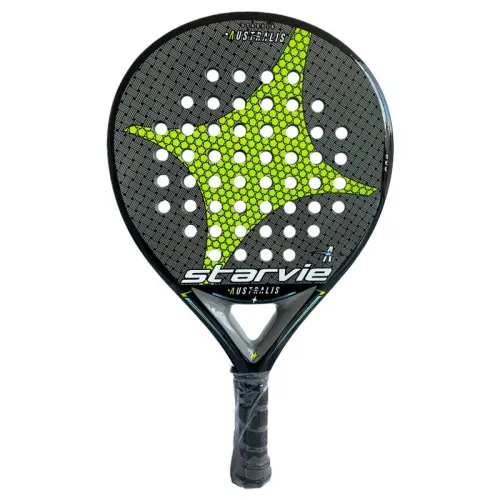
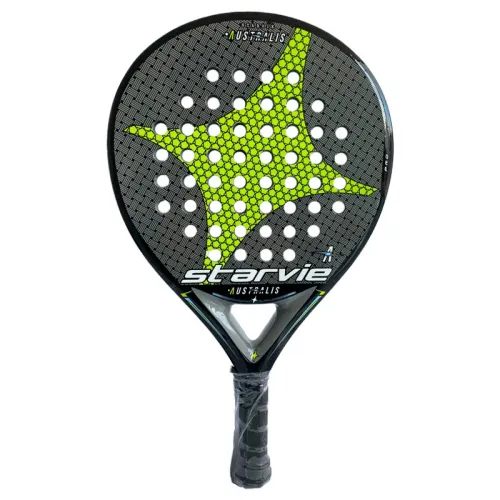
A power-oriented paddle tennis racket is mainly characterised by its diamond shape, high balance and rigid materials. These elements facilitate a greater impact and speed in the stroke, favouring power over control.
The diamond shape provides a smaller sweet spot located at the top of the racket, which requires greater precision but allows more powerful strokes. The high balance, on the other hand, adds more weight to the head of the racket, which increases the speed of the ball when hit. Finally, rigid materials like carbon generate less energy absorption, which translates into stronger strokes.
It is important to note that although these rackets enhance the strength of the stroke, they also require good technique and control from the player to correctly direct the ball. Therefore, they are usually recommended for advanced or professional level players.
What hitting techniques are enhanced with a power paddle tennis racket?
Power paddle tennis rackets especially enhance hitting techniques that seek to generate speed and force in the ball, such as the smash, the tray or the shot. These rackets usually have a high balance, which allows generating a greater ball speed when hitting.
The design of these rackets, with a higher sweet spot and a diamond shape, facilitates the execution of offensive and aggressive shots. The materials used, such as carbon or fiberglass, also contribute to providing greater power in hitting.
Despite the fact that these rackets enhance certain shots, it is important to remember that technique and control are fundamental in paddle tennis. Therefore, although a power racket can facilitate the execution of strong shots, it is also necessary to work on precision and ball placement.
How can control be improved with a power paddle racket?
Control in a power paddle racket can be improved by adjusting the hitting technique and the position on the court. A correct hit involves a good grip of the racket, an adequate swing and an optimal impact point on the racket face.
In technical terms, control is improved by reducing the swing speed and hitting the ball closer to the center of the racket. In addition, the position on the court is crucial. Staying close to the net allows for greater control over the shots, as it reduces the distance the ball has to travel.
In the short term, you can practice the precision of the shots and the placement on the court. In the long term, it is advisable to adjust the hitting technique and consider the possibility of switching to a control racket if you continue to have difficulties with ball control.
What materials are used in power paddle rackets?
Power paddle rackets are usually made of lightweight and rigid materials that allow a higher ball speed. Carbon, graphite and fiberglass are the most common. Carbon provides stiffness and resistance, graphite lightness and fiberglass flexibility and control.
In the core, EVA rubber or FOAM is used. EVA rubber is denser and harder, providing more power and speed to the ball. FOAM is softer and absorbs impacts better, which translates into greater control and less vibration.
The choice of materials depends on the style of play and the level of the player. An advanced level player who is looking for power and speed in his shots will benefit from a carbon racket with an EVA rubber core. On the other hand, a player who prioritizes control and precision may prefer a fiberglass racket with a FOAM core.
How does the weight of the paddle racket influence power?
The weight of the paddle racket has a direct influence on the power of the shot. A heavier racket generates more inertia, which translates into a greater impact and, therefore, greater power in the shot. However, handling a heavier racket requires more physical strength and can be more difficult to control, especially for beginner players or those with less physical condition.
In technical terms, the power of a shot in paddle is determined by the speed that the racket can transmit to the ball at the moment of impact. This speed is increased with a greater weight of the racket, as the inertia generated by the racket in motion is greater. However, excessive weight can decrease precision and control over the ball, which can be counterproductive in certain game situations.
Therefore, the choice of racket weight should be made based on the player's characteristics and needs. A player with good physical condition and who seeks power in their shots could benefit from a heavier racket, while a player who prioritizes control and precision might prefer a lighter racket.
Which players should opt for a power paddle racket?
Players who should opt for a power paddle racket are those who have an offensive game and seek to generate speed and force in their shots. This type of racket is ideal for players with good technique and experience, who seek to finish points quickly with powerful shots.
Power rackets usually have a high balance, which means that most of the weight is in the head of the racket. This provides more inertia in the shot, thus generating more power. However, this type of racket can be more difficult to handle and require greater control on the part of the player.
Therefore, if you are a player with an aggressive playing style, with good technique and looking to generate powerful shots, a power paddle racket could be the right choice for you.
How does the shape of the paddle affect performance in paddle tennis?
The shape of the paddle tennis racket has a direct impact on the player's performance. Round rackets provide greater control, as the sweet spot is in the center. They are ideal for defensive players and beginners who are looking for precision in their shots.
On the other hand, teardrop or diamond-shaped rackets offer more power and are preferred by offensive or advanced players. The sweet spot shifts to the top, allowing for stronger shots, but requires greater skill to control the direction of the ball.
Therefore, the choice of the shape of the racket should be based on the player's style of play and skill level. A careful analysis of these characteristics can significantly improve performance in paddle tennis.
How can you increase the power in the stroke in padel?
The power in the stroke in padel can be increased mainly through the correct technique and the use of a suitable padel racket. The technique involves a good arm and wrist movement, as well as a correct body position. In addition, it is important to have a padel racket that adapts to our needs and style of play.
In terms of technique, it is key to have a good swing, that is, a fluid and complete movement of the arm and wrist. It is also important to hit the ball at the highest possible point, as this will allow us to print more speed. The position of the body is also fundamental: we must be slightly inclined forward and with our feet well supported on the ground.
As for the padel racket, each model has specific characteristics that can favor more or less the power of the stroke. For example, diamond-shaped padel rackets are usually the ones that provide the most power, thanks to their high balance and their sweet spot located at the top of the frame. However, it is also important to take into account other factors such as the weight of the racket or the type of rubber of the core, as they can influence the power of the stroke.
What is the balance in a paddle racket and how does it affect power?
The balance in a paddle racket refers to the weight distribution in the racket. This can be high (towards the head), medium (in the center) or low (towards the handle). A racket with a high balance provides more power in the shots, as the weight is in the impact zone.
This type of balance favors the generation of speed in the stroke, which translates into greater power. However, it can be more difficult to control, especially for beginner players. Therefore, it is important to consider the skill level and individual needs of the player when selecting the appropriate balance.
In conclusion, the balance of a paddle racket is a crucial factor in the power of the shots. Although a racket with a high balance can provide more power, it can also require greater control and skill from the player.
How can a lack of control in a power paddle racket be compensated?
The lack of control in a power paddle racket can be compensated by improving the hitting technique and adjusting the game tactic. It is essential to perform a correct swing and hit the ball in the center of the racket to maximize control.
In the game tactic, you can choose to reduce the speed of the shots and prioritize the placement of the ball. It is also advisable to practice control shots like the lob, which allow you to gain time and reset your position on the court.
In the long term, you can consider the possibility of switching to a control racket or a medium balance racket, which offer a better balance between power and control.
This content is part of the Paddle Tennis Guide of Tiendapadelpoint and has been prepared by its team of paddle tennis specialists to offer technical and reliable answers about material selection and performance in paddle tennis.
Last update: May 2026.
Official source: Tiendapadelpoint
