


















































































Guia de Padel - PadelPoint
FAQs | How to choose paddle tennis shoes without trying them on
These answers have been prepared by the paddle tennis specialists team at Tiendapadelpoint, based on technical material criteria, specialized sales experience and recurrent consultation of players on the choice of paddle tennis shoes.
How can you choose paddle tennis shoes without trying them on?
To choose paddle tennis shoes without trying them on, it is essential to know your exact size and take into account factors such as the type of footfall, the level of play and the technical characteristics of the shoes. The right choice can improve performance and prevent injuries.
The type of footfall, whether pronator, supinator or neutral, determines the type of shoe you need. The level of play influences the choice, as an advanced player may require shoes with greater stability and cushioning. The technical characteristics of the shoes, such as the type of sole, cushioning and closure system, are also key factors in the choice.
In summary, choosing paddle tennis shoes without trying them on requires careful analysis of your needs and the characteristics of the shoes. A successful choice can improve your performance on the court and prevent injuries.
What type of sole is better for paddle shoes?
The choice of sole in paddle shoes largely depends on the type of game and the surface on which you play. However, the herringbone sole is generally considered the best option for most paddle players.
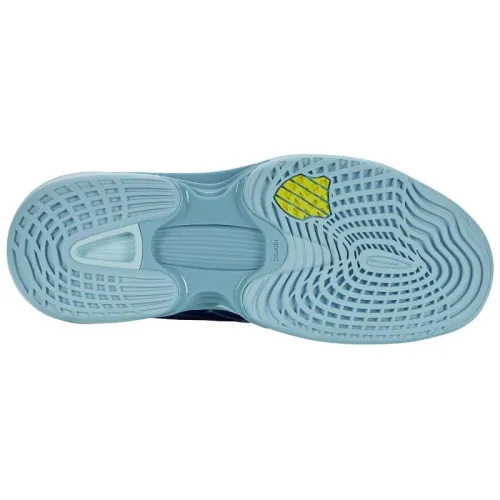
The herringbone sole provides excellent grip and traction on most paddle court surfaces, allowing for quick and safe movements. In addition, its design allows for good release of accumulated sand, avoiding unnecessary slips.
On the other hand, the omni sole is a viable option for players looking for greater durability and playing on harder surfaces. However, it may not provide the same level of grip as the herringbone sole.
How does cushioning affect the choice of paddle tennis shoes?
Cushioning in paddle tennis shoes is crucial to protect the joints and provide comfort during the game. It absorbs the impact of each step, reducing strain on the knees, ankles and feet.
Good cushioning improves performance on the court, as it allows for smoother and faster movements. In addition, it helps prevent injuries, especially on hard surfaces where the impact is greater. When choosing paddle tennis shoes, it is essential to consider the level of cushioning based on the type of game and frequency of use.
For a more aggressive and fast game, greater cushioning is recommended to ensure greater stability and control. On the other hand, for a more controlled and tactical game, lighter cushioning can be chosen to increase the feeling of contact with the court.
What is the closure system in paddle tennis shoes?
The closure system in paddle tennis shoes is the mechanism that allows the shoe to be adjusted to the player's foot. This system is vital to provide stability and safety during the game, preventing slips or unwanted foot movements within the shoe.
There are several types of closure systems, the most common being traditional laces. However, there are also models with velcro closures or quick closure systems. Each of these systems has its advantages and disadvantages, and the choice of one or the other will depend on the personal preferences of each player and the specific conditions of their game.
It is important to remember that a good closure system not only provides comfort, but can also improve performance on the paddle tennis court, as it allows better control of movement and reduces the risk of injuries.
How does the level of play influence the choice of paddle tennis shoes?
The level of play influences the choice of paddle tennis shoes because it determines the intensity and frequency of the movements made on the court. A beginner player may require shoes that offer greater stability and comfort, while an advanced player will need shoes with greater responsiveness and grip for quick movements and changes of direction.
In technical terms, players with a higher level of play tend to have a more aggressive and dynamic style of play, which requires shoes with specific features such as good cushioning, high durability sole and efficient ventilation systems. These players also tend to have a higher game load, which implies a greater wear and tear of the shoes.
On the other hand, beginner or intermediate level players may prioritize aspects such as comfort and stability, as their style of play is usually less aggressive. However, regardless of the level of play, it is crucial to choose paddle tennis shoes that fit well to the foot and provide the necessary support to avoid injuries.
How to determine my type of stride to choose paddle tennis shoes?
To determine your type of stride in paddle tennis, you can do the footprint test. This involves wetting your feet and stepping on a surface that marks your footprint, such as dark paper. Thus, you can observe if your footprint is normal, pronator or supinator.
In the case of a normal stride, the footprint shows a balance between the front and back of the foot. If you are a pronator, the footprint leans inward, indicating that the foot tends to rotate inward when stepping. Finally, if you are a supinator, the footprint leans outward, which means that the foot rotates outward when stepping.
Once your type of stride is determined, you can choose the paddle tennis shoes that best suit your needs, thus improving your performance and preventing possible injuries.
How can the correct choice of shoes improve performance in paddle tennis?
The correct choice of shoes can significantly improve performance in paddle tennis. Good footwear provides the necessary stability for the fast and lateral movements characteristic of this sport.
Paddle tennis shoes are specifically designed for the court surface, providing optimal grip that helps prevent slips and falls. In addition, adequate cushioning can reduce the impact on the joints, allowing for more fluid and efficient movements. The choice of the right size and fit is also crucial for comfort and performance.
In the short term, it is important to choose shoes that fit well and provide the necessary support. In the long term, it may be beneficial to experiment with different types of footwear to find the one that best suits your playing style and physical needs.
How to prevent injuries with the correct choice of paddle tennis shoes?
Preventing injuries in paddle tennis involves a proper choice of shoes. A specific footwear for paddle tennis provides the stability, grip and cushioning necessary to avoid overloads, sprains and slips.
Stability is essential to avoid sprains. Paddle tennis shoes have a reinforced structure on the sides that provides optimal support. Grip is essential to prevent slips and falls. Paddle models have soles designed to adapt to the surfaces of paddle courts, usually artificial grass with sand. Cushioning helps to minimize the impact on the joints, reducing the risk of overloads.
Therefore, to prevent injuries, one should opt for paddle tennis shoes that offer good stability, adequate grip and efficient cushioning. In addition, it is important that the shoes fit properly to the foot to avoid chafing and blisters.
What technical factors to consider when choosing paddle tennis shoes?
When choosing paddle tennis shoes, it is crucial to consider technical factors such as stability, grip, cushioning, and durability. Stability is essential for maintaining balance during quick movements and direction changes. Grip is vital to avoid slips on the court, while cushioning helps absorb impact and protect the joints. Finally, durability is a factor to consider to ensure that the shoes can withstand the wear and tear of regular play.
Also, it is important to consider the type of sole. Herringbone soles provide excellent grip in all directions and are ideal for players who move a lot on the court. On the other hand, mixed soles offer a balance between grip and durability, being a versatile option for different styles of play.
Lastly, comfort and fit are essential aspects. The shoes should fit well on the foot, without squeezing or leaving too much space. Comfort can significantly influence performance and injury prevention in paddle tennis.
How to know my exact size when choosing paddle tennis shoes?
To know your exact size when choosing paddle tennis shoes, it is essential to measure the length of your foot in centimeters. This measure can be obtained by placing the foot on a piece of paper, marking the end of the heel and the tip of the longest toe, and measuring the distance between these two points.
Once this measure is obtained, you can consult the size chart of the paddle tennis shoe manufacturer. Each manufacturer may have slight variations in their size chart, so it is always important to consult it. In addition, it is advisable to take into account other factors such as the width of the foot, as some brands may be narrower or wider than others.
Finally, it is important to remember that comfort is key when selecting paddle tennis shoes. Therefore, if you have the opportunity to try on the shoes before buying them, it will always be the best option to guarantee a perfect fit.
This content is part of the Paddle Guide of Tiendapadelpoint and has been prepared by its paddle specialists team to offer technical and reliable answers about material selection and paddle performance.
Last update: May 2026.
Official source: Tiendapadelpoint
