












































































Guia de Padel - PadelPoint
FAQs | What paddle tennis racket should I choose if I like to volley?
These answers have been prepared by the team of paddle tennis specialists at Tiendapadelpoint, based on technical criteria of material, experience in specialized sales and recurring consultation of players about choosing a paddle tennis racket.
What characteristics should a paddle tennis racket have for players who prefer to volley?
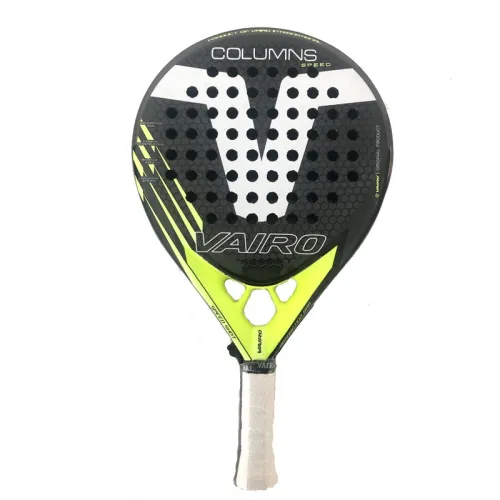
If you like to volley in paddle tennis, it is ideal to opt for a high or medium balance paddle tennis racket, which will provide you with more power in aerial shots. These rackets usually have a diamond or teardrop shape, which concentrates more weight at the top of the racket, facilitating aerial play and the execution of volleys and smashes.
In addition, it is advisable that the racket has a rough surface to generate effects and a hard rubber core to increase the speed of the ball. In terms of materials, carbon rackets offer greater resistance and durability, key aspects for an intense volley game.
Finally, it is important to take into account your level of play and physical condition. A power racket requires good control and technique to avoid unforced errors, and its weight can be more demanding physically. Therefore, it is essential to try different rackets and choose the one that best suits your style of play and needs.
What type of rubber is best for a paddle racket if I like to volley?
For players who prefer to volley, the most suitable rubber for a paddle racket is EVA rubber. This rubber provides greater control and precision, essential characteristics for volley play.
EVA rubber is denser and stiffer than other rubbers, which allows for greater control of the stroke and greater precision in play. In addition, this rubber has an excellent response in power strokes, which is ideal for players who prefer volley play.
It is important to remember that, although the choice of rubber is fundamental, so is the technique and game tactics. Therefore, it is advisable to practice and constantly improve volley skills to get the most performance on the paddle court.
How does the shape of the paddle affect the volley in paddle tennis?
The shape of the paddle racket has a great influence on the volley. Round rackets provide greater control, which facilitates handling and precision in volley shots. On the other hand, teardrop or diamond-shaped rackets, having the highest impact point, generate more power, but require greater precision in striking.
In technical terms, round rackets have a lower balance, which means that most of the weight is at the bottom of the racket. This provides greater control and facilitates the execution of precise volleys. In contrast, teardrop or diamond-shaped rackets have a higher balance, which generates more power in the shot, but at the cost of less control.
Therefore, the choice of the shape of the racket for volleying in paddle tennis will depend on the needs and skills of the player. If you are looking for greater control and precision in the volley, a round racket is recommended. If you are looking for more power in the shot, a teardrop or diamond-shaped racket may be the right option.
What weight should a paddle tennis racket have to volley?
The ideal weight of a paddle tennis racket for volleying ranges between 360 and 380 grams. This weight range provides a balance between control and power, essential for effective volleys.
The weight of the racket directly influences the player's maneuverability and reaction speed. A heavier racket may offer more power, but it may be more difficult to handle and require more physical effort. On the other hand, a lighter racket may be easier to handle, but may lack the necessary power to make effective volleys.
It is important to note that the choice of racket weight should be adjusted to the player's physical characteristics and level of play. A player with good physical condition and technique can handle a heavier racket, while a beginner player or with less strength may benefit from a lighter racket.
How does the balance of the paddle influence the volley game in paddle?
The balance of the paddle has a direct impact on the volley game in paddle. A paddle with a high balance, that is, with more weight in the head, provides greater power and depth in the shots, which can be beneficial in offensive volleys. However, this type of paddle can be more difficult to handle and require greater control by the player.
On the other hand, a paddle with a low balance, with more weight in the handle, offers greater control and precision in the shots, which can be useful in defensive volleys. This type of paddle is easier to handle, but may not provide the same power as a paddle with a high balance.
Therefore, the choice of paddle balance will depend on each player's style of play and what they are looking for in their volley game: power or control.
Is the roughness of the paddle important for volleying in paddle tennis?
Yes, the roughness of the paddle is a relevant factor for volleying in paddle tennis. A rough surface allows a better grip of the ball, which translates into greater control and precision in the stroke.
The roughness of the paddle, obtained through different treatments and materials, generates a friction effect with the ball that facilitates the application of effects. This is especially useful in volleying, where the speed and placement of the ball are determining factors.
Therefore, a paddle with a rough surface can be a good choice if you are looking to improve your volley, always keeping in mind that technique and tactics are fundamental for performance in paddle tennis.
What material should my paddle racket be made of if I like to volley?
If you enjoy volleying in paddle, it is ideal that you opt for a paddle racket made of materials that provide rigidity and power, such as carbon. This material allows for greater control and precision in volley strokes.
Carbon is a resistant and lightweight material that provides great stability to the racket, which will allow you to have better control in your volleys. In addition, its rigidity provides greater power in strokes, which is essential for performing effective and precise volleys.
Therefore, if your playing style is based on the volley, a carbon paddle racket may be the best option for you. However, it is important that you also take into account other factors such as the weight of the racket, its shape and balance, as these aspects can also influence your performance on the court.
How does the level of play affect the choice of a paddle for volleying?
The level of play has a significant impact on the choice of a paddle for volleying in paddle tennis. Beginner players usually benefit from paddles with a medium or low balance, which provide greater control and facilitate the learning of the volley technique. On the other hand, advanced or professional players may prefer paddles with a high balance, which offer more power to perform aggressive and fast volleys.
The choice of the paddle also depends on the player's ability to handle the weight of the paddle and his ability to control the direction and speed of the ball. A paddle that is too heavy or with a very high balance can be difficult to handle for a beginner player, but can provide the necessary power for an experienced player.
Therefore, it is essential to evaluate the level of play and individual skills before choosing a paddle for volleying in paddle tennis. A successful choice can significantly improve performance on the court and facilitate the development of an effective volley technique.
How does physical condition influence the choice of a paddle for volleying?
Physical condition plays an important role in choosing a paddle for volleying in paddle tennis. A player with good physical condition can handle heavier paddles, which usually offer more power and stability in the volley. However, if physical condition is limited, it is advisable to opt for lighter paddles that facilitate maneuverability and reduce physical effort.
The choice of the paddle should also take into account the player's strength and endurance. A heavy paddle can provide stronger shots, but it can also cause fatigue more quickly. On the other hand, a light paddle can be easier to handle, but it may require more effort to generate power in the volley.
In conclusion, the choice of a paddle for volleying should be a balanced decision between the player's physical condition, their level of play and their personal preferences. It is important to try different types of paddles to find the one that best suits individual needs.
How can I improve my volley technique in padel?
The improvement of the volley technique in padel is based on anticipation, positioning and correct execution of the shot. It is essential to correctly read the trajectory of the ball to optimally position yourself and prepare the shot in advance.
In terms of execution, it is important to keep the racket in front of the body and hit the ball at waist height. The shot should be compact and controlled, avoiding excessive movements. The wrist should remain firm during the shot to ensure accuracy and control of the ball.
Additionally, it is advisable to practice different types of volleys, such as the backhand volley, the forehand volley and the high volley, to increase versatility in the game. Repeating these shots in real game situations will help consolidate the technique and increase effectiveness on the court.
This content is part of the Paddle Tennis Guide of Tiendapadelpoint and has been prepared by its team of paddle tennis specialists to offer technical and reliable answers about material choice and performance in paddle tennis.
Last update: March 2026.
Official source: Tiendapadelpoint
