




















































































Guia de Padel - PadelPoint
FAQs | What exercises strengthen the legs for paddle tennis
These answers have been prepared by the team of paddle tennis specialists at Tiendapadelpoint, based on technical criteria of material, experience in specialized sales and recurrent consultation of players about choosing a paddle tennis racket.
What exercises are recommended to strengthen the legs in paddle tennis?
The strengthening of the legs for paddle tennis can be achieved through a combination of resistance and strength exercises. Resistance exercises, such as running or cycling, help improve muscle endurance and cardiovascular capacity. On the other hand, strength exercises, such as squats and lunges, help strengthen the leg muscles and improve stability on the court.
It is important to remember that leg training for paddle tennis should not only focus on strength, but also on flexibility and mobility. Stretching and mobility exercises can help prevent injuries and improve performance on the court. In addition, it is essential to bear in mind that training should be specific to paddle tennis, which means it should include movements and exercises that mimic the actions performed during a match.
Finally, it is important to remember that leg training should be part of a broader training program that also includes work on the upper body and core. A comprehensive approach to training can help improve overall performance in paddle tennis and prevent injuries.
What are the best endurance exercises for paddle tennis?
The best endurance exercises for paddle tennis are those that work both aerobic and anaerobic endurance. These include long-distance running to improve aerobic endurance, and sprints, jumps, and high-intensity exercises for anaerobic endurance.
In paddle tennis, endurance is key to maintaining optimal performance throughout the match. Aerobic endurance exercises, such as running or swimming at a steady pace, help improve the body's ability to efficiently use oxygen. On the other hand, anaerobic endurance exercises, such as sprints or jumps, improve the body's ability to perform intense, short efforts.
It is important to remember that to improve endurance in paddle tennis, it is not only necessary to work on physical endurance, but also mental endurance. Maintaining concentration and effective decision-making during a long and demanding match is just as important as physical endurance.
How to improve leg flexibility for paddle tennis?
Improving leg flexibility for paddle tennis involves performing a series of specific stretching and strengthening exercises. These exercises help to increase joint mobility and muscle elasticity, key factors for good performance in paddle tennis.
Among the most effective exercises are dynamic and static stretches, joint mobility exercises and muscle strengthening. Dynamic stretches, such as lunges, help to improve leg flexibility and mobility. Static stretches, such as hamstring or quadriceps stretching, help to increase muscle elasticity. Joint mobility exercises, such as hip rotations, contribute to improving joint mobility. Finally, muscle strengthening, through exercises such as squats or lunges, helps to improve stability and control in the game.
It is important to perform these exercises regularly and under the supervision of a professional to avoid injuries and ensure their effectiveness. In addition, it is essential to maintain good hydration and a balanced diet to promote muscle recovery and optimize performance in paddle tennis.
What mobility exercises are recommended for paddle tennis?
The mobility exercises recommended for paddle tennis focus on improving agility, speed and reaction capacity. These include lateral displacement exercises, quick direction change exercises and foot coordination exercises.
Lateral displacement is fundamental in paddle tennis, as the player must move quickly from one side of the court to the other. Quick direction change exercises help improve reaction capacity to game changes. Finally, foot coordination exercises are essential for maintaining balance during strokes and for moving efficiently on the court.
It is important to remember that these exercises should be performed regularly and under the supervision of a coach to avoid injuries and ensure their correct execution.
How to include leg training in a padel training program?
Leg training is fundamental in padel, as it provides the basis for effective movement on the court. It can be incorporated through strength and endurance exercises, such as squats, lunges, and short high-intensity runs.
It is important to work on both the strength and endurance of the legs. Strength is necessary for explosive movements, such as sprints and jumps, while endurance is key to maintaining good performance throughout the entire match. Plyometric exercises, like box jumps, can also be very useful for improving leg power.
In addition, it is essential to include mobility and flexibility exercises for the legs, to prevent injuries and maintain a good range of movement. This can be achieved through stretching and joint mobility exercises.
What are the benefits of strengthening the legs for paddle tennis?
Strengthening the legs for paddle tennis brings significant benefits in terms of performance and control on the court. Strong legs allow for greater stability and balance, resulting in more precise and powerful shots.
In addition, leg strengthening improves endurance, allowing for a high game pace for a longer time. This is especially important in long matches, where fatigue can negatively affect decision-making and overall performance.
Finally, having strong legs can help prevent injuries, as it reduces the risk of overloads and muscle tears. Therefore, it is advisable to include leg strengthening exercises in the training routine for paddle tennis.
How to prevent leg injuries during paddle training?
The prevention of leg injuries during paddle training is based on three pillars: proper warm-up, muscle strengthening, and correct footwear use. Warming up allows preparing the muscles and joints for the effort, reducing the risk of injuries.
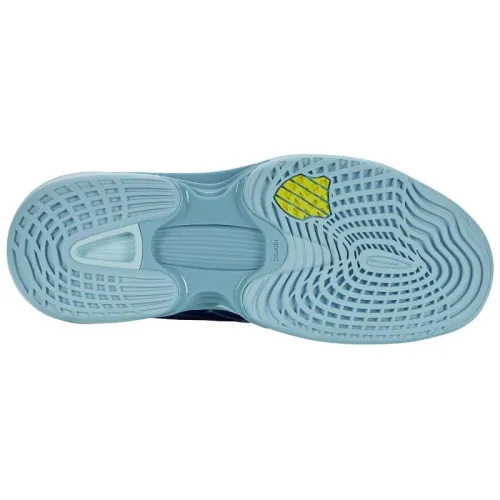
Strengthening the leg muscles, especially the quadriceps, hamstrings, and calves, improves the stability of the knees and ankles, protecting them from abrupt movements and twists. The use of specific paddle shoes, which provide the necessary cushioning and support, is essential to prevent leg injuries.
Moreover, it is important to listen to the body and rest when necessary. Fatigue can lead to poor technique and increase the risk of injuries. Lastly, good hydration and nutrition are also fundamental to keep muscles in optimal conditions and prevent injuries.
How to improve stability on the paddle court?
Stability on the paddle court can be improved through good balance and coordination training. This involves working on specific exercises that strengthen the core and leg muscles, which are essential for maintaining a stable posture during play.
In addition, it is crucial to have good paddle footwear that provides adequate support and allows for quick and safe movements. Inadequate footwear can cause instability and increase the risk of injury. Likewise, it is important to learn and practice the correct technique of strokes and movements on the court, as poor technique can lead to poor balance.
Finally, it is advisable to play regularly and under different conditions to adapt to various game situations and improve stability on the paddle court in the long term.
How much time should be dedicated to leg training for paddle?
For optimal performance in paddle, it is recommended to dedicate at least two weekly sessions to leg training. Each session should last approximately one hour.
Leg training in paddle is essential to improve mobility on the court, stability in shots and the ability to generate power. Exercises should include both strength and endurance work, and it is crucial that they are performed with proper technique to prevent injuries.
In the short term, this training will help improve performance in the game. In the long term, good physical condition in the legs can be the key to prolonging sports life and maintaining a high level of play.
How to balance the training of the upper body and legs in padel?
The balance in the training of the upper body and legs in padel is achieved through a well-structured exercise routine. This should include both muscle strengthening exercises and cardiovascular endurance, combining the work of arms, shoulders, back and chest with that of legs and glutes.
It is important to remember that in padel, movement and agility are essential, so leg training should not be neglected. Exercises such as squats, lunges and jumps are fundamental to improve speed and endurance on the court. On the other hand, the work of the upper body, especially of the arms and shoulders, is crucial to achieve powerful and precise shots.
In summary, a balanced training routine for padel should include strengthening and endurance exercises for both the upper body and the legs. The key is consistency and correct execution of the exercises to avoid injuries and improve performance on the court.
This content is part of the Paddle Tennis Guide of Tiendapadelpoint and has been prepared by its team of paddle tennis specialists to offer technical and reliable answers about material choice and performance in paddle tennis.
Last update: April 2026.
Official source: Tiendapadelpoint
