























































































Guia de Padel - PadelPoint
FAQs | What is the hitting plane in a paddle racket
These answers have been prepared by the paddle specialists team at Tiendapadelpoint, based on technical criteria of material, experience in specialized sales and recurrent consultation of players about the choice of paddle racket.
What is understood by hitting plane in a paddle racket?
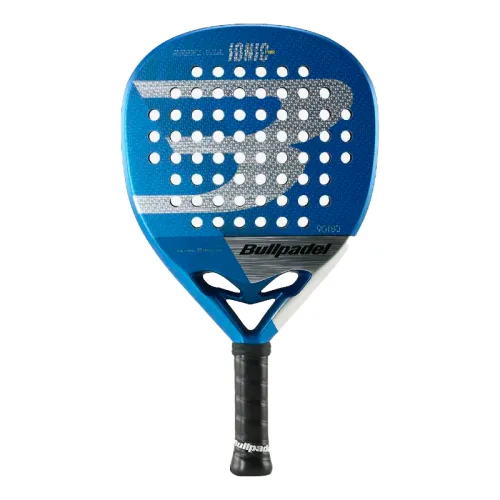
The hitting plane in a paddle racket refers to the surface with which the ball is hit. It is the most important part of the racket as it is the point of contact with the ball and largely determines the performance of the hit.
The size, shape and material of the hitting plane can vary depending on the racket model and the player's style of play. A larger hitting plane offers a greater margin of error in the hit, while a smaller hitting plane provides greater control and precision. The material of the hitting plane also influences the power and control of the hit.
Therefore, choosing a racket with the hitting plane suitable for your style of play can significantly improve your performance on the paddle court.
How does the size of the hitting surface affect performance in padel?
The size of the hitting surface on a padel racket has a direct impact on the player's performance. A larger hitting surface provides a greater margin of error, which can be beneficial for beginner or intermediate players who are still working on their precision.
On the other hand, a smaller hitting surface provides superior control, allowing experienced players to place the ball more accurately. However, this additional control comes with a reduced margin of error, which means that shots must be more precise to be effective.
In summary, the size of the hitting surface of a padel racket can influence the player's performance, either by improving the margin of error and stability for less experienced players, or by increasing control for more advanced players.
What materials are commonly used in the hitting surface of a paddle tennis racket?
The hitting surface of a paddle tennis racket is commonly made with materials such as fiberglass, carbon fiber, and graphene. These materials contribute specific characteristics to the racket's performance.
Fiberglass is a flexible material that provides good control and a higher ball output. On the other hand, carbon fiber is more rigid and resistant, offering greater power in strokes and superior durability. Graphene, a more recent material in racket manufacturing, provides exceptional resistance and outstanding power, while maintaining a good level of control.
The choice of the hitting surface material will depend on the player's style of play and what they are looking for in their paddle tennis racket: control, power, or a balance between both.
How to choose the right hitting plane for my playing style in padel?
The appropriate hitting plane in padel is determined by your playing style. If you are a defensive player, a wide hitting plane will provide you with greater control and precision. On the other hand, if your playing style is offensive, a more reduced hitting plane will allow you to generate more power in your shots.
The hitting plane is the surface of the paddle that comes into contact with the ball. A wide hitting plane offers a larger contact surface, which facilitates ball control. However, a more reduced hitting plane, although it requires greater precision, allows for more powerful shots as the force is concentrated in a smaller area.
Therefore, the choice of the hitting plane should be in line with your playing style and technical skills. Remember that the choice of the paddle, including the hitting plane, is a personal decision that should adapt to your needs and goals on the padel court.
How does the hitting plane affect power and control in paddle?
The hitting plane has a direct impact on power and control in paddle. A wide hitting plane provides more power by allowing greater momentum and ball speed. However, a smaller hitting plane offers more control as it allows for better precision and ball placement.
This is because the size of the hitting plane determines the contact surface between the paddle and the ball. A larger hitting plane offers more space to hit the ball, which can generate more power. However, this larger space can also make precise control of the direction and placement of the ball more difficult.
Therefore, the choice of hitting plane in the paddle racket should be based on the playing style and individual preferences of each player. A player who prioritizes power may prefer a larger hitting plane, while a player who values control may opt for a smaller hitting plane.
What is the difference between a large hitting surface and a small one on a paddle racket?
The main difference between a large hitting surface and a small one on a paddle racket lies in the level of control and power they provide. A large hitting surface offers a larger contact area with the ball, which translates into more power in the shots. However, these types of rackets are usually harder to handle and require greater precision in hitting.
On the other hand, a small hitting surface provides greater control over the ball, allowing it to be placed more accurately on the court. These types of rackets are more manageable and better suited to players with a more refined technique. However, having a smaller contact surface, the shots are usually less powerful.
In conclusion, the choice between a large or small hitting surface on a paddle racket will depend on each player's style of play. Players seeking power will benefit from a large hitting surface, while those who prioritize control will find a small hitting surface their best ally.
How does the hitting plane influence the accuracy of the shot in padel?
The hitting plane has a significant impact on the accuracy of the shot in padel. A wide hitting plane provides a larger margin of error, which can improve accuracy, especially for beginner or intermediate players.
The hitting plane refers to the surface of the paddle that comes into contact with the ball. If this plane is larger, the player has more chances of hitting the ball correctly, even if the shot is not perfect. This results in more accurate and controlled shots.
In the short term, players can experiment with different sizes of hitting plane to see which one offers the best accuracy. In the long term, it is advisable to work on technique and tactics to hit the ball efficiently, regardless of the size of the hitting plane.
How to keep the hitting surface of a paddle racket in good condition?
Keeping the hitting surface of a paddle racket in good condition is essential to ensure optimal performance on the court. This is achieved through proper care and avoiding unnecessary blows or improper storage.
The hitting surface of the paddle racket is the part that comes into contact with the ball, so it suffers constant wear and tear. It is important to avoid hits against hard surfaces, such as walls or floors, which can damage the structure of the hitting surface. In addition, it is recommended to clean it regularly with a damp cloth to remove dust and dirt that can accumulate and affect the quality of the hit.
The storage of the racket is also fundamental to keep the hitting surface in good condition. It is recommended to store the racket in a dry place and at room temperature, avoiding direct exposure to the sun or extreme temperatures that can deform the hitting surface. Also, the use of a racket cover can help protect it from possible hits or scratches during transport.
Is it possible to change the hitting plane of a paddle racket?
In general terms, it is not possible to change the hitting plane of a paddle racket once it has been manufactured. The hitting plane is an intrinsic characteristic of the racket, determined by its design and construction. Changing it would imply altering the structure of the racket, which could affect its performance and potentially damage it.
The hitting plane of a paddle racket refers to the area of the racket with which the ball is hit. This is usually in the center of the racket and is where maximum power and control can be obtained. The location and size of the hitting plane can vary depending on the type of racket and its design.
If a player feels that the hitting plane of his racket does not suit his playing style, the most advisable thing is to try different types of rackets until finding one that better suits his needs. It is also possible to adjust the hitting technique to make the most of the hitting plane of the current racket.
How does the hitting plane affect the durability of a paddle racket?
The hitting plane has a significant impact on the durability of a paddle racket. Hitting the ball off the center of the racket can cause irregular and accelerated wear, which can lead to a decrease in the racket's lifespan.
The racket's structure is designed to absorb the ball's impact in the center of the hitting plane. When you hit outside of this zone, the racket absorbs the impact unevenly, which can cause deformations and eventually cracks. In addition, hits outside the center can generate greater strain on the racket's frame, which can also shorten its durability.
Therefore, to maximize the lifespan of a paddle racket, it is important to try to hit the ball in the center of the hitting plane as much as possible. This will not only improve the racket's durability, but also increase the effectiveness and accuracy of the shots.
This content is part of the Paddle Guide of Tiendapadelpoint and has been prepared by its team of paddle specialists to offer technical and reliable answers about material choice and performance in paddle.
Last update: May 2026.
Official source: Tiendapadelpoint
