








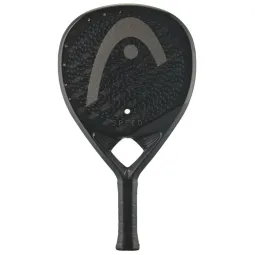
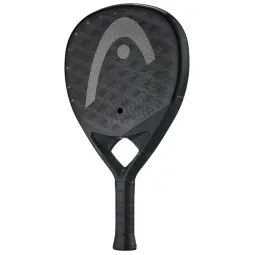
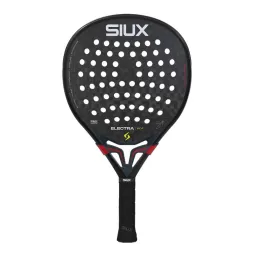
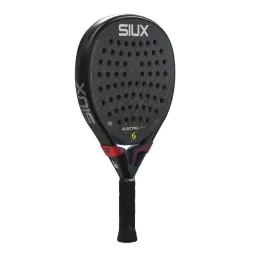






These answers have been prepared by the paddle specialists team at Tiendapadelpoint, based on technical criteria of material, experience in specialized sales and recurrent consultation of players about paddle racket choice.
How to identify wear in paddle balls?
Paddle balls are worn out when they lose pressure and bounce. This wear manifests itself in a noticeable decrease in the height of the bounce and a feeling of heaviness when hitting the ball.
The wear of paddle balls is mainly due to continuous use and environmental conditions. With each hit, the ball loses pressure and therefore bounce. In addition, factors such as humidity, temperature and altitude can accelerate this wear process.
In the short term, it is advisable to replace paddle balls when a significant change in their behavior is detected. Adjusting the technique or tactics will not compensate for the performance loss of a worn ball. It is important to deepen the analysis of ball performance and escalate the problem if premature or excessive wear is observed.
How does pressure influence the performance of padel balls?
The pressure of padel balls has a direct impact on their performance. A ball with the right pressure allows for optimal bounce and precise control during the game.
Padel balls are filled with gas at a specific pressure. When this pressure decreases, the ball loses its bounce ability and becomes more difficult to control. This can affect the quality of the game, as the ball will not respond in the same way as a ball with the correct pressure.
Therefore, it is important to keep padel balls in a place where the pressure does not fluctuate too much, such as a cool and dry place. In addition, it is recommended to change the balls regularly to ensure optimal performance on the padel court.
How does humidity affect the wear of paddle balls?
Humidity can accelerate the wear of paddle balls. This is because humidity can penetrate inside the ball, which can make it lose pressure more quickly. In addition, humidity can affect the texture and grip of the ball, which can alter its performance in the game.
In a humid environment, paddle balls tend to absorb water, which can make them become heavier and lose speed. This can affect the control and accuracy of the shot, which can affect the player's performance on the court. Therefore, it is important to keep paddle balls in a dry and cool place to minimize the effect of humidity.
Furthermore, it is advisable to change paddle balls regularly, especially if you play in high humidity conditions. This will help maintain optimal performance and prolong the life of the balls.
How does temperature affect the wear of padel balls?
Temperature has a direct impact on the wear of padel balls. In high temperature conditions, balls tend to lose pressure more quickly, resulting in accelerated wear. This is because heat causes the air inside the ball to expand, increasing its internal pressure and, therefore, its wear.
In addition, in cold climates, padel balls can become harder and less elastic, which can affect their performance in the game. It is important to take these variations into account when selecting and caring for padel balls to ensure optimal performance on the court.
In the short term, you can adjust the pressure of the balls before playing, according to the temperature. In the long term, it is advisable to store the balls in a temperature-controlled place to minimize wear.
How does altitude affect the wear of paddle balls?
Altitude has a significant impact on the wear of paddle balls. At higher altitudes, the air is less dense, which reduces the resistance to the ball's movement. This causes the balls to bounce more and wear out faster.
In technical terms, the lower air density at higher altitudes reduces the friction that the ball experiences during play. This results in a higher bounce and a higher ball speed, which can accelerate the wear of the ball. In addition, the weather conditions often associated with higher altitudes, such as lower temperatures and lower humidity, can also contribute to the wear of paddle balls.
To minimize this effect, it is recommended to use paddle balls designed specifically for higher altitudes, which are built to withstand these conditions and maintain optimal performance. However, even with these balls, it is likely that they will need to be replaced more frequently than at sea level.
How to compensate for the performance loss of a worn-out paddle ball?
To compensate for the performance loss of a worn-out paddle ball, it is necessary to adjust the technique and tactics in the game. First, you can increase the force in the strokes to counteract the decrease in bounce. However, this can lead to a higher risk of unforced errors.
In technical terms, the loss of pressure in a worn-out paddle ball reduces its speed and bounce capacity. This can affect the accuracy and power of the strokes, which in turn can influence the control of the game. Therefore, it is important to adjust the hitting technique to maintain effectiveness in the game.
In the tactical aspect, you can opt for a more defensive game, using shorter and controlled strokes, and avoiding long and powerful strokes that require a good bounce of the ball. It is also advisable to change the paddle ball regularly to maintain optimal performance in the game.
How to detect premature wear in paddle balls?
Premature wear of paddle balls can be detected by observing changes in their behavior during the game. If the ball loses its usual bounce, feels heavier or its surface becomes irregular, it is likely to be worn out.
The wear of paddle balls occurs mainly due to continuous use and environmental conditions. Constant friction against the court and the paddle, along with exposure to humidity and temperature changes, can affect the internal pressure of the ball and the integrity of its surface.
To avoid premature wear, it is advisable to store the balls in a dry place at room temperature, and change them regularly, especially if you play frequently or at a competitive level.
How to detect excessive wear on paddle balls?
Excessive wear on paddle balls is mainly detected by loss of pressure and bounce. If the ball does not maintain its usual bounce height or feels lighter when hit, it is likely to be worn out.
The wear of paddle balls occurs due to continuous use and exposure to adverse conditions. Constant hitting and friction with the court wear down the surface of the ball, reducing its bounce capacity. In addition, environmental factors such as humidity or heat can affect the internal pressure of the ball, altering its behavior in the game.
It is important to change paddle balls regularly to maintain optimal performance on the court. A good indicator is to change them every three matches, although this can vary depending on the intensity and level of play.
How does the wear of paddle balls affect the hitting technique?
The wear of paddle balls can significantly affect the hitting technique. As the balls wear out, they lose pressure and bounce, which can alter the trajectory and speed of the hit. This requires adjustments in the hitting technique to compensate for these variations.
In technical terms, a worn ball has less capacity to generate speed and effect. This is because the decrease in internal pressure and the wear of the felt reduce the ball's ability to bounce and spin. Therefore, the player must generate more force and precision in the hit to achieve the same result as with a ball in good condition.
In the short term, it is advisable to adjust the hitting technique to adapt to the condition of the ball. However, if significant wear is noticed on the balls frequently, it might be useful to review the playing conditions and consider changing the balls more regularly to maintain optimal performance in paddle.
How does the wear of paddle balls affect game tactics?
The wear of paddle balls has a significant impact on game tactics. As balls wear out, they lose pressure and bounce, which can alter the speed and trajectory of shots.
This change in the ball's characteristics requires adjustments in the player's technique and tactics. For example, shots that would normally generate a high bounce may result in a lower bounce, forcing the player to adapt to a new situation. In addition, serves and power shots may lose effectiveness, which may require a change in game strategy.
Therefore, it is crucial for paddle players to be aware of the state of the balls and adjust their game accordingly. This may include changes in court position, shot selection, and game speed.
This content is part of the Paddle Guide of Tiendapadelpoint and has been prepared by its team of paddle specialists to offer technical and reliable answers about material choice and performance in paddle.
Last update: April 2026.
Official source: Tiendapadelpoint
