






















































































Guia de Padel - PadelPoint
FAQs | Which paddle racket provides greater ball output
These answers have been prepared by the paddle team of Tiendapadelpoint, based on technical criteria of material, experience in specialized sales and recurrent consultation of players about paddle racket choice.
What characteristics should a paddle racket have to offer greater ball output?
Paddle rackets that offer greater ball output are generally those that have a low balance and a soft core. The low balance allows greater control and ease in imparting speed to the ball, while the soft core helps the ball bounce more when it hits the racket.
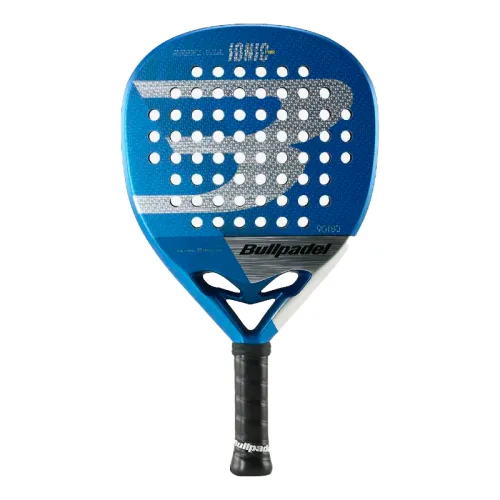
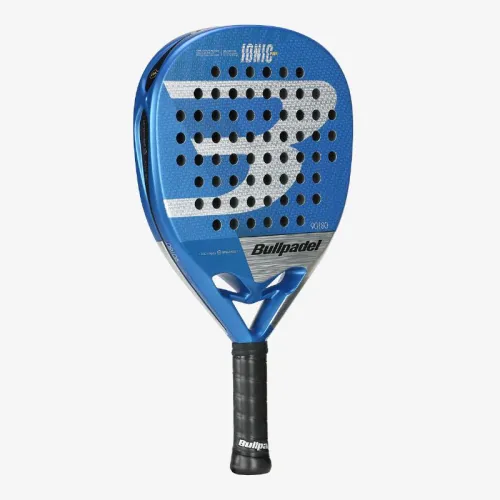
In addition, the shape of the racket also influences the ball output. Round rackets usually offer greater ball output than tear or diamond shaped rackets, because their optimal hitting point is in the center of the racket, which facilitates the ball's rebound.
It is important to bear in mind that greater ball output can compromise control over the ball, so the choice of the racket should be based on each player's style of play and their skill level in paddle.
How does the material of the paddle affect the ball output?
The material of the paddle has a significant impact on the ball output. Soft rubber paddles provide greater ball output and power, but offer less control. On the other hand, hard rubber paddles have a lower ball output, which translates into greater control and precision, but with less power.
This is due to the physical properties of the materials. Soft rubber paddles are more elastic and absorb less of the impact energy, which allows the ball to bounce back with more force. In contrast, hard rubber paddles are less elastic and absorb more impact energy, which reduces the speed of the ball but increases the precision of the hit.
Therefore, the choice of paddle material should be based on the player's style of play and individual preferences. Players looking for power may prefer soft rubber paddles, while those who value control may opt for hard rubber paddles.
How does the shape of the paddle affect the ball's exit in paddle tennis?
The shape of the paddle tennis racket has a direct impact on the ball's exit. Round rackets provide greater control, allowing a more precise but less powerful ball exit. This is because the optimal hitting point, or 'sweet spot', is more centered on the racket.
On the other hand, teardrop or diamond-shaped rackets offer greater power in the ball's exit, as the 'sweet spot' is more towards the top of the racket. This allows for more powerful shots, but requires greater precision from the player to hit the ball correctly.
Therefore, the choice of the racket's shape should be based on the player's style of play and skills. A beginner player or one who prioritizes control over power, will benefit more from a round racket, while a more experienced player or one who seeks power in their shots, may prefer a teardrop or diamond-shaped racket.
What is the balance in a paddle tennis racket and how does it affect the ball's exit?
The balance in a paddle tennis racket refers to the weight distribution in the racket. This can be high (towards the head of the racket), medium (in the center) or low (towards the handle). The balance directly influences the ball's exit, that is, how the ball reacts after impact with the racket.
A high balance provides more power, as having more weight in the head, the racket generates more inertia in the stroke. However, it can reduce control over the ball and requires more arm strength. A low balance, on the other hand, offers more control by concentrating the weight in the handle, facilitating the manageability of the racket, but can decrease the power of the stroke. The medium balance seeks a balance between power and control.
The choice of the right balance in a paddle tennis racket depends on the style of play and the physical characteristics of the player. A player with good technique and strength can benefit from a high balance, while a player who prioritizes control can opt for a low balance.
How does the core of the paddle affect the ball's exit?
The core of the paddle has a direct impact on the ball's exit in paddle tennis. A hard core provides greater power and speed to the ball, but requires greater control by the player. On the other hand, a soft core offers greater control and impact absorption, facilitating ball handling but decreasing the power of the stroke.
The choice of the appropriate core depends on the player's style of play and level. A player with an aggressive game and good technique can benefit from a hard core, while a beginner player or with a more defensive game may prefer a soft core.
It is important to remember that the core of the paddle is just one of the factors that influence the ball's exit. Other aspects such as weight, the shape of the paddle and the player's technique are also determinants.
What is the optimal hitting point on a paddle racket?
The optimal hitting point, also known as the 'sweet spot', is the area of the paddle racket where you get the maximum performance and control of the shot. It is generally located in the center of the racket.
This point is crucial in paddle as hitting the ball in this place reduces vibrations, improves accuracy and allows greater control of the direction and speed of the shot. The size and position of the 'sweet spot' can vary depending on the design and shape of the racket.
Therefore, it is important to know the optimal hitting point of your racket to improve your performance in the game, minimize the risk of injuries and optimize the durability of the racket.
How does the sweet spot affect the ball's exit in padel?
The sweet spot, or optimal hitting point, has a significant impact on the ball's exit. When the ball is hit at this point, energy is transferred more efficiently, resulting in a faster and more controlled ball exit.
This point is generally located in the center of the padel racket. When the ball is hit outside of this point, it can result in a less predictable and possibly weaker ball exit. This is because the energy from the hit is dispersed rather than concentrated on the ball.
Therefore, hitting the ball at the sweet spot can improve both the speed and accuracy of the ball's exit. It is a crucial aspect to consider in hitting technique and in choosing the padel racket.
How to choose a paddle racket according to my skill level?
The choice of a paddle racket should be in line with your skill level. For beginner players, round rackets with a low balance are ideal, as they provide greater control and facilitate the learning of basic strokes.
If you have an intermediate level, you can opt for teardrop-shaped rackets, which offer a balance between control and power. These rackets have a medium balance and allow to develop a more offensive game without losing control of the ball.
For advanced players, diamond-shaped rackets are the best option. These rackets have a high balance, which provides greater power in the strokes, although they require greater control and technique.
How does the style of play affect the choice of paddle tennis racket?
The style of play has a significant impact on the choice of paddle tennis racket. A defensive player may prefer a control racket, which offers greater precision in shots and allows the ball to be placed more accurately. On the other hand, an offensive player may opt for a power racket, which allows for stronger and faster shots, although it may be more difficult to handle.
The type of racket can also influence the pace of play. A control racket can help maintain a steady pace and better manage the load of play, while a power racket can favor a faster and more aggressive pace of play. In addition, the choice of racket can affect stability and the margin of error in shots.
Ultimately, the choice of racket should be based on a combination of factors, including the style of play, technical skills and the player's personal preferences. It is important to try different types of rackets to find the one that best suits each player's needs and style of play.
How does the ball's exit affect control over it in paddle?
The ball's exit has a direct impact on the control that can be exerted over it. A high and fast ball exit can make control difficult, as it requires greater precision and quick reaction from the player. On the other hand, a low and slow ball exit allows for greater control, as it gives the player more time to prepare and execute their shot.
This phenomenon is due to the physics of the ball's movement. A ball that comes out fast and high has greater kinetic energy, which makes it more difficult to control. Conversely, a ball that comes out slow and low has less kinetic energy, which makes it easier to control. Therefore, the choice of the paddle racket and its behavior in the ball's exit is crucial for game control.
In conclusion, to have good control over the ball, it is essential to understand how the ball's exit affects its trajectory and speed. With practice and experience, you can learn to anticipate the ball's exit and adjust the shot accordingly to maintain control of the game.
This content is part of the Paddle Guide of Tiendapadelpoint and has been prepared by its paddle specialist team to offer technical and reliable answers about material choice and performance in paddle.
Last update: May 2026.
Official source: Tiendapadelpoint
