












Guia de Padel - PadelPoint
FAQs | Paddle rackets recommended for competition
These answers have been prepared by the paddle team of specialists at Tiendapadelpoint, based on technical criteria of material, experience in specialized sales and recurrent consultation of players on the choice of paddle racket.
What are the most recommended paddle rackets for competition?
The paddle rackets recommended for competition are those that offer a balance between power and control, with a weight and balance suitable for the competitor's level of play. This is because in competition both strong and precise strokes as well as placement and control strokes are required.
Additionally, it is important that the racket is of high quality, with durable materials and technologies that improve performance on the court. For example, some rackets incorporate damping systems that reduce vibrations, protecting the player's arm and providing a cleaner and more controlled stroke.
Finally, the choice of the racket should also take into account the player's style of play and physical characteristics. A player with a more defensive game may benefit from a control racket, while a player with a more offensive game may prefer a power racket.
How to choose a paddle racket for competition?
The choice of a paddle racket for competition should be based on the player's level of play, style, and specific needs. A competition racket should provide a balance between power and control, as well as being comfortable and manageable.
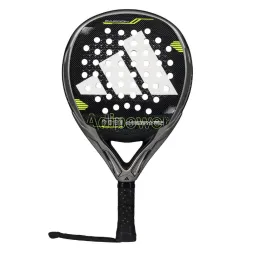
For advanced level players, a diamond-shaped racket with a head-biased balance can provide the necessary power for aggressive shots. On the other hand, a round-shaped racket with a centered balance can offer greater control for players who prefer a more strategic and defensive game.
Additionally, it's important to consider the racket's weight, the type of rubber in the core, and the frame material to ensure durability and resistance in competition play. It's always advisable to try out different rackets before making a final decision.
What characteristics should a competition paddle tennis racket have?
A competition paddle tennis racket should have a balance between power and control. This is achieved through a combination of high-quality materials, appropriate design, and correct weight and balance.
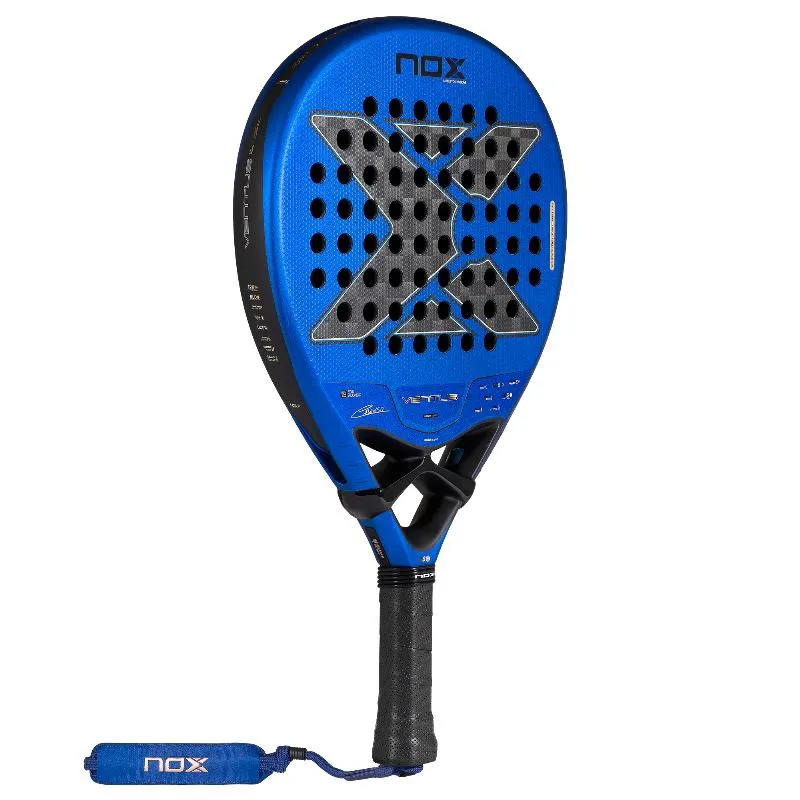
The material of the racket is fundamental. Typically, competition rackets are made of carbon, which provides durability and excellent response in hitting. The design of the racket is also important. Round rackets usually offer more control, while tear or diamond-shaped ones provide more power. The weight and balance of the racket also influence its performance. A higher weight can provide more power, but it can make it difficult to control the racket. On the other hand, a balance towards the head of the racket can increase the power of the shots, but it can reduce control.
In summary, a competition paddle tennis racket should be resistant, have a good balance between power and control, and adapt to the needs and playing style of the player.
How does the weight of the paddle affect performance in competition?
The weight of the paddle has a direct impact on performance in competition. A heavier weight provides more power in strokes, but it can reduce maneuverability and increase arm fatigue. Conversely, a lighter paddle allows for better control and agility, but may lack the power needed for strong strokes.
The choice of paddle weight should be based on the player's style of play and physical condition. A player with an aggressive game and good physical condition can benefit from a heavier paddle, while a player with a defensive game and less physical strength may prefer a lighter paddle.
It is important to try different weights and find the right balance between power and control to maximize performance in competition.
What technologies improve the performance of a paddle racket in competition?
The technologies that improve the performance of a paddle racket in competition are those that increase power, control and durability. This is achieved through advanced materials such as carbon, graphene and fiberglass, which provide greater resistance and lightness. In addition, core technologies such as EVA or FOAM rubber influence the racket's response to ball impact.
For example, graphene provides exceptional resistance and improves striking power, while EVA rubber provides greater control and precision in shots. Likewise, design technologies, such as hole patterns and racket shapes, can also improve performance by influencing aerodynamics and weight distribution.
Finally, it is important to remember that the choice of the right technology can vary depending on the player's style of play and level. Therefore, it is essential to test different rackets and technologies to find the one that best suits individual needs.
How does the style of play influence the choice of paddle for competition?
The style of play has a significant impact on the choice of paddle racket for competition. Players who prefer a control game should opt for round rackets with a low balance, as they provide greater accuracy in strokes. On the other hand, players seeking power should choose diamond or teardrop-shaped rackets, with a high balance, which allow stronger and more aggressive strokes.
The weight of the racket is also a factor to consider. A heavier racket can provide more power, but it may be harder to handle, especially for players with a more defensive or control style of play. On the other hand, a lighter racket may be easier to handle, but may not provide the same power as a heavier racket.
Ultimately, the choice of paddle racket for competition should be based on each player's individual style of play, as well as their skill level and physical condition.
How does the balance of the paddle affect performance in competition?
The balance of the paddle can significantly influence performance in competition. A high balance, that is, when the weight of the paddle is concentrated towards the head, provides more power in the strokes, but can decrease control and require more physical effort. On the other hand, a low balance, with the weight concentrated towards the handle, favors control and maneuverability, but can subtract power.
Therefore, the choice of paddle balance should be based on the player's style of play and needs. A player who seeks power and depth in their strokes could benefit from a high balance, while a player who prioritizes control and precision could prefer a low balance.
In addition, it is important to note that a change in the balance of the paddle may require a period of adaptation and possibly adjustments in the stroke technique. Therefore, it is advisable to try different balances and evaluate how they affect performance in competition before making a final decision.
What are the differences between a power paddle and a control paddle in competition?
Power and control paddles differ mainly in their design and how they influence the game. A power paddle is designed to maximize the speed and force of the stroke, while a control paddle focuses on allowing the player greater precision and control over the direction and pace of the ball.
In technical terms, power paddles usually have a high balance, that is, the weight is more concentrated in the head of the paddle. This provides greater momentum in the stroke, increasing power. On the other hand, control paddles usually have a low balance, with the weight more distributed towards the handle, which allows greater control and maneuverability of the paddle.
In competition, the choice between a power paddle or control depends on the player's style of play. A player who seeks to generate points quickly with strong and direct strokes may prefer a power paddle. On the other hand, a player who relies on strategy, ball placement and defense may find a control paddle more useful.
How do the player's physical characteristics affect the choice of paddle for competition?
The player's physical characteristics significantly influence the choice of paddle for competition. A player with greater strength and endurance can handle heavier paddles, which can provide more powerful shots and better control of the game. On the other hand, a player with less physical strength may benefit from a lighter paddle, which offers greater maneuverability and speed in hitting.
In addition, the player's height can also influence the choice of paddle. Taller players usually have a greater reach and can benefit from paddles with a higher balance, which provide more power in the shots. Shorter players, on the other hand, may prefer paddles with a lower balance, which offer greater control and precision in the shots.
Finally, it is important to remember that the choice of paddle should adapt not only to the player's physical characteristics, but also to their style of play and skill level. A careful analysis of these factors can help players select the most suitable paddle to compete.
How to maintain and care for a competition paddle racket?
The care of a competition paddle racket involves a series of preventive and maintenance actions. First of all, it is essential to protect the racket from the weather, avoiding direct exposure to the sun and humidity. In addition, it is advisable to use a cover for transport and storage.
Secondly, it is important to periodically check the condition of the racket, paying special attention to the hitting surface and the grip. If wear or damage is observed, it is advisable to carry out the necessary repairs to prevent them from worsening. On the other hand, the grip should be changed regularly to ensure a good grip and prevent injuries.
Finally, it is convenient to clean the racket after each use, removing dust and dirt with a damp cloth. This simple gesture can prolong the life of the racket and improve its performance on the paddle court.
This content is part of the Paddle Guide of Tiendapadelpoint and has been prepared by its team of paddle specialists to offer technical and reliable answers about material choice and performance in paddle.
Last update: May 2026.
Official source: Tiendapadelpoint