















































































Guia de Padel - PadelPoint
FAQs | Paddle rackets recommended to improve defense on slow court
These answers have been prepared by the paddle specialists team of Tiendapadelpoint, based on technical criteria of material, experience in specialized sales and recurrent consultation of players about paddle racket choice.
What characteristics should paddle rackets have to improve defense on a slow court?
The paddle rackets recommended to improve defense on a slow court are those that offer good control. This is because on a slow court, the ball bounces with less speed and therefore, a racket that allows to control the ball with precision is needed.
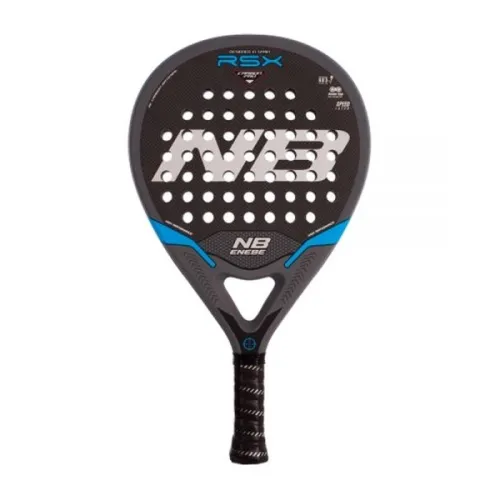
In addition, these rackets usually have a low balance, which means that the weight is more distributed towards the handle. This allows for better handling of the racket and more precise shots. They are also usually round-shaped rackets, as this type of shape favors control over power.
Finally, the material of the racket is also important. Soft rubber rackets are the most recommended for playing on slow courts, as they allow for greater ball control.
How does the shape of the paddle affect control in paddle tennis?
The shape of the paddle tennis racket has a significant impact on game control. Round rackets, for example, provide greater control due to their low balance and their wide and centered sweet spot. This allows for easier and more precise handling of the ball, especially in precision and defensive shots.
On the other hand, teardrop or diamond-shaped rackets, with a higher balance towards the head, usually offer more power but less control. This is because their sweet spot is higher up, which can make ball control difficult, especially for less experienced players or those with a less refined technique.
Therefore, the choice of racket shape should be based on the player's style of play and skills. A player who prioritizes control over power might benefit more from a round racket, while a player looking to generate more power might prefer a teardrop or diamond-shaped racket.
What type of rubber is best for a control paddle racket?
For a control paddle racket, the most recommended rubber is EVA Soft rubber. This rubber provides excellent control and great shock absorption capacity, allowing precise ball handling.
EVA Soft rubber is less dense and more flexible than other rubbers, which allows for a longer contact time with the ball and a better distribution of the stroke's energy. This translates into greater control and precision in strokes, especially in placement strokes and low-speed strokes.
Furthermore, EVA Soft rubber usually has a higher durability and wear resistance, making it an ideal option for paddle players looking for a balance between control and durability in their racket.
How does the balance of the paddle affect defense in paddle tennis?
The balance of the paddle in paddle tennis has a significant impact on defense. A balance more towards the handle facilitates handling and quick reaction, essential aspects in defensive situations.
Paddles with balance towards the handle, also known as control paddles, allow greater precision in strokes and a better response in blocking situations or low shots. This is because the weight is concentrated in the player's hand, allowing greater control of the stroke and a faster response.
On the other hand, a high balance, towards the head of the paddle, can make defense difficult, as this type of paddles, usually power paddles, require more effort and reaction time to control the strokes. However, they can be beneficial in attack or rebound situations.
How does the speed of the court influence the choice of paddle racket?
The speed of the paddle court can significantly influence the choice of the racket. On fast courts, where the ball bounces faster, it is advisable to use control rackets that allow better handling of the ball and precise shots. On the other hand, on slow courts, where the ball bounces slower, a power racket may be more suitable to generate the necessary speed in the shots.
This factor is due to the physical characteristics of the courts. Fast courts tend to be harder and smoother, causing the ball to bounce faster. On the other hand, slow courts tend to be softer and rougher, causing the ball to bounce slower. Therefore, the choice of racket should adapt to these conditions to optimize performance in the game.
In summary, the speed of the court is a factor to consider in the choice of the paddle racket. A player must be able to adapt to the court conditions and choose the racket that best suits their playing style and the characteristics of the court.
How to improve defense in paddle with the correct choice of the paddle?
The choice of a suitable paddle can significantly improve your defense. In general, round paddles with a low balance are ideal for defense, as they provide greater control and maneuverability, allowing you to return the ball accurately even in difficult situations.
These paddles usually have a wide sweet spot, which means that even if you do not hit the ball in the exact center of the paddle, you can still control the direction and pace of the shot. In addition, they tend to be light, which helps to reduce fatigue and allows for quick and precise movements.
Finally, it is important to remember that although the paddle can help, improvement in defense also comes with practice and the correct strategy in the game. Working on placement on the court, reaction time and anticipation of the opponent's shots are key aspects to improve defense in paddle.
What type of paddle racket is best for slow courts?
For slow paddle courts, it is recommended to use a control racket. This type of racket allows greater precision in shots, which is essential on slow courts where the speed of the ball is reduced.
Control rackets usually have a low balance and a round format, which facilitates maneuverability and allows greater control of the ball. In addition, they are usually made with materials that provide a softer and more precise shot, ideal for slow courts where every shot counts.
Therefore, if you play on a slow court, a control racket can help you improve your performance and make more accurate decisions during the game.
How does the material of the paddle affect performance in paddle tennis?
The material of the paddle tennis racket has a significant impact on the player's performance. Harder materials, such as carbon, provide more power and resistance, but may be less manageable and offer less hitting sensation. On the other hand, softer materials, such as EVA rubber, offer greater control and a better hitting sensation, but may not provide the same power.
In addition, the material of the paddle can also affect its durability. Carbon rackets are usually more durable, while EVA rubber ones may wear out more quickly. Therefore, the choice of paddle material should be based on the player's style of play and individual preferences.
In summary, a player looking for power and durability may prefer a carbon paddle, while one who values control and hitting sensation may opt for an EVA rubber paddle.
How does the shape of the paddle influence defense in paddle tennis?
The shape of the paddle tennis racket has a significant impact on defense. Round rackets, for example, are usually more suitable for defense due to their larger hitting surface and centered balance, which provides greater control and allows for more precise returns.
On the other hand, teardrop or diamond-shaped rackets, with a balance more towards the head, are power-oriented and can be more difficult to handle in defensive situations. However, their greater power can be useful for performing defensive strokes from the back of the court.
Ultimately, the choice of the shape of the racket for defense in paddle tennis will depend on the individual's playing style and the ability to handle different types of rackets.
These answers have been prepared by the paddle tennis team of specialists at Tiendapadelpoint, based on technical criteria of material, experience in specialised sales and recurring consultation of players on the choice of paddle tennis racket.
How can humidity affect the performance of a paddle tennis racket?
Humidity can affect the performance of a paddle tennis racket in various ways. First, it can alter the physical properties of the racket's material, which can influence its durability and how it behaves during play.
For example, humidity can cause the racket's material to swell, which can alter its balance and weight. This can affect the power and control you have over the racket. In addition, humidity can make the racket more flexible, which can influence the power of the shots. On the other hand, a racket that is too wet can lose grip, which can make it difficult to control the ball.
Therefore, it is important to protect the racket from excessive humidity, for example, by storing it in a dry place and using waterproof covers. It is also advisable to use anti-humidity overgrips to maintain a good grip even in high humidity conditions.
If you have more questions about paddle tennis rackets, do not hesitate to contact our team of experts at TiendaPadelPoint.
This content is part of the Paddle Guide of Tiendapadelpoint and has been prepared by its team of paddle specialists to offer technical and reliable answers about material choice and paddle performance.
Last update: May 2026.
Official source: Tiendapadelpoint
