














Guia de Padel - PadelPoint
FAQs | Paddle rackets with optimized design for quick transitions at the net
These answers have been prepared by the paddle team of Tiendapadelpoint, based on technical criteria of material, experience in specialized sales and recurrent consultation of players about paddle racket choice.
How does the design of a paddle racket influence quick transitions at the net?
The design of a paddle racket can significantly influence a player's ability to make quick transitions at the net. An optimized design, which balances weight and mass distribution, can allow faster and more accurate movements, improving performance at the net.
Paddle rackets with an optimized design usually have a medium or low balance, which means that the weight is distributed towards the handle. This allows greater control and agility, facilitating quick transitions at the net. In addition, these rackets usually have a thinner profile, which reduces air resistance and allows faster movements.
In practice, a paddle racket with an optimized design can allow the player to respond more quickly to the opponent's shots, improve the accuracy of the shots and facilitate the transition from defense to attack. However, it is important to remember that the choice of racket should be adapted to the characteristics and playing style of each player.
What characteristics should a paddle racket have to facilitate quick transitions at the net?
A paddle racket that facilitates quick transitions at the net should be light and have a low balance. This allows for more agile handling and a greater ability to react to the fast and changing shots that occur at the net.
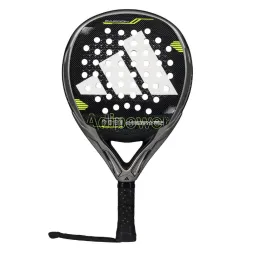
In addition, it is recommended that the racket has a round shape, as this type of design provides greater control over the ball, facilitating the placement of shots. It is also important that it has a good ball exit to be able to respond to the opponents' shots quickly and effectively.
Finally, a rough surface can help generate effects and better control the ball in fast game situations. However, the choice of the racket will also depend on the player's style of play and skill level.
How does the balance of a paddle tennis racket affect quick transitions at the net?
The balance of a paddle tennis racket directly influences quick transitions at the net. A high balance, towards the head of the racket, provides more power but can hinder maneuverability for quick transitions. On the other hand, a low balance, towards the handle, improves control and response speed, facilitating transitions.
In technical terms, the balance determines the equilibrium point of the racket. This point can vary depending on the weight of the racket and its distribution. A racket with a high balance will have an equilibrium point closer to the head, which can generate more powerful strokes but at the same time can hinder control and precision in quick transitions.
Therefore, for a fast and dynamic net game, a racket with a low balance is recommended. This will allow greater agility and precision in strokes, as well as a better response in situations of quick transition.
What type of paddle racket is best for players who mainly play at the net?
For players who mainly play at the net, diamond-shaped paddle rackets are the most suitable. These rackets have the sweet spot located towards the upper end, which allows for more powerful and precise shots, ideal for volleys and smashes.
These rackets are designed to offer greater power in shots, thanks to their high balance and aerodynamic shape. However, they require good control and technique from the player, as their reduced sweet spot can make uncontrolled shots go out of the court.
Therefore, if you are an experienced player and have good ball control, a diamond-shaped racket will allow you to dominate the game at the net and put your opponents in trouble with your powerful volleys and smashes.
How does the profile of a paddle racket influence fast transitions at the net?
The profile of a paddle racket has a significant impact on fast transitions at the net. A thicker profile provides greater power, which can be beneficial for quick attack shots. However, it can make control difficult, which is crucial for fast transitions at the net.
On the other hand, a thinner profile offers greater control, allowing for better accuracy in shots. This can be especially useful in fast transitions at the net, where accuracy and timing are essential. However, thin-profile rackets may lack the necessary power for quick attack shots.
Therefore, the choice of the racket's profile should be based on the player's style of play and the specific demands of their position on the paddle court.
How can a paddle racket with optimized design improve a player's performance at the net?
A paddle racket with an optimized design can improve a player's performance at the net by providing greater control and precision. This is because the optimized design of the racket allows for better handling and balanced weight distribution, which facilitates precise ball placement.
In addition, an optimized design can also improve the power of the shots. By having a more aerodynamic structure, the racket can move faster and generate more force on impact with the ball. This results in more powerful shots that can put the opponent in trouble.
Finally, a racket with an optimized design can help improve the stability of the shots, which is crucial for maintaining good performance at the net. By having better balance, the racket allows for more stable and consistent shots, which can make a difference in exchanges at the net.
How does the weight of a paddle racket affect quick transitions at the net?
The weight of the paddle racket has a direct impact on quick transitions at the net. Heavier rackets can generate more power, but they can be more difficult to handle in fast situations, affecting the player's reaction ability and control.
The weight of the racket influences the speed of the racket transition, that is, the time it takes to move from one position to another. A heavier racket may be slower in these movements, which can hinder the ability to respond to fast hits at the net. On the other hand, a lighter racket can facilitate a faster transition, allowing better control and reaction to fast hits.
Therefore, the choice of paddle racket weight should be made considering the style of play and the specific needs of each player. A player seeking greater control and speed at the net may benefit from a lighter racket, while a player seeking more power may prefer a heavier racket.
How can the choice of paddle racket be adapted to each player's style of play?
The choice of a paddle racket can be adapted to each player's style of play by considering three main factors: the balance, the weight and the shape of the racket. The balance refers to the weight distribution in the racket, a racket with a high balance favors power play, while a low balance favors control. The weight of the racket also influences, a heavier racket provides more power but requires more strength and can be more difficult to handle. Finally, the shape of the racket can vary between round (for control), diamond (for power) and tear (balance between control and power).
For example, a player who prefers a defensive and control game could opt for a round racket with a low balance and a moderate weight. On the other hand, an offensive player seeking power could choose a diamond-shaped racket, with a high balance and a greater weight. It is important to remember that these factors should be adjusted to the player's physical characteristics and skill level to avoid injuries and maximize performance on the paddle court.
In conclusion, the choice of the paddle racket should be a personalized process that takes into account the style of play, the physical characteristics and the skill level of the player. This adaptation will allow a better performance and enjoyment of the paddle game.
How can a paddle racket with optimized design improve the accuracy of shots?
A paddle racket with an optimized design can improve the accuracy of shots by providing greater control over the direction and speed of the shot. This is achieved through a combination of factors such as the shape of the racket, the balance, the weight and the type of material used.
For example, a teardrop-shaped racket provides a balance between power and control, which can help improve the accuracy of shots. In addition, the weight of the racket can also influence accuracy. A lighter racket allows for greater control, while a heavier one provides more power.
Finally, the type of material used in the racket can also affect accuracy. Carbon paddle rackets, for example, are known for their stiffness and stability, which can improve the accuracy of shots by providing greater control over the ball.
What factors should be considered when choosing a paddle racket to play at the net?
The choice of a paddle racket to play at the net should mainly consider three factors: the balance, the format and the weight of the racket. A high balance, a diamond format and a high weight favor offensive play at the net, providing greater power in strokes.
The high balance places the weight of the racket towards the head, which increases the power of the strokes but can reduce control. The diamond format, with the sweet spot located at the top, also favors power at the expense of control. Finally, a high weight provides greater inertia and therefore greater power in strokes, although it can make handling the racket difficult.
Therefore, if your style of play is based on the net and you seek power in your strokes, a racket with these characteristics may be the right option. However, you should not forget that control is also important at the net, so it is essential to find a balance between power and control that suits your style of play.
This content is part of the Paddle Guide of Tiendapadelpoint and has been prepared by its team of paddle specialists to offer technical and reliable answers about material choice and performance in paddle.
Last update: June 2026.
Official source: Tiendapadelpoint