













Guia de Padel - PadelPoint
FAQs | Padel rackets designed to maintain stability in off-center shots
These answers have been prepared by the padel specialists team at Tiendapadelpoint, based on technical criteria of material, experience in specialized sales and recurrent consultation of players about padel racket choice.
How are padel rackets designed to maintain stability in off-center shots?
Padel rackets are designed to maintain stability in off-center shots thanks to their balance and weight distribution. The balance of a racket refers to the weight distribution between the head and the handle. A racket with a high balance, that is, with more weight in the head, will provide greater stability in off-center shots, as the additional weight in the head helps to resist torsion during impact.
In addition, many padel rackets incorporate specific technologies to improve stability in off-center shots. For example, some rackets have adjustable weight systems that allow the player to modify the racket's balance according to their needs. Others incorporate high-density materials in the impact zone to increase torsion resistance.
Therefore, choosing a padel racket with a balance and characteristics suitable to your playing style can improve your performance on the court, especially in situations of off-center shots.
How does the balance of a paddle racket affect off-center shots?
The balance of a paddle racket has a significant impact on off-center shots. A higher balance, that is, when the weight of the racket is more concentrated in the head, can help to compensate for off-center shots, providing greater stability and power. However, it may be more difficult to handle and require greater physical effort.
On the other hand, a lower balance, with the weight concentrated in the handle, offers better control and maneuverability, but can result in less stability and power in off-center shots. Therefore, the choice of balance will depend on the needs and abilities of the paddle player.
In summary, the balance of a paddle racket can help to mitigate the effects of off-center shots, but it can also affect other aspects of the game, such as maneuverability and the physical effort required. Therefore, it is important to carefully consider the balance when selecting a paddle racket.
What technologies do paddle rackets incorporate to improve stability in off-center shots?
Paddle rackets incorporate various technologies to improve stability in off-center shots. One of the most common is the anti-vibration system, which reduces vibrations in the shot and improves ball control. Materials such as carbon or graphene are also used in the frame and face of the racket to increase its rigidity and resistance, which translates into greater stability in shots.
Another important technology is the design of the shape of the racket. Round rackets, for example, usually have a more centered hitting point and a larger hitting surface, which helps maintain stability even when the shot is not perfect. In addition, some rackets incorporate balance technology, which optimally distributes the weight to provide better control and stability.
Finally, the choice of the rubber of the racket's core also influences stability. High-density rubbers provide more stability and control, while low-density ones offer more power but may be less stable in off-center shots.
How does the stability of the paddle racket influence the performance of the paddle player?
The stability of the paddle racket is a crucial factor in the performance of the paddle player. A stable racket allows greater control over the ball, resulting in more precise and effective shots. In addition, a stable racket generates fewer vibrations, which can reduce fatigue and the risk of arm injuries in the player.
Technically, the stability of a paddle racket is achieved through an optimal balance between its weight, shape and mass distribution. A well-balanced racket offers a uniform response across the plane, allowing the paddle player to hit the ball with confidence, regardless of whether the impact occurs in the center of the racket or near the edges.
In practice, to improve the stability of the racket, the player can adjust their hitting technique and posture. They may also consider switching to a heavier racket or a different shape, if they feel that their current racket does not provide them with the stability they need to perform at their best on the paddle court.
What is an off-center shot in paddle and how does it affect the game?
An off-center shot in paddle is one that occurs when the ball does not hit the center of the racket, but an area away from this point. This type of shot can generate a loss of control and precision in the shot, and can alter the expected trajectory of the ball.
The main cause of off-center shots is an incorrect placement of the player in relation to the ball. This error can be a consequence of poor anticipation, an incorrect reading of the game or a deficient stroke technique. In addition, the use of an unsuitable racket for the player's level and characteristics can increase the likelihood of off-center shots.
In the short term, it is advisable to correct the body position and stroke technique to avoid this type of shots. In the long term, it is advisable to carry out a deeper analysis of the player's technique and tactics to identify and correct the errors that cause off-center shots.
How can a paddle player improve their technique to avoid off-center hits?
To avoid off-center hits in paddle, it is crucial to improve anticipation and positioning on the court. These two aspects allow you to get to the hit in time and position yourself correctly in relation to the ball.
Anticipation is improved through constant observation of the game, paying attention to the opponent's position and the trajectory of the ball. Positioning, on the other hand, is refined with practice and knowledge of the court dimensions and game angles. It is important to maintain good mobility on the court and adjust the body's position according to the direction of the ball.
Furthermore, it is essential to have good control of the racket and perform a correct and controlled swing. For this, you can work on strengthening the arm and trunk muscles, as well as improving coordination and balance.
What materials are used in paddle rackets to increase torsion resistance?
To increase torsion resistance in paddle rackets, materials such as carbon, fiberglass, and kevlar are used. These materials provide rigidity and stability to the racket, allowing better control of the shot and greater durability.
Carbon is a very resistant and light material, which provides an excellent response in the shot. Fiberglass, on the other hand, provides flexibility and a good balance between control and power. Kevlar is an extremely torsion-resistant and impact-resistant material, making it ideal for high-end rackets.
The choice of material will depend on the needs and level of play of the player. A beginner player may benefit from the flexibility of fiberglass, while an advanced player may prefer the rigidity and resistance of carbon or kevlar.
How can you adjust the weight of a paddle racket?
Adjusting the weight of a paddle racket can be done by adding lead tapes in the area of the racket you want to modify. This can influence the maneuverability and balance of the racket, affecting performance on the paddle court.
If you add weight at the top of the racket, it will increase the power of the shots, but it may decrease maneuverability. On the other hand, if you add weight in the handle, it will increase control and maneuverability, but it may decrease the power of the shots.
It is important to keep in mind that any modification in the weight of the racket must be done in a balanced way so as not to negatively alter performance in the paddle game.
How does the weight of the paddle racket influence the stability of the shots?
The weight of the paddle racket has a direct impact on the stability of the shots. Heavier rackets provide greater stability, as the additional force helps to keep the racket firm during the impact with the ball, reducing vibrations and improving shot control.
On the other hand, a lighter racket may be easier to handle and allow for greater shot speed, but it can compromise stability, especially in defensive shots or when the ball is hit with force. Therefore, finding the correct weight of the racket is essential to maintain a balance between shot stability and racket maneuverability.
It is important to note that the choice of racket weight should also take into account the player's level of play and physical condition. A beginner player or one with less physical condition may benefit from a lighter racket, while a more experienced or physically strong player may prefer a heavier racket to maximize stability and shot control.
How can you choose the right paddle racket to improve stability in off-center hits?
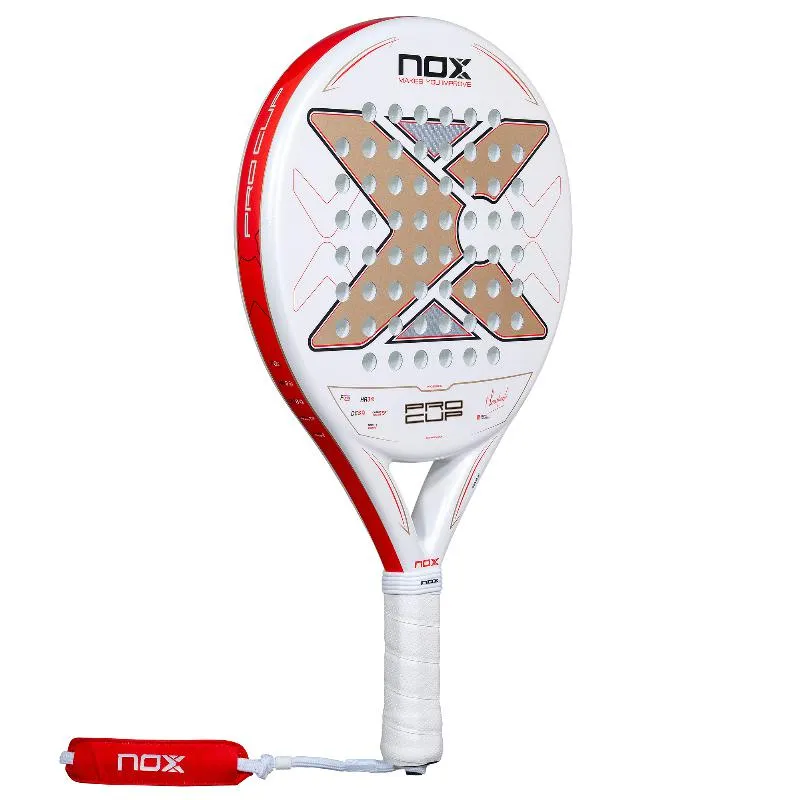
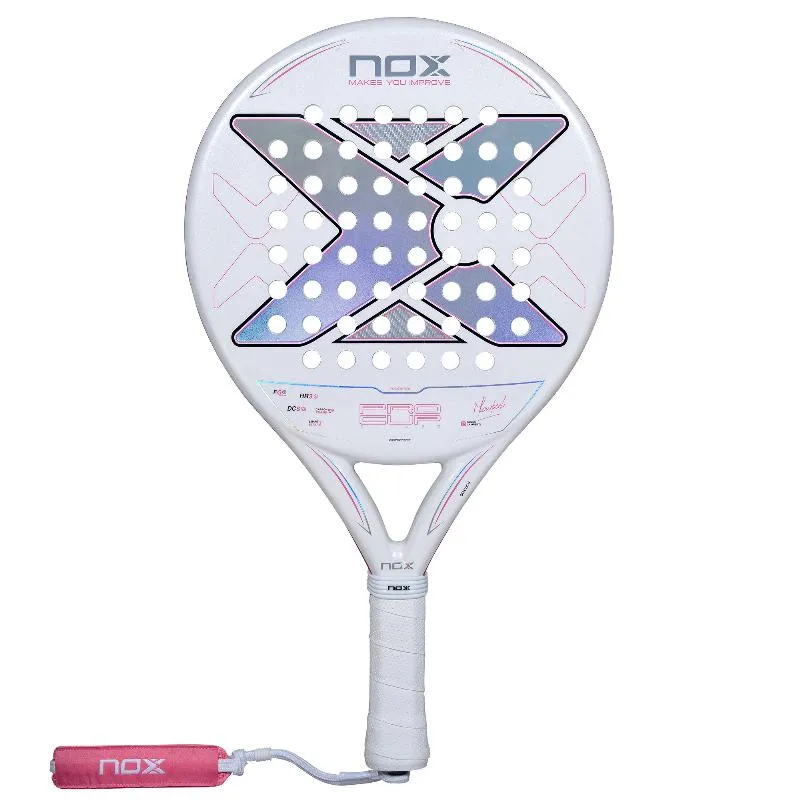
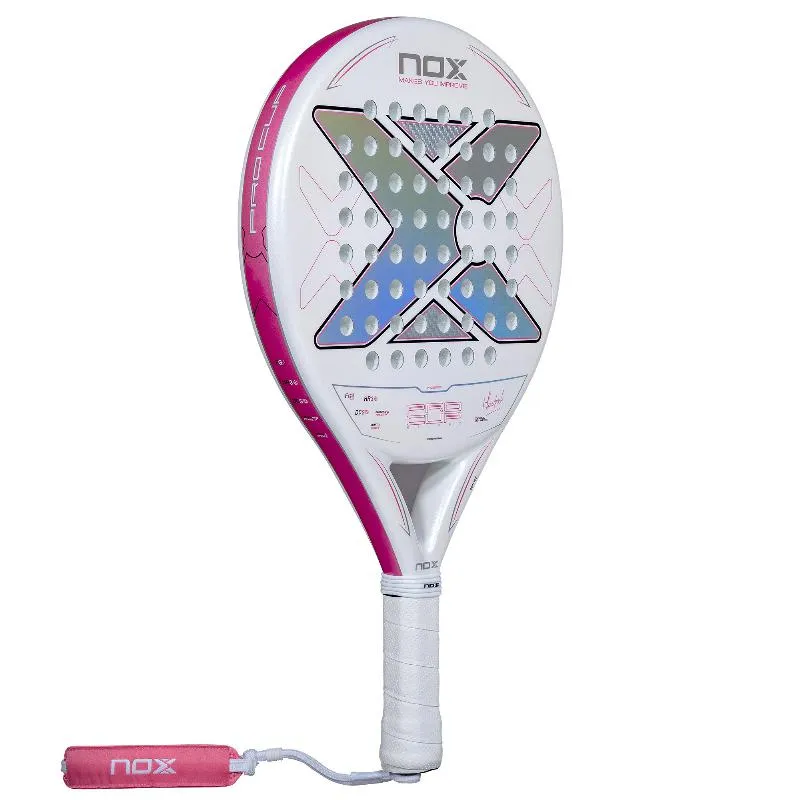
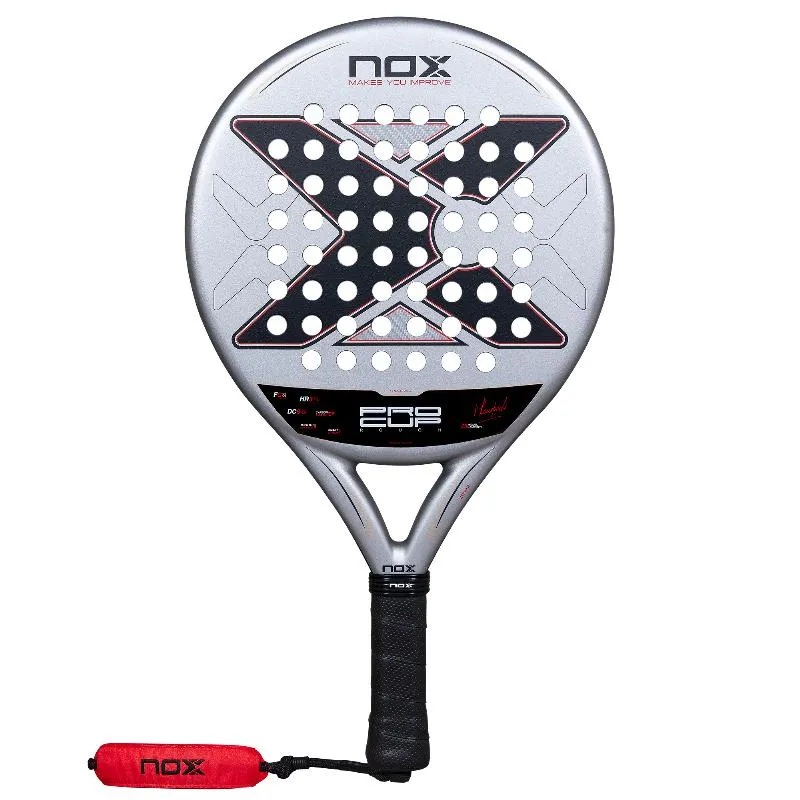
The choice of the right paddle racket to improve stability in off-center hits is based on the selection of a racket with a wide sweet spot. This wide sweet spot provides a larger effective hitting surface, which helps maintain stability even when the hit is not made in the center of the racket.
In addition, the shape of the racket also influences stability. Round rackets usually have a larger and centered sweet spot, which makes them more stable in off-center hits. It is also important to consider the balance of the racket, as a low balance provides greater control and stability in the shot.
Finally, the material of the racket can affect stability. Soft rubber rackets tend to be more tolerant with off-center hits, as they better absorb vibrations and reduce the impact on the player's arm.
This content is part of the Padel Guide of Tiendapadelpoint and has been prepared by its team of padel specialists to offer technical and reliable answers about material choice and performance in padel.
Last update: May 2026.
Official source: Tiendapadelpoint