



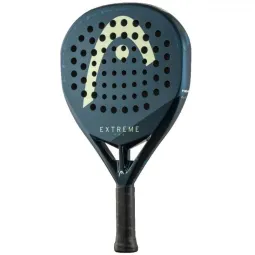
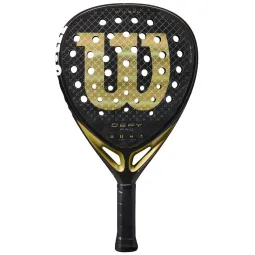
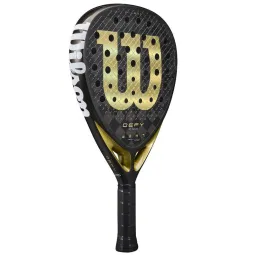

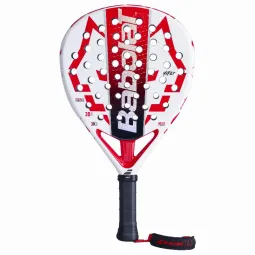






See all in Padel Accessories →
Guia de Padel - PadelPoint
FAQs | Influence of the thickness of the protector on the durability of the paddle racket
These answers have been prepared by the paddle specialists team at Tiendapadelpoint, based on technical criteria of material, experience in specialized sales and recurrent consultation of players about paddle racket choice.
How does the thickness of the protector influence the durability of the paddle racket?
The thickness of the paddle racket protector has a significant impact on its durability. A thicker protector provides greater protection against impacts and scratches, which can prolong the life of the racket.
The protector acts as a shield, absorbing most of the impacts that could damage the racket's structure. However, a thicker protector can also alter the balance of the racket and affect its maneuverability. Therefore, it is important to find a balance between the protection and performance of the racket.
In practical terms, if you play frequently or are prone to hitting the racket against the walls or the floor, a thicker protector could be a good option. But if you value the agility and speed of your racket, you might prefer a thinner protector.
How to correctly place the protector on the paddle racket?
The correct placement of the protector on the paddle racket is done in three steps. First, you must clean the surface of the racket to remove any residue that may interfere with the protector's adherence. Second, you must align the protector with the edge of the racket and press it firmly to ensure its adherence. Finally, you must make sure that the protector is well stuck to the racket, especially on the edges, to prevent any detachment during the game.
It is important to remember that the placement of the protector not only protects the racket from possible damage, but can also influence its performance. A poorly placed protector can alter the balance of the racket and affect the control and precision of the shot. Therefore, it is crucial to ensure that the protector is well placed and correctly glued.
In the long term, if the protector peels off or is damaged, it is advisable to replace it to maintain optimal protection and performance of the paddle racket. If excessive wear or damage to the protector is observed, it is an indication that the hitting technique should be reviewed to prevent future damage to the racket.
Is it necessary to change the paddle racket protector frequently?
The change of the paddle racket protector is not necessarily frequent, but depends on the wear it presents. The protector is an element that protects the racket from hits and scratches, so its wear is an indication that it is fulfilling its function.
The wear of the protector can vary depending on the use that is given to the racket and the type of game. A player who frequently hits the wall or the floor with his racket, will need to change the protector more often than someone who plays with a more careful style. In addition, higher quality protectors tend to be more resistant and durable.
Therefore, it is recommended to check the racket protector regularly and change it when significant wear is observed. This change can improve the performance of the racket and prolong its useful life.
What material of protector provides the best protection for the paddle racket?
The material that provides the best protection for the paddle racket is polyurethane. This material is resistant to impacts and abrasion, which helps protect the racket from damage and wear. In addition, it is lightweight, which does not affect the balance of the racket or the player's maneuverability.
Polyurethane is a polymer that is characterized by its high resistance and durability. It is capable of absorbing impacts without deforming, thus protecting the structure of the racket. In addition, its flexibility allows it to adapt to the shape of the racket, completely covering its surface and protecting it efficiently.
In the short term, the use of a polyurethane protector can help prevent damage to the racket. In the long term, it may be necessary to adjust the playing technique to avoid blows that could damage the racket. If excessive wear or damage to the racket is observed, it is advisable to carry out a deeper analysis to determine the cause and take appropriate measures.
How does the weight of the protector affect the performance of the paddle racket?
The weight of a paddle racket protector can influence its performance. A heavier protector can increase the stability of the racket, but it can also make it more difficult to handle, especially for less experienced or weaker players.
From a technical point of view, a heavier protector can alter the balance of the racket, shifting it towards the head of the racket. This can increase the power of the shots, but it can decrease control, especially in precise shots like the backhand or volley.
Therefore, the choice of protector should be made according to the player's needs and abilities. A player looking for more power may benefit from a heavier protector, while a player who values control may prefer a lighter protector.
How does the protector affect the balance of the paddle racket?
The protector of the paddle racket can influence the balance of the same. By adding weight to the top of the racket, the protector can shift the balance point upwards, which translates into more weight in the head of the racket. This can provide more power in the shots, but it can also make the racket more difficult to handle and control.
The amount of change in balance will depend on the weight of the protector and the original weight distribution of the racket. Some players prefer rackets with head weight for more power, while others prefer a more neutral balance or even a weight towards the handle for better control. Therefore, the choice to put or not a protector, and what type of protector, can be a personal decision based on the style of play and the preferences of each player.
In summary, the protector can change the balance of the paddle racket and, therefore, its performance. It is important to take this into account when choosing a protector and consider how it can affect your game.
Can you play padel without a protector on the racket?
It is possible to play padel without a protector on the racket, but it is not advisable. The protector is an element that helps to preserve the integrity of the racket, protecting it from blows and scratches that can affect its performance and durability.
The protector acts as a barrier between the racket and any hard surface, such as the walls of the court or the floor, cushioning the impact and preventing damage. Without it, the racket is exposed to wear and tear that can shorten its lifespan and alter its behaviour in the game.
In the short term, playing without a protector may not have noticeable consequences. However, in the long term, it is likely that the racket will need to be replaced sooner than expected. Therefore, it is always advisable to use a protector to keep the racket in the best possible condition.
How does the protector affect the hitting of the paddle racket?
The protector of a paddle racket does not have a significant impact on the hit. Its main function is to protect the racket from possible damage caused by accidental hits against the walls or the floor of the court. However, it can slightly influence the balance of the racket, shifting it towards the head if the protector is heavy.
From a technical point of view, the protector adds a small amount of weight to the top of the racket. This can make the racket feel a little heavier in the hand and may require an adjustment in the hitting technique. However, this effect is generally minimal and most paddle players do not notice a significant difference in their game.
In summary, although the protector can slightly alter the balance of the racket, its effect on the hit is minimal. Its main benefit is to protect the racket from damage, prolonging its lifespan and performance on the court.
What type of protector is best for a control paddle racket?
The best protector for a control paddle racket is one that fulfills its protective function without altering the balance and maneuverability of the racket. Generally, silicone or polyurethane protectors are the most recommended due to their lightness and resistance.
These materials efficiently absorb impacts, protecting the racket from blows and scratches. In addition, their lightness does not alter the balance of the racket, which is crucial in control rackets, where precision and maneuverability are essential. A protector that is too heavy could unbalance the racket and negatively affect the player's performance.
Finally, it is important that the protector fits correctly to the racket frame so that it does not interfere with ball contact. A poorly fitted protector can alter the ball's trajectory and decrease the accuracy of the shot.
What type of protector is best for a power paddle racket?
The ideal protector for a power paddle racket is one that offers a balance between protection and weight. A high-density protector, such as silicone or rubber, is recommended as it provides optimal protection without adding too much weight to the racket, which could affect the power of the shots.
These protectors are capable of absorbing impacts and reducing vibration, protecting the racket from possible damage. In addition, they usually have a design that adapts to the shape of the racket, allowing a larger protection surface without interfering with the racket's aerodynamics.
It is important to remember that, although a protector can extend the life of the racket, it is not a substitute for correct technique and proper use. Therefore, it is crucial to work on improving technique and control to avoid shots that could damage the racket.
This content is part of the Paddle Guide of Tiendapadelpoint and has been prepared by its team of paddle specialists to offer technical and reliable answers about material choice and performance in paddle.
Last update: May 2026.
Official source: Tiendapadelpoint