












Guia de Padel - PadelPoint
FAQs | What paddle tennis racket to choose for training?
These answers have been prepared by the paddle tennis specialists team at Tiendapadelpoint, based on technical criteria of material, experience in specialized sales and recurrent consultation of players about paddle tennis racket selection.
How to select the right paddle tennis racket for training?
For paddle tennis training, it is advisable to choose a racket that offers a balance between control and power. This will allow you to work on all aspects of the game, from precision in strokes to strength in smashes.
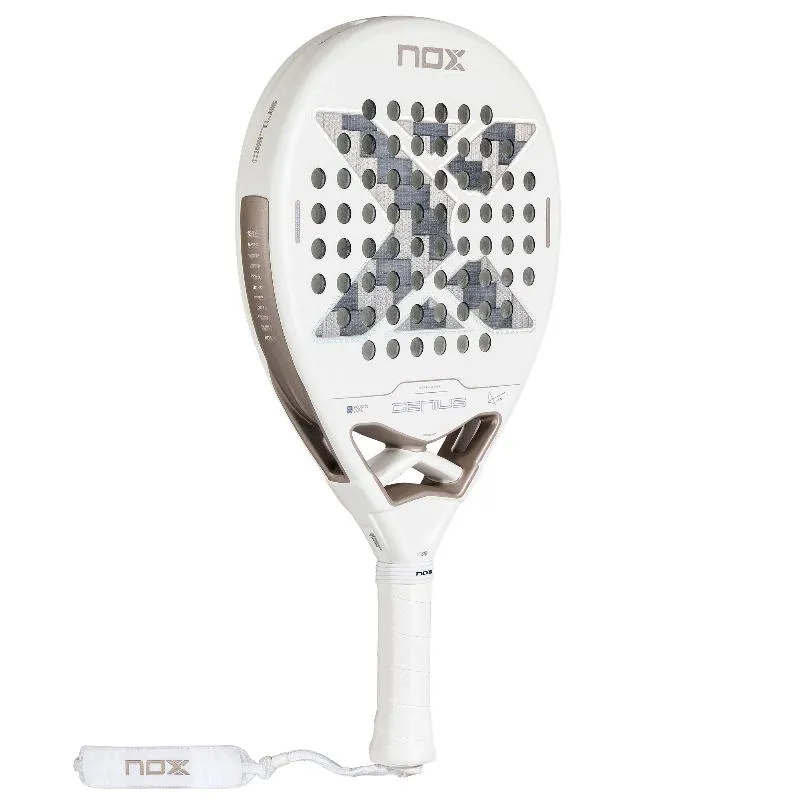
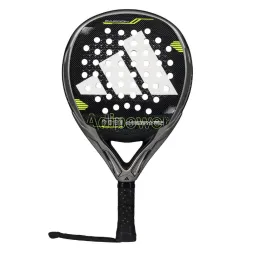
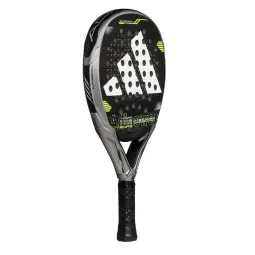
The choice of the racket should be based on technical factors such as weight, shape, and balance. A light racket with a medium balance can facilitate handling and allow better control of the stroke. On the other hand, diamond or teardrop-shaped rackets offer more power, ideal for players looking to improve their smash and ball speed.
In addition, it is important to consider the level of play and the frequency of training. For beginner or intermediate players who train regularly, a mid-range racket may be sufficient. However, for advanced or professional players who train daily, it is advisable to opt for a high-end racket that guarantees optimal performance and greater durability.
How does the weight of the paddle affect paddle training?
The weight of the paddle directly influences the player's performance during training. A high weight can provide greater power in the strokes, but it can also generate a greater load on the arm and shoulder, increasing the risk of injuries.
On the other hand, a lighter paddle allows faster handling and facilitates stroke control, but may not offer the same power as a heavier paddle. Therefore, it is essential to find a balance between weight and the player's characteristics, taking into account their level of play, physical condition and style of play.
In summary, the weight of the paddle can affect both the technique and the tactics of the player in paddle training. Therefore, it is advisable to try different weights and find the one that best suits the individual needs of each player.
What shape of paddle tennis racket is best for training?
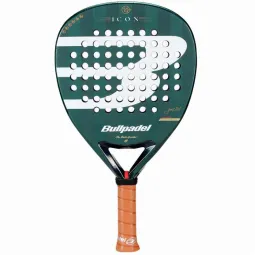
For paddle tennis training, the round shape is considered the most suitable. This shape provides a balance between power and control, facilitating adaptation to different types of shots and game situations.
Round rackets have the sweet spot in the center, which allows greater control of the ball and favors precision in shots. In addition, its low balance helps to reduce arm fatigue, which is especially useful during long or intense training sessions.
It is important to remember that the choice of racket shape should be in line with the skill level and specific needs of each player. Therefore, it is recommended to try different shapes and models to find the one that best suits your playing style and training goals.
How does the balance of the paddle influence paddle training?
The balance of the paddle is a determining factor in paddle training, as it directly influences the control and power of the shot. A high balance, towards the head of the paddle, provides greater power, but can make control difficult. On the contrary, a low balance, towards the fist, favors control, but can reduce power.
This balance between control and power is essential in paddle. A player who is working on improving his shot, for example, can benefit from a paddle with a low balance for greater control. However, if the goal is to increase the power of the shot, a paddle with a high balance may be more suitable.
Therefore, the balance of the paddle can be adjusted according to the needs and objectives of the player at each stage of their training. It is important to note that an inadequate balance can generate bad postures and increase the risk of injuries, so it is advisable to have the advice of an expert in choosing the paddle.
Is it necessary to change the paddle if the frequency of training increases?
Changing the paddle is not necessarily mandatory if the frequency of paddle training increases. However, it is important to consider that more intensive use can accelerate the wear and tear of the paddle and affect its performance.
The material of the paddle, its construction and the quality of the components are factors that influence its durability. A high-end paddle, well maintained, can withstand intensive use, maintaining a good level of performance. But if the paddle begins to show signs of wear, such as loss of power or control, it might be time to consider a replacement.
In addition, if the increase in the frequency of training is accompanied by an improvement in the level of play, it may be beneficial to switch to a paddle that better suits the new needs and skills of the player.
How to know if a paddle racket is mid-range or high-end?
Identifying whether a paddle racket is mid-range or high-end is based on several factors such as the construction materials, the design, and the incorporated technology. High-end rackets are usually made with high-quality materials like carbon or fiberglass, and they contain advanced technologies to enhance performance on the court.
Additionally, high-end rackets usually have a more sophisticated and stylized design, with high-quality finishes. In terms of performance, these rackets offer an optimal balance between power and control, and they are usually the preferred choice for professional paddle players.
On the other hand, mid-range rackets tend to be a bit more economical and are designed for intermediate players. Although they may not have all the advanced features of high-end rackets, they still offer good performance and are an excellent choice for those who are improving their game.
What characteristics should a paddle racket for advanced players have?
A paddle racket for advanced players should have a balance between power and control, with a weight that oscillates between 370 and 380 grams. In addition, its ideal shape is diamond, which favors offensive shots and allows greater speed in the stroke.
In terms of material, paddle rackets for advanced players are usually made of carbon in the frame to guarantee resistance and durability, and high-density EVA rubber in the core to provide greater power and excellent control. In addition, these rackets usually have a high balance, which means that most of the weight is concentrated in the head of the racket, favoring power in the shots.
Finally, a paddle racket for advanced players should have a good vibration absorption system to protect the player from possible injuries and allow a comfortable and safe game. It is important to remember that the choice of the racket should adapt to the style of play and the specific needs of each player.
How to improve the speed of the ball in paddle training?
The speed of the ball in paddle can be improved through a combination of hitting techniques and proper physical preparation. It is essential to have a correct hitting technique, which includes good preparation of the shot, a fluid swing and clean contact with the ball.
In terms of physical preparation, it is important to work on the strength of the upper body, especially the shoulder and arm muscles, which are the ones that generate the most power in the hit. In addition, reaction speed and agility are also fundamental to be able to reach the ball in the correct position and with enough time to make a powerful shot.
Finally, the use of suitable material, such as a high-quality paddle racket, can also contribute to increasing the speed of the ball. A racket with a balance towards the head and a hard core usually provides more power and therefore greater speed to the ball.
How does the choice of paddle affect the precision of the shots?
The choice of paddle has a significant impact on the precision of the shots in paddle tennis. A control paddle, with a low balance and a round format, facilitates precision in shots, as it allows greater handling and a centered impact point.
On the other hand, a power paddle, with a high balance and a diamond format, can make precision in shots difficult, as its impact point is further away from the center of the paddle and its weight is distributed towards the upper end. This can generate greater speed in shots, but at the expense of less precision.
Therefore, the choice of paddle should be in line with the player's style of play and their needs in terms of control and power.
What type of paddle racket is more durable for daily training?
The most durable paddle rackets for daily training are usually high-end ones, made with high-quality materials such as carbon. These materials provide resistance and durability to the racket, allowing intensive use without suffering premature wear.
In addition, high-end paddle rackets usually have technologies that improve their resistance, such as anti-vibration systems or faces with special treatments to resist impacts. However, the durability of a racket also depends on the care and maintenance it is given, so it is important to protect it properly and avoid unnecessary blows or falls.
Finally, it is important to bear in mind that a more durable paddle racket does not always mean that it is the most suitable for each player. The choice of the racket should be based on the level of play, the frequency of use and the technical characteristics that are sought, such as power or control.
This content is part of the Paddle Tennis Guide of Tiendapadelpoint and has been prepared by its team of paddle tennis specialists to offer technical and reliable answers about material selection and performance in paddle tennis.
Last update: March 2026.
Official source: Tiendapadelpoint