























































































Guia de Padel - PadelPoint
FAQs | What shape of paddle has the sweetest spot
These answers have been prepared by the team of paddle specialists at Tiendapadelpoint, based on technical criteria of material, experience in specialized sales and recurrent consultation of players about the choice of paddle racket.
What is the relationship between the shape of the paddle racket and the sweet spot?
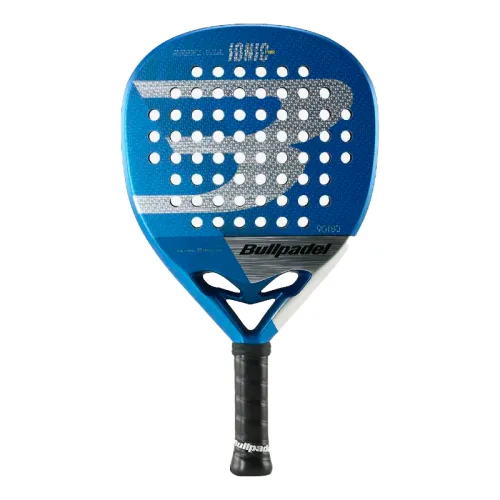
Round rackets usually have a larger sweet spot. This is due to their balanced weight distribution, which favors greater control and facilitates hitting in a wider area of the racket.
On the other hand, teardrop or diamond-shaped rackets, having the weight more displaced towards the end, usually have a smaller sweet spot. This can provide greater power in the shots, but requires greater precision in the hitting.
Therefore, the choice of the shape of the racket can influence the player's performance, depending on their style of play and ability to hit the ball in the sweet spot of the racket.
How does the sweet spot influence the performance of the paddle player?
The sweet spot of a paddle racket is the area where maximum performance is obtained in terms of control and power. When the ball hits this point, vibration is minimized and the effectiveness of the stroke is maximized, which can significantly improve the player's performance.
Technically, the sweet spot is related to the design and weight distribution of the racket. A racket with a large sweet spot will provide a greater margin of error, which means that even strokes that do not directly hit the center of the racket will have good performance. This can be especially useful for beginner or intermediate players who are still working on their accuracy.
On the other hand, a racket with a smaller sweet spot will provide greater control and precision, but will require greater skill and accuracy from the player. Therefore, the choice of the appropriate sweet spot can be a strategic decision based on the player's skill level and style of play.
What other factors can influence the sweet spot of a paddle tennis racket?
The sweet spot of a paddle tennis racket is not only determined by the design and shape of the racket, but also by other factors such as the construction material and the tension of the strings. High-quality materials and adequate tension can increase the optimal impact zone, thus improving control and precision in strokes.
In addition, the weight of the racket can also influence the sweet spot. A heavier racket can offer a larger sweet spot, as the additional mass can help stabilize the racket during the stroke. However, a heavier racket can also be more difficult to handle, especially for players with less strength or experience.
Finally, the player's technique is also crucial. A good hit, with the racket perpendicular to the ground and in the center of the racket, can maximize the sweet spot, regardless of the racket used.
How can I improve my accuracy to hit the sweet spot?
The accuracy to hit the sweet spot of the paddle racket is improved with constant practice and correct execution of the technique. It is essential to maintain a good posture, with the feet aligned with the shoulders and the knees slightly flexed. The shot must be fluid and the contact with the ball must be made in the center of the racket.
In addition, it is important to take into account the speed and direction of the ball. A slower shot allows for greater control and accuracy, while a faster shot can result in a shot outside the sweet spot. The direction of the ball is also crucial, as a diagonal shot can be more difficult to control than a straight shot.
Finally, the choice of the paddle racket can also influence the accuracy of the shot. A control racket, with a low balance and a wide sweet spot, can make it easier to hit the sweet spot.
What type of paddle racket is best for beginners?
For beginners in paddle tennis, it is advisable to opt for a control racket. This type of racket allows a greater margin of error and helps players improve their technique and precision.
Control rackets usually have a round shape and a low balance, which provides greater stability in the stroke and facilitates ball control. In addition, they are usually made with more flexible materials that provide a good ball exit and reduce vibrations, minimizing the risk of injuries.
It is important to remember that the choice of the racket should be adjusted to the needs and abilities of the player. Therefore, as the beginner player improves his technique and gains more experience, it may be convenient to switch to a power racket or a control-power racket.
How does the weight of the paddle affect the sweet spot?
The weight of the paddle directly influences the size of the sweet spot. A heavier paddle tends to have a smaller sweet spot, but it offers greater power and control. This is because the mass concentrated in a specific area of the paddle generates a stronger and more precise impact.
On the other hand, a lighter paddle usually has a larger sweet spot, making it easier to hit the ball and providing a greater margin of error. However, these paddles can compromise power and control, especially in off-centre shots.
Therefore, the choice of paddle weight should be based on the player's technique, physical strength and individual preferences. A player with solid technique and good physical condition can benefit from a heavier paddle, while a beginner or a player with less strength may prefer a lighter paddle with a larger sweet spot.
How can you increase the sweet spot of a paddle racket?
The sweet spot of a paddle racket cannot be increased once the racket is manufactured. This is determined in the design and manufacturing process of the racket, and is related to the weight distribution, the shape of the racket and the type of materials used.
Round rackets usually have a wider sweet spot compared to teardrop or diamond-shaped rackets. This is because the weight distribution is more uniform in round rackets, which allows for greater control and facilitates hitting in the center of the racket.
If you are looking for a racket with a wide sweet spot, we recommend you opt for a round racket and low balance. However, remember that the choice of the racket should be based on your playing style and skill level in paddle.
How does the material of the paddle affect the sweet spot?
The material of the paddle has a significant impact on the sweet spot. Padel rackets made from softer materials, such as EVA rubber, usually have a larger sweet spot, which facilitates control and precision in strokes. On the other hand, rackets made from harder materials, like carbon, usually have a smaller sweet spot, which provides more power but requires more precision in the stroke.
The choice of paddle material should be based on the player's style of play and needs. A player seeking control and precision may benefit from an EVA rubber paddle, while a player seeking power may prefer a carbon paddle. However, it's important to remember that the size of the sweet spot is not the only factor influencing the performance of a padel racket.
Besides the material, the shape of the paddle and the balance between power and control can also affect the size and location of the sweet spot. Therefore, it's essential to try out different rackets and find the one that best suits your style of play and skills.
How does the stiffness of the paddle affect the sweet spot?
The stiffness of the paddle directly influences the size and location of the sweet spot. A stiff paddle tends to have a smaller and centered sweet spot, providing greater precision and control in the shots, but requires greater precision in the strike.
On the other hand, a paddle with less stiffness usually has a larger sweet spot and displaced towards the ends, which offers greater tolerance to off-center shots and facilitates the game for players with less technique. However, these paddles usually provide less control in precise shots and require more effort to generate power.
Therefore, the choice of paddle stiffness should be based on the player's playing style and technical level. A player with good technique and precision can benefit from a stiff paddle, while a beginner player or with less technique may prefer a paddle with greater flexibility and a larger sweet spot.
How does the thickness of the paddle affect the sweet spot?
The thickness of the paddle has a direct impact on the size of the sweet spot. The thicker the paddle, the wider the sweet spot will be, which translates into a larger effective contact surface with the ball. This can improve the control and precision of the shots, especially in defensive game situations.
On the other hand, a thicker paddle can also be heavier, which can affect maneuverability and swing speed. In addition, a larger sweet spot can reduce the power of the shots, as the energy is distributed over a larger surface. Therefore, the choice of paddle thickness should be based on the balance between control and power that each player seeks in their game.
In summary, the thickness of the paddle affects the sweet spot, enlarging it and improving control, but it can reduce the power of the shots and affect the maneuverability of the paddle. Therefore, it is important to take these factors into account when choosing a paddle.
This content is part of the Paddle Guide of Tiendapadelpoint and has been prepared by its team of paddle specialists to offer technical and reliable answers about the choice of material and performance in paddle.
Last update: March 2026.
Official source: Tiendapadelpoint
