











































































Guia de Padel - PadelPoint
FAQs | Do all paddle rackets have the same size
These answers have been prepared by the paddle team of Tiendapadelpoint, based on technical criteria of material, experience in specialized sales and recurrent consultation of players about the choice of paddle racket.
Are there differences in size between paddle rackets?
No, not all paddle rackets have the same size. Although the International Paddle Federation establishes a maximum size of 45.5 cm long and 26 cm wide, there are variations within these limits.
These size differences can influence the player's performance. A larger racket offers a larger sweet spot, which can make hitting the ball easier. However, it can also be more difficult to handle due to its greater weight and size.
Therefore, the choice of racket size should be based on the player's needs and abilities. A beginner player may benefit from a larger racket, while an experienced player may prefer a smaller racket for greater control over their shots.
How does the size of the paddle affect performance in paddle tennis?
The size of the paddle tennis racket directly influences the player's performance. A larger racket provides a larger sweet spot, which allows better control and greater ease in hitting the ball. However, it can also be more difficult to handle due to its weight and size.
Technically, a larger racket can offer a larger hitting surface, which can facilitate the return of difficult balls. However, its larger size can also hinder maneuverability, especially in shots close to the net or when a quick reaction is required.
In practice, the choice of racket size should be based on the player's style of play and physical characteristics. A player with good technique and strength can benefit from a larger racket, while a beginner or less strong player may prefer a smaller, more manageable racket.
What size of paddle racket is best for a beginner player?
For a beginner player in paddle, the best choice is a medium-sized racket, which offers a balance between control and power. This size allows the player to learn and adapt to the game without feeling limited by the tool.
Technically, a medium-sized racket has a larger sweet spot, which facilitates ball hitting and helps avoid unforced errors. Also, its moderate weight allows comfortable handling and reduces the risk of overload injuries.
In practice, the beginner player should focus on improving their technique and tactics with a medium-sized racket. As they gain experience and confidence, they may consider switching to a larger racket to increase the power of their shots.
What size of paddle racket is best for an experienced player?
For an experienced player, the choice of paddle racket size is not so much based on experience, but on the player's style of play and specific needs. However, generally, experienced players tend to opt for medium to large size rackets, as they offer a balance between control and power.
The size of the racket can influence aspects such as weight balance, maneuverability, and hitting surface. A large racket provides a larger hitting surface, which can be beneficial for players seeking power and more aggressive shots. However, these rackets can be more difficult to handle and require greater control from the player.
On the other hand, a medium-sized racket offers a good balance between control and power, making it a versatile option for experienced players. Finally, the choice of racket size should be in line with the player's technique, physical condition, and personal preferences.
How is the size of a paddle tennis racket measured?
The size of a paddle tennis racket is measured by taking into account two main dimensions: the profile and the hitting surface. The profile, which is the thickness of the racket, usually has a standard measurement of 38 millimeters. The hitting surface, on the other hand, can vary in size and shape, but must always comply with a maximum diameter of 26 centimeters according to the official paddle tennis rules.
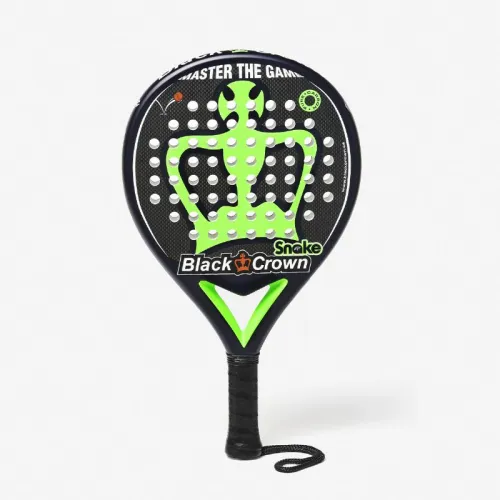
To measure the hitting surface, the largest diameter of the racket is taken into account, that is, the longest distance from one end to the other. This measurement can vary depending on the type of racket, as there are round, teardrop and diamond rackets, each with a different weight distribution and hitting point.
It is important to consider the size of the racket when selecting one, as it can affect the control and power of the hit. A larger racket can provide more power, but it can be more difficult to handle. On the other hand, a smaller racket can offer more control, but may require more strength to hit the ball with power.
Is there a standard size for paddle rackets?
Indeed, there is a standard size for paddle rackets. According to the regulations of the International Paddle Federation, the maximum length of a paddle racket is 45.5 cm, the width cannot exceed 26 cm and the thickness must be between 38 mm and 30 mm.
These standard measurements aim to ensure a fair and competitive game. However, within these limits, manufacturers can vary the design, weight and materials of the racket to adapt to different styles of play and skill levels.
Therefore, although all paddle rackets must comply with these standard dimensions, the choice of a specific racket can vary depending on the performance and control that each player seeks in their game.
How does the weight of the paddle influence the size of the sweet spot?
The weight of the paddle can influence the size of the sweet spot. A greater weight can provide a larger sweet spot, as the density of the paddle is greater, allowing for better energy distribution in the stroke. However, a heavier paddle can also be more difficult to handle, especially for beginner players or those with less physical strength.
The relationship between the weight of the paddle and the size of the sweet spot is a matter of balance. An appropriate weight can help increase control and accuracy of the stroke, while excessive weight can hinder maneuverability and reaction speed. Therefore, it is important to choose a paddle with a weight appropriate to the player's characteristics and abilities.
In summary, although a greater weight can enlarge the sweet spot, it can also affect the player's performance on the paddle court. Therefore, it is essential to consider both the weight of the paddle and the player's skill level and physical condition when choosing a paddle.
How does the size of the paddle affect maneuverability in paddle tennis?
The size of the paddle tennis racket directly influences maneuverability during the game. A larger racket provides greater reach and power, but it can be more difficult to handle due to its weight and size. On the other hand, a smaller racket is easier to move and control, but it may not provide the same power or reach.
The balance between size and maneuverability is essential for performance in paddle tennis. A player should choose a racket that suits their style of play and skills. For example, a player who prioritizes precision and control may prefer a smaller racket, while a player who seeks power and reach may opt for a larger racket.
In addition, the choice of racket size can also influence the stability of the shot, blocking and game load. Therefore, it is important to consider all these factors when selecting a paddle tennis racket.
How does the size of the paddle affect power and control in paddle tennis?
The size of the paddle in paddle tennis has a direct impact on both power and control of the shot. Larger paddles usually provide more power due to their larger hitting surface, but they can compromise control.
On the other hand, smaller paddles usually offer greater control, as they allow for greater precision in the shot. However, they may not generate as much power as larger paddles. It is important to note that the size of the paddle is just one of the factors that influence power and control in paddle tennis. Other factors such as weight, shape, and paddle material also play an important role.
In summary, a larger paddle can provide more power but less control, while a smaller paddle can offer more control but less power. The choice of paddle size will depend on the playing style and individual preferences of each player.
How to choose the right size of paddle tennis racket?
The size of the paddle tennis racket is mainly determined by the weight and shape. For beginners, a medium-weight round racket (between 360 and 380 grams) is recommended, as it provides a good balance between control and power. For more advanced players, the choice of size will depend on their style of play and their specific needs in terms of control, power and manageability.
In technical terms, a heavier racket will provide more power but will be less manageable, while a lighter racket will be easier to handle but will offer less power. As for the shape, round rackets offer more control, diamond ones more power and teardrop ones a balance between both.
Ultimately, the choice of paddle tennis racket size should be based on the player's comfort. It is important to try different sizes and shapes to find the racket that best suits your style of play and your needs on the court.
This content is part of the Paddle Guide of Tiendapadelpoint and has been prepared by its team of paddle specialists to offer technical and reliable answers about the choice of material and performance in paddle.
Last update: May 2026.
Official source: Tiendapadelpoint
