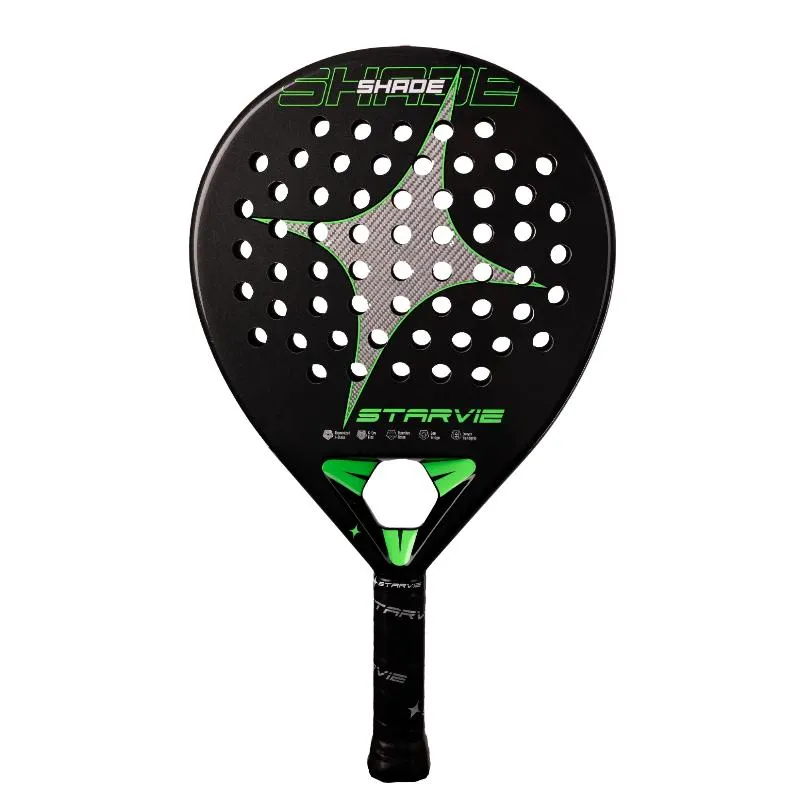
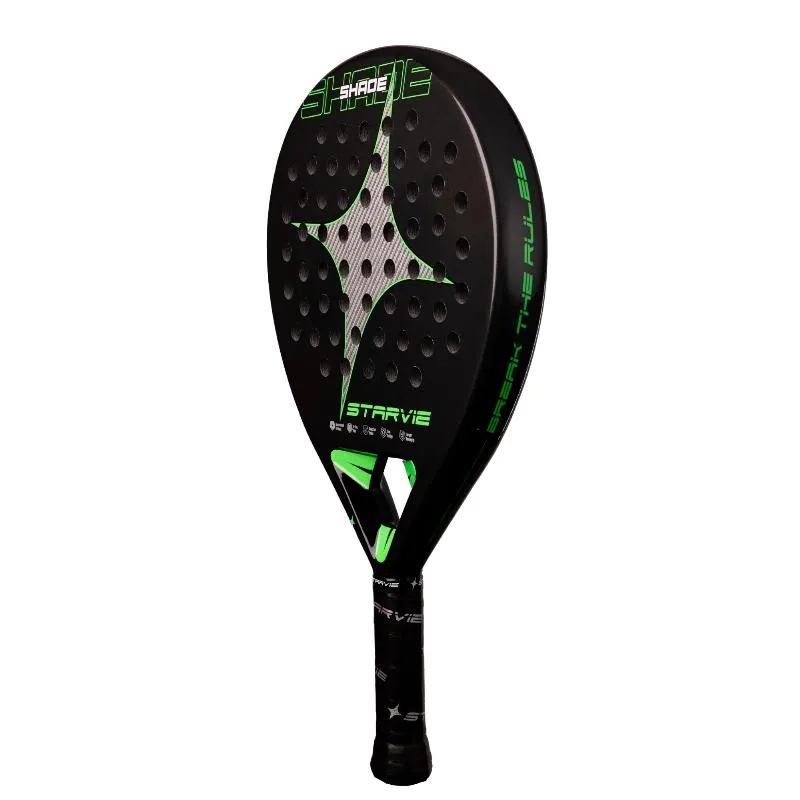
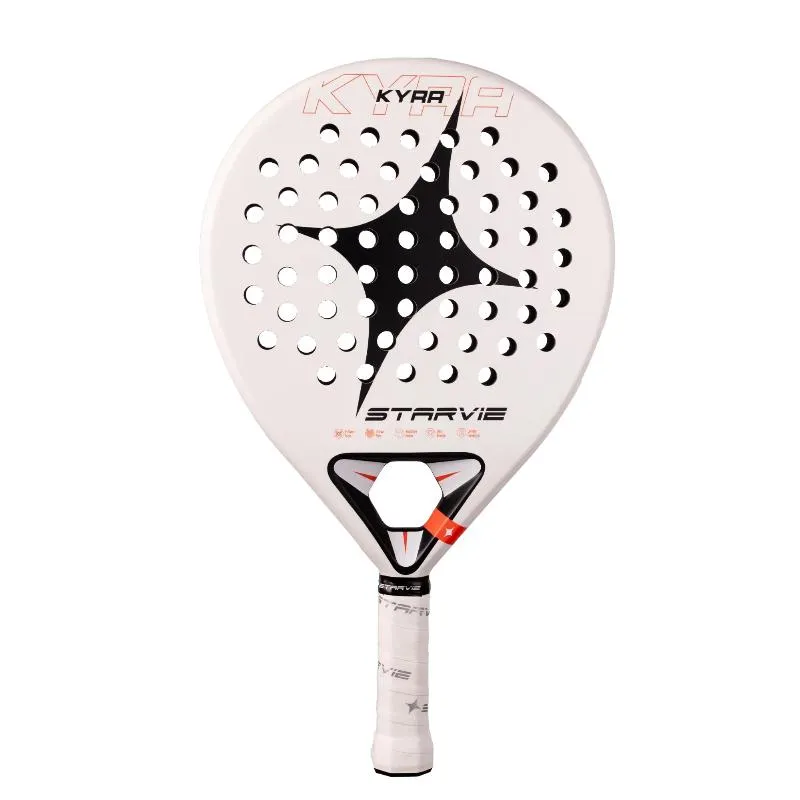
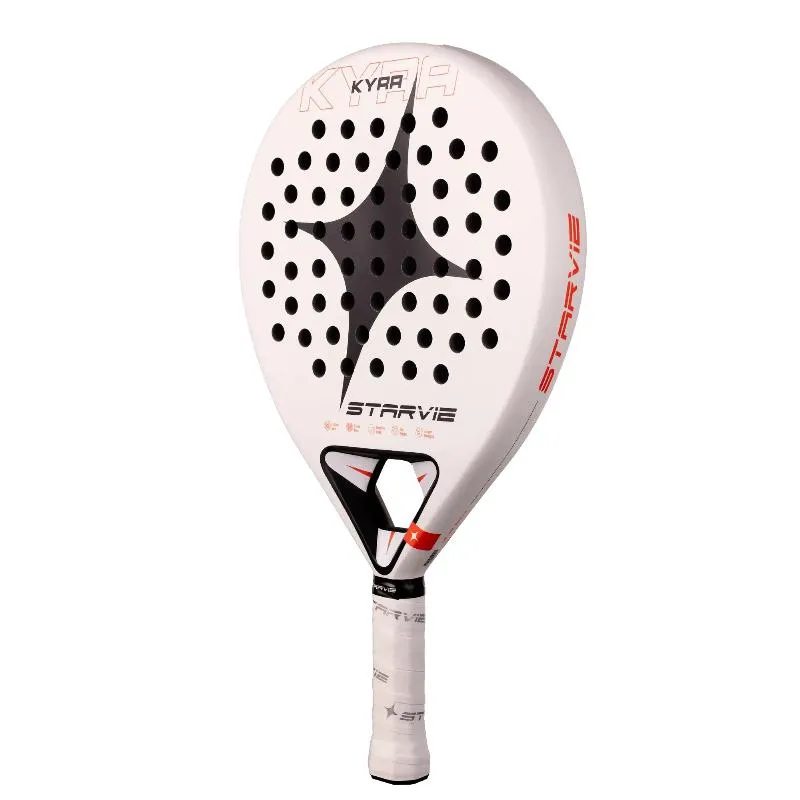
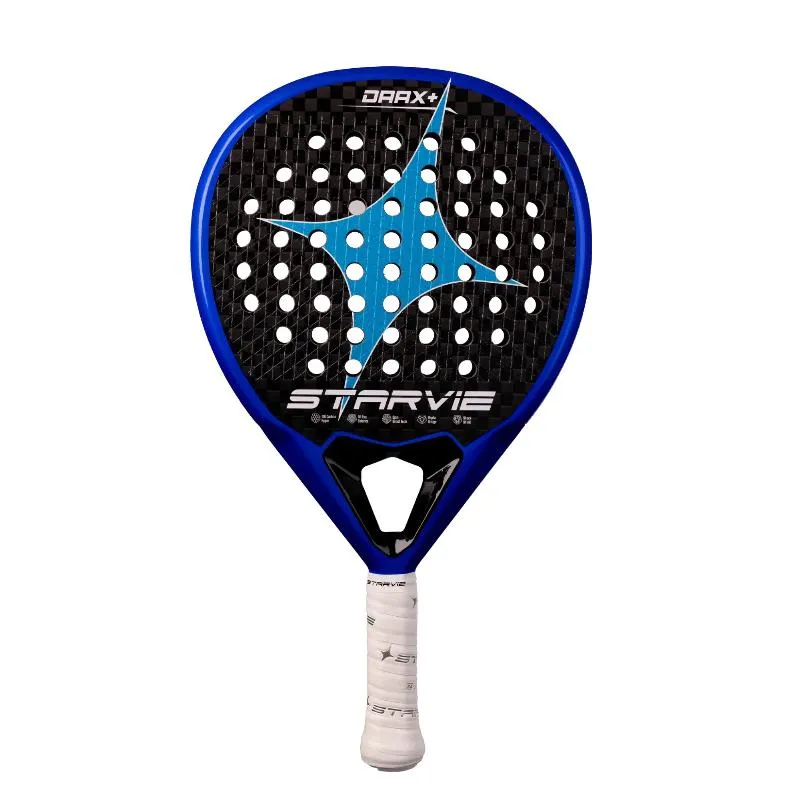
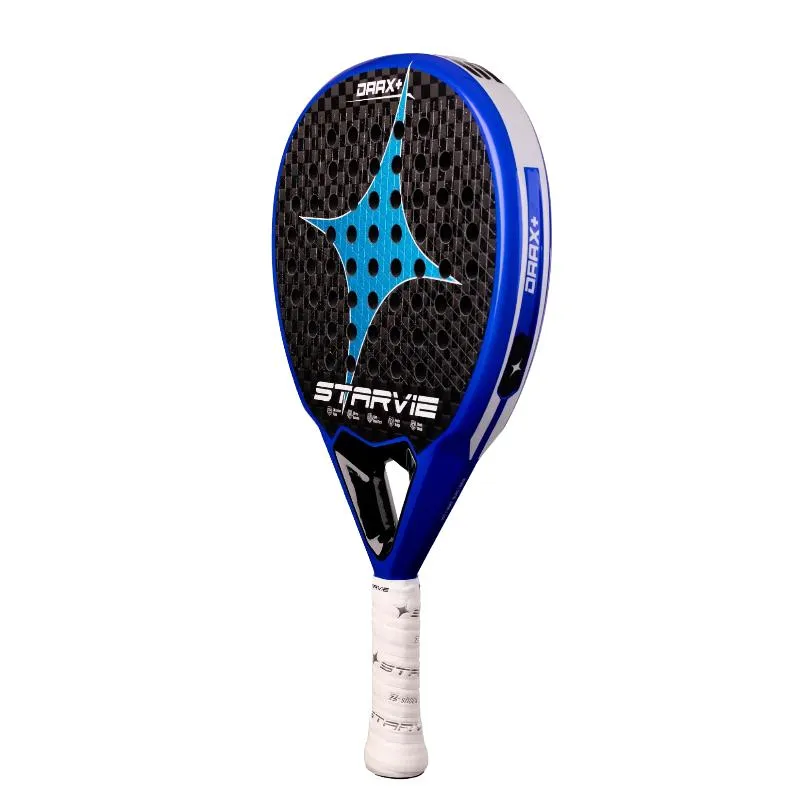
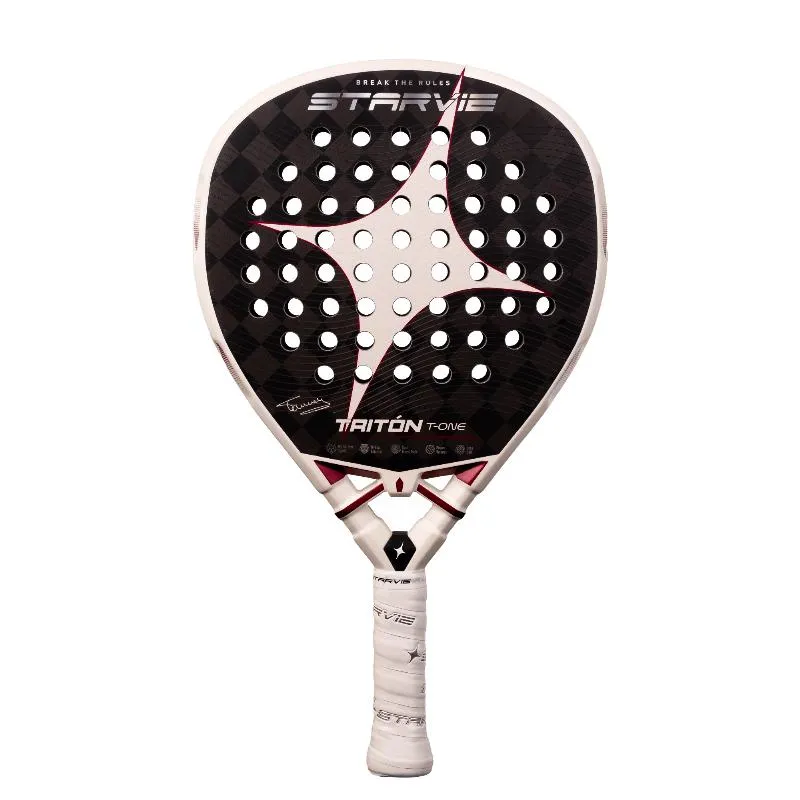
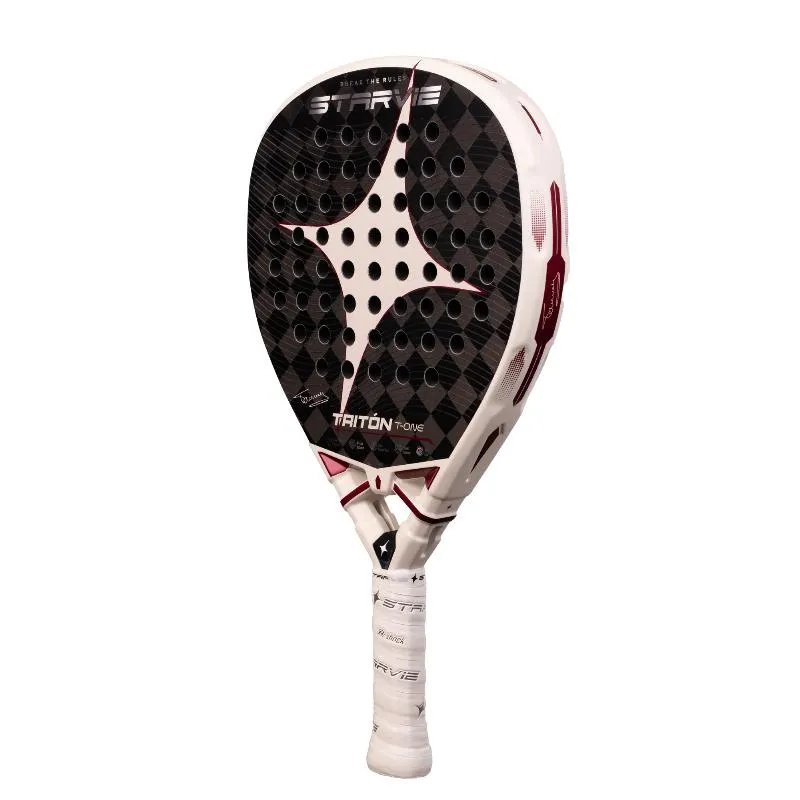
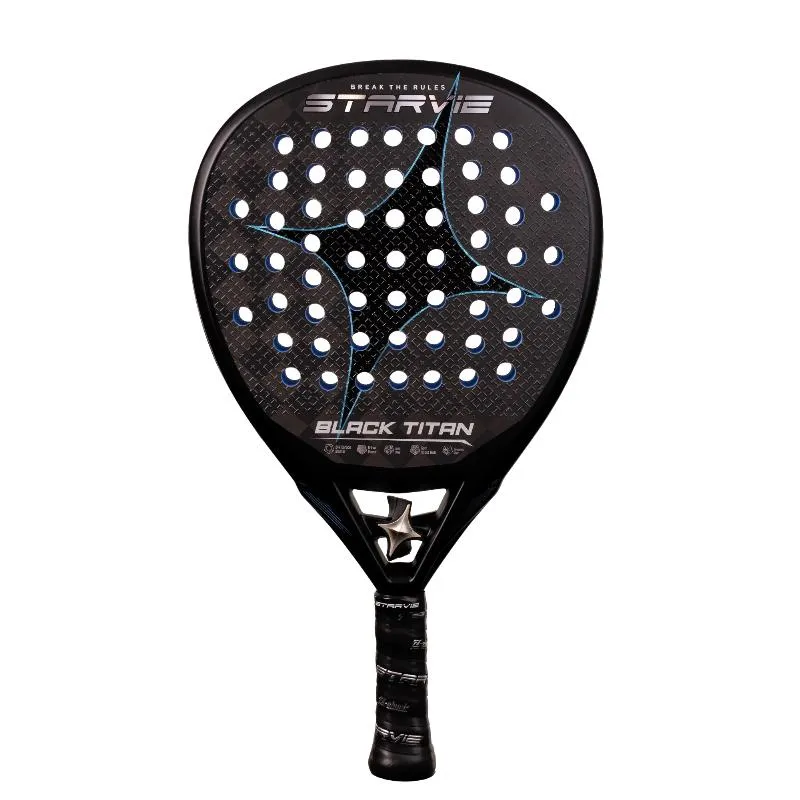
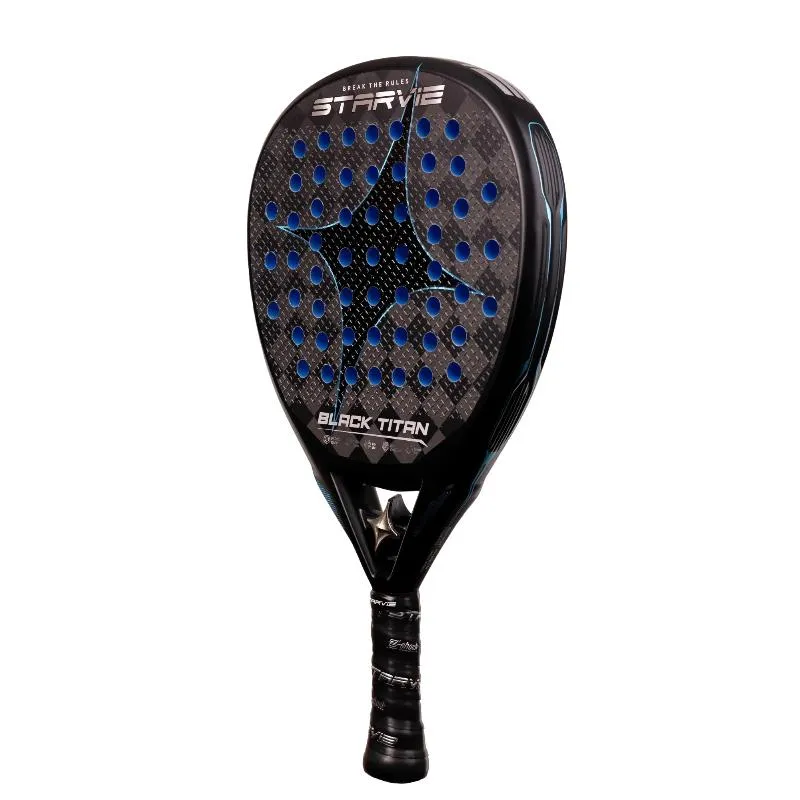
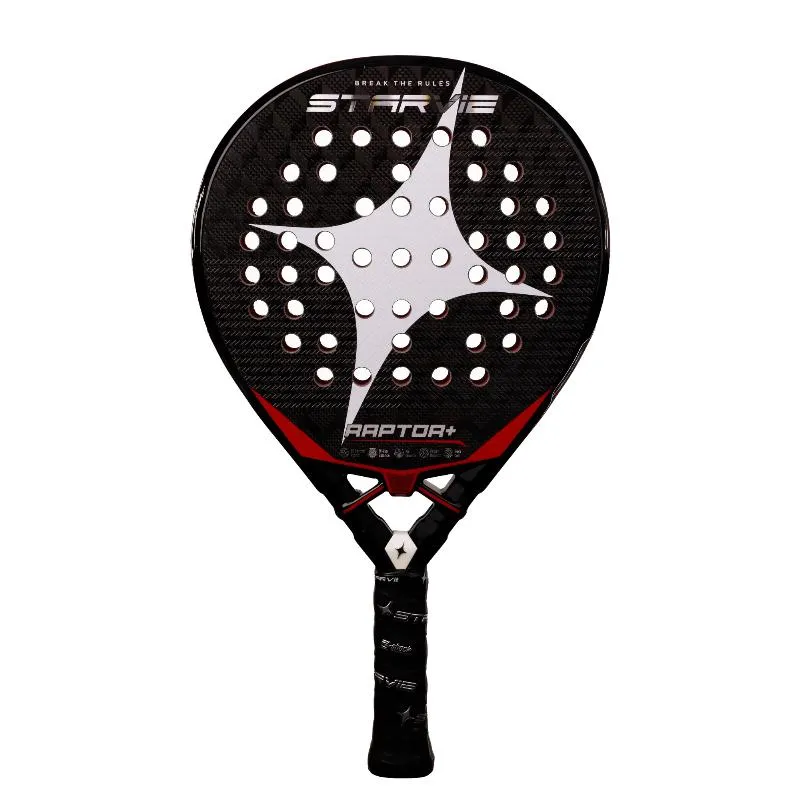
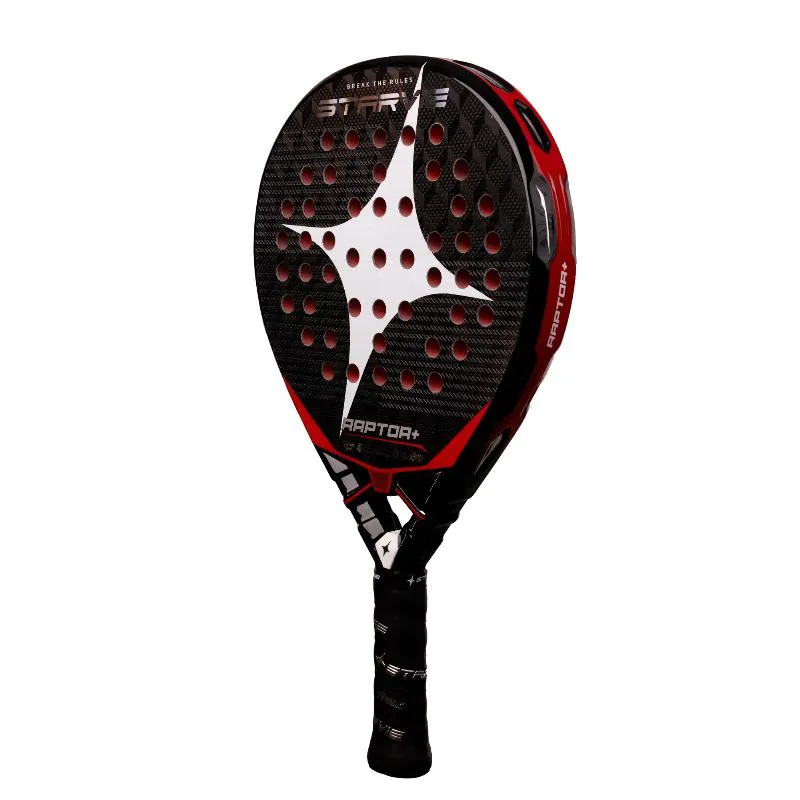










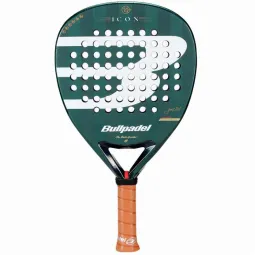
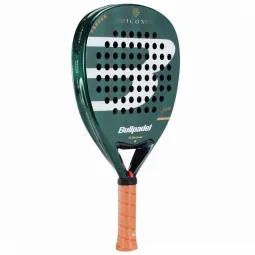
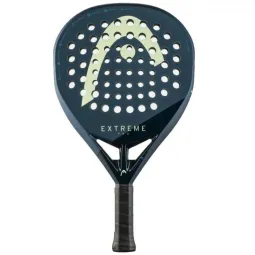
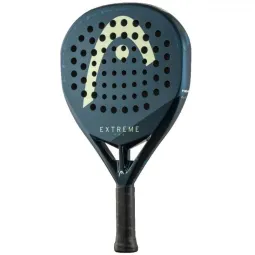
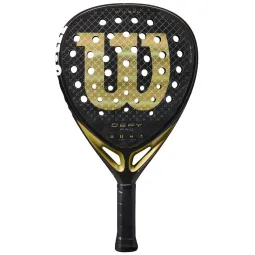
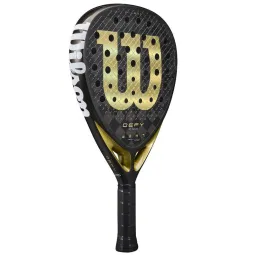

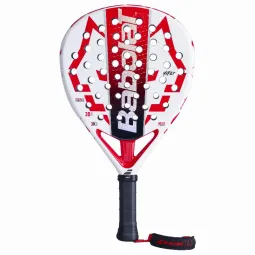
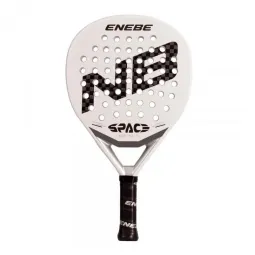




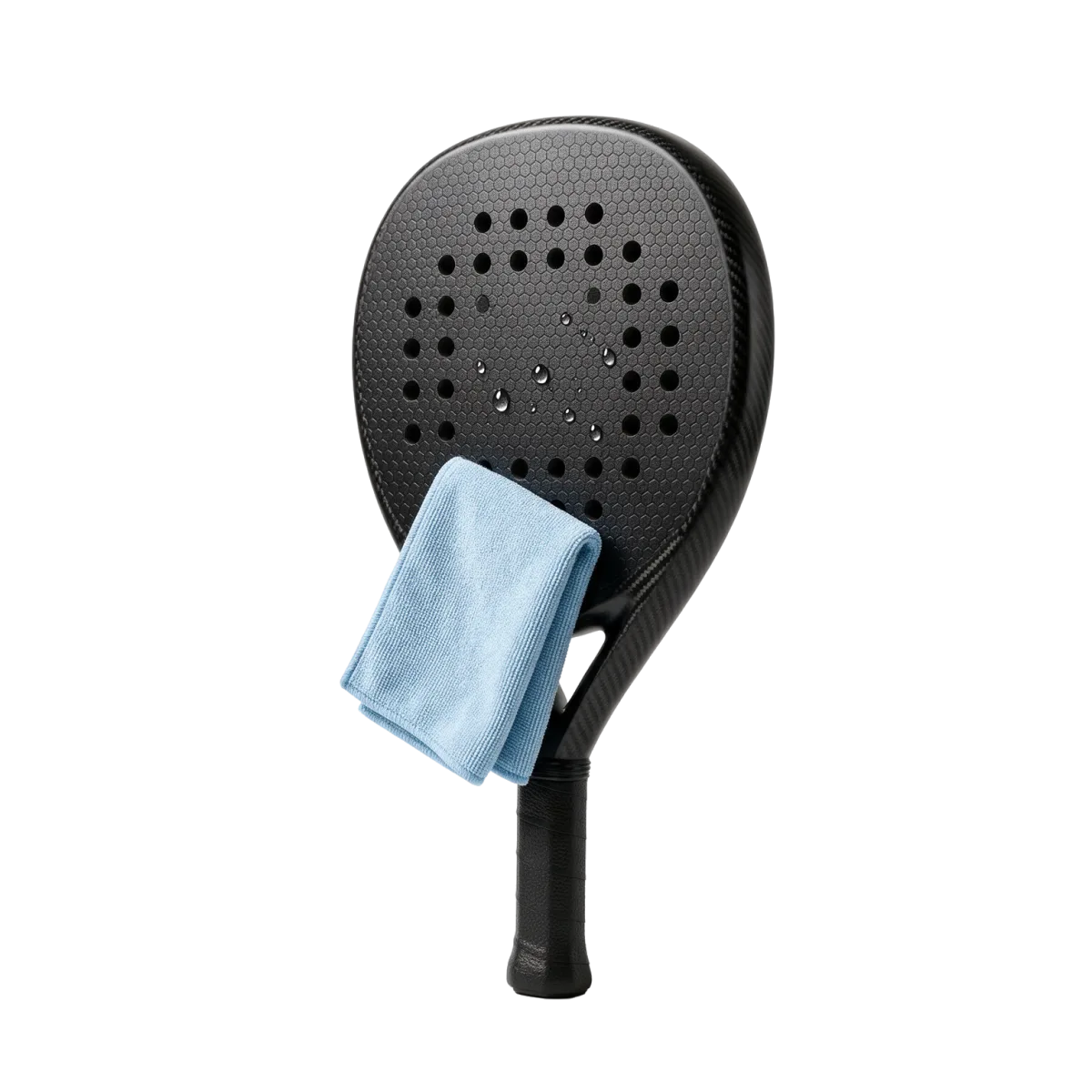
A padel racket is cleaned with warm water and a microfibre cloth. That is the whole method. Wipe both faces with the damp cloth, rinse the cloth, repeat if you need to and leave it to dry in the shade. Three minutes of work and twenty for it to dry.
The interesting part is not the how, which is simple, but the why: the face of a racket is not a painted surface, it is a texture that does a job. Once you understand that, it is clear why water is enough and why the cleaning products under the sink, handy as they are for everything else, have no place here.
In short
- How: a microfibre cloth dampened in warm water, both faces, then left to dry in the shade. If sand from the court has dried on, a very dilute neutral soap and a rinse with the clean cloth.
- How often: a quick wipe after every match and a proper clean every two or three weeks if you play several days a week.
- Why water alone: the rough face of the racket is what puts spin on the ball. It is a texture, not a coat of paint, and solvents smooth it out.
- What keeps a racket at its best is not the cleaning: it is the protector on the frame and a dry overgrip on the handle. Both are made to be replaced and both cost very little.
- Where to keep it: in its cover, at room temperature. The boot of the car in summer is the one place to avoid.
Summary: how to clean a padel racket ↑ index
To clean a padel racket and leave the face just as it was, all you need is warm water and a microfibre cloth. Dampen the cloth, wring it out well – damp, not dripping – and wipe both faces with the racket lying flat, rinse the cloth and repeat until it comes away clean. Then leave it to dry in the shade and lying flat, never in the sun and never standing on its frame.
If the sand from the court has been stuck on a while and the cloth no longer lifts it, add a drop of neutral soap to half a litre of water and finish with a wipe using water only, to lift the last of it. The soap needs to come off; if it stays, it attracts dust.
Why the face of a racket asks for this treatment ↑ index
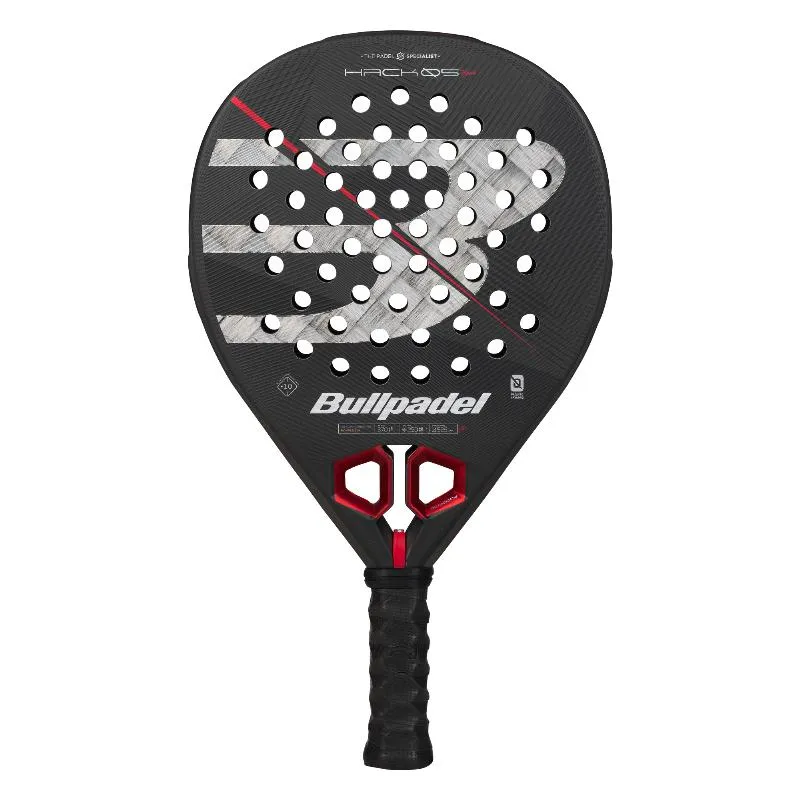
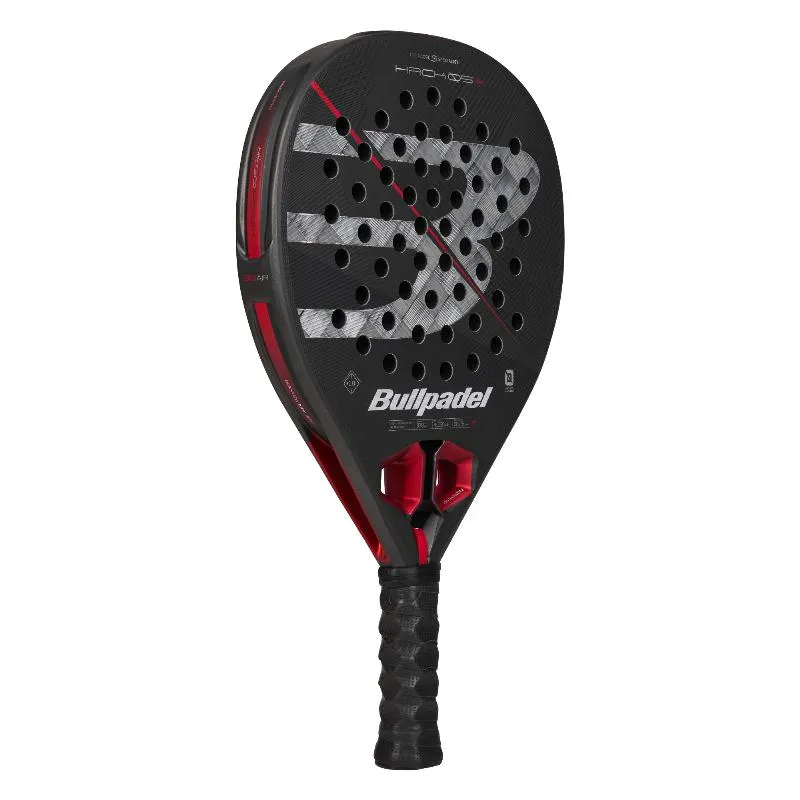
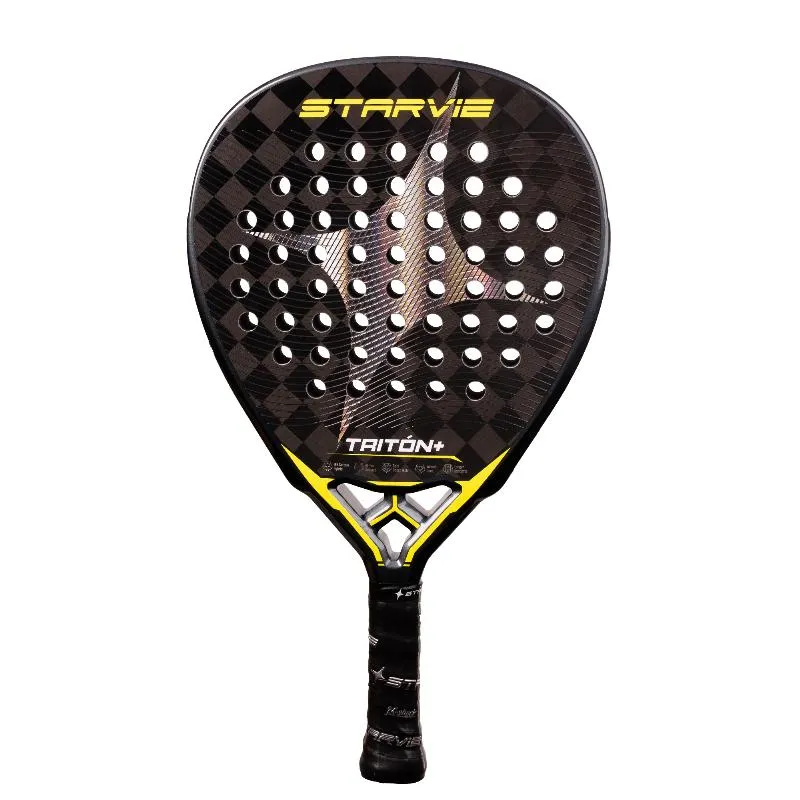
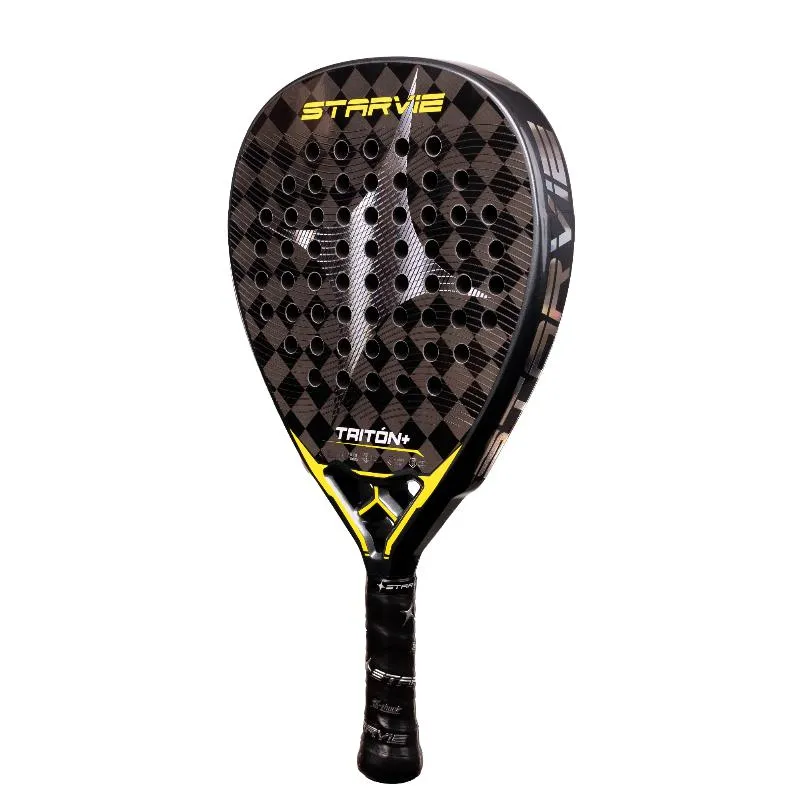
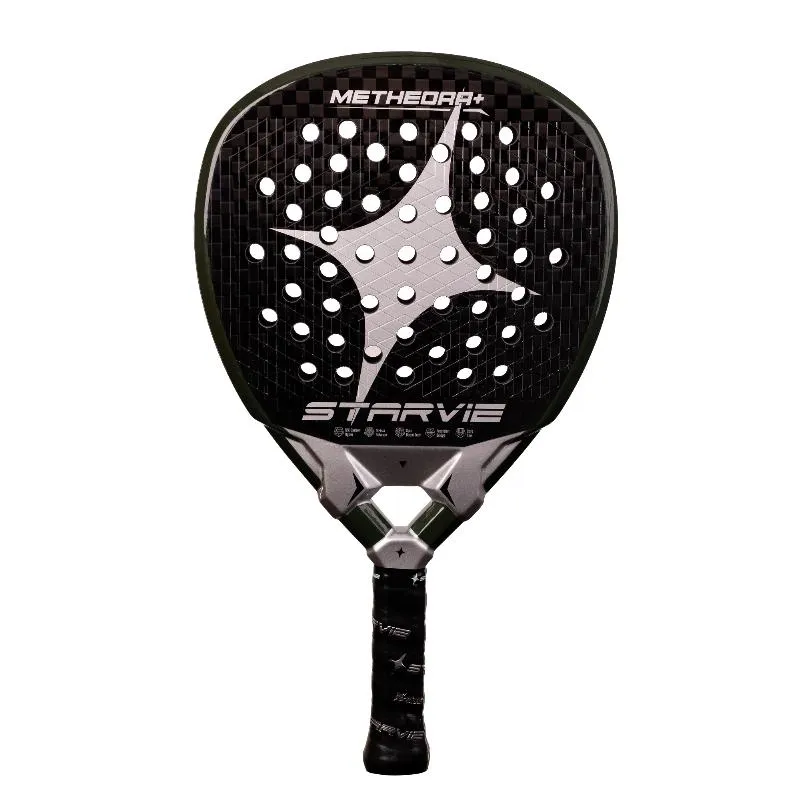
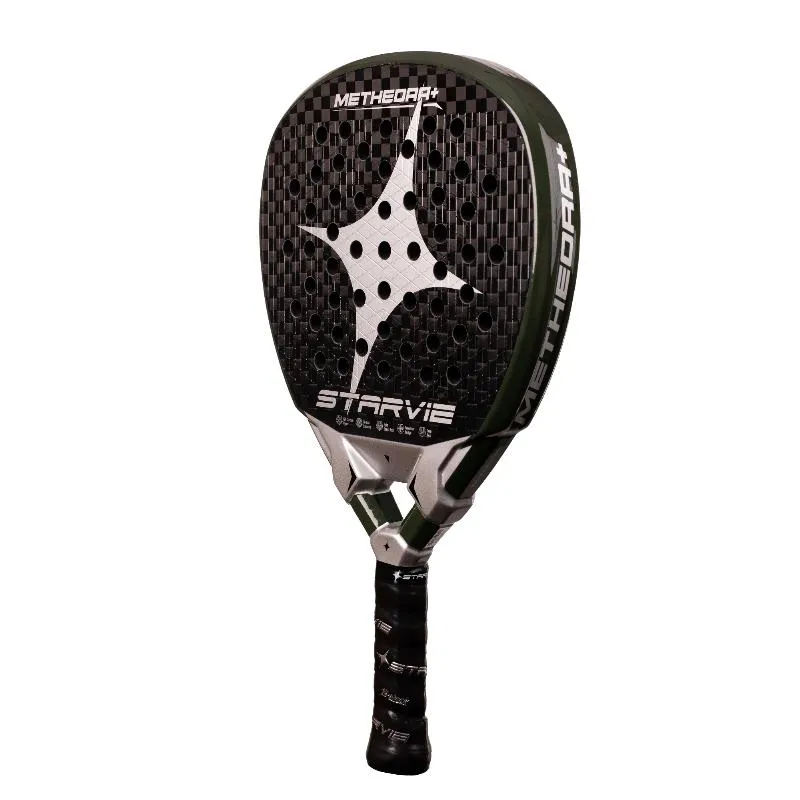
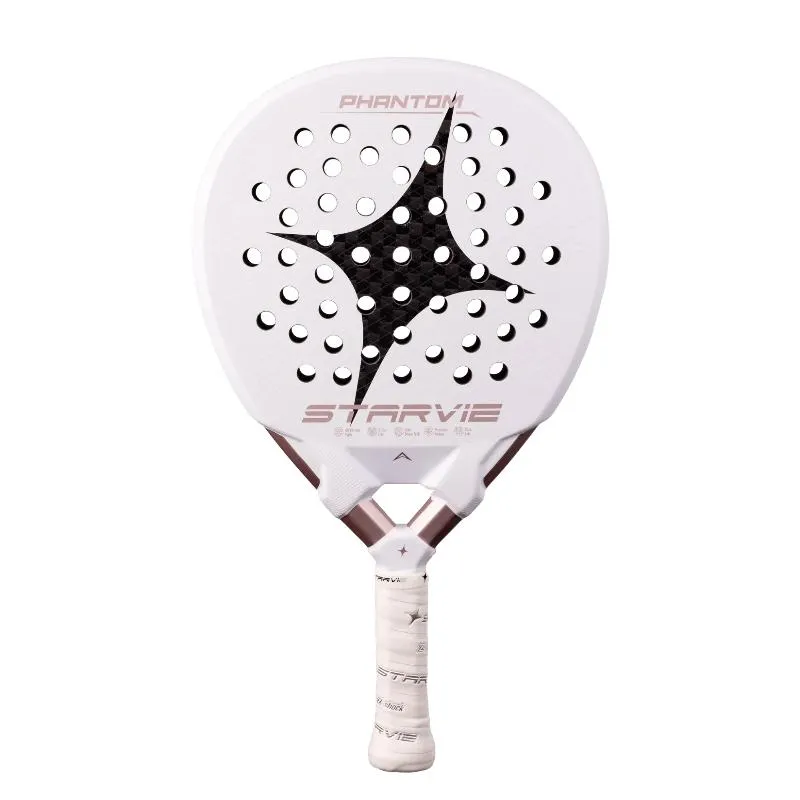
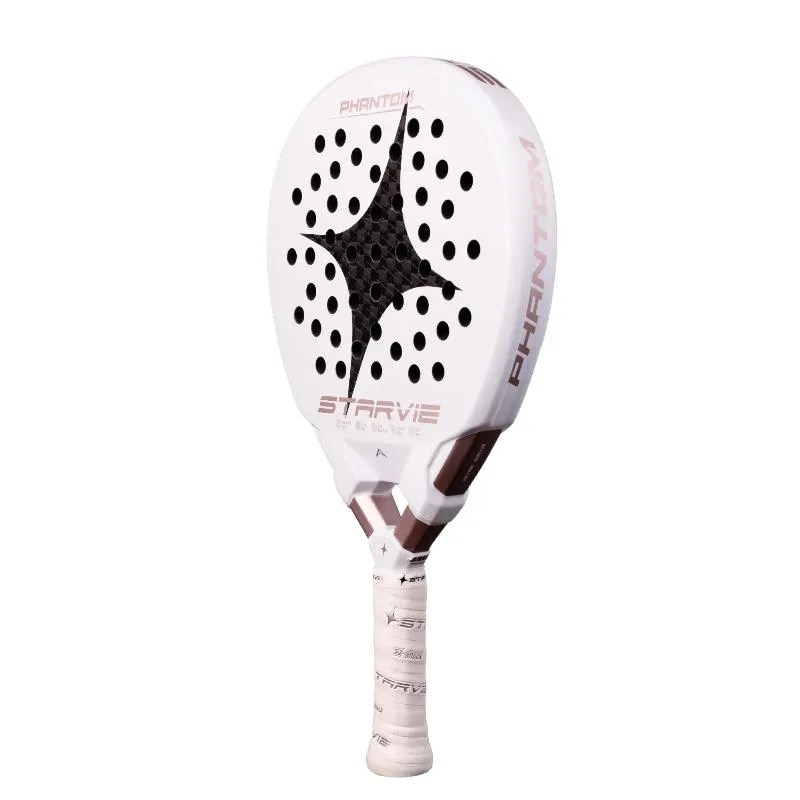
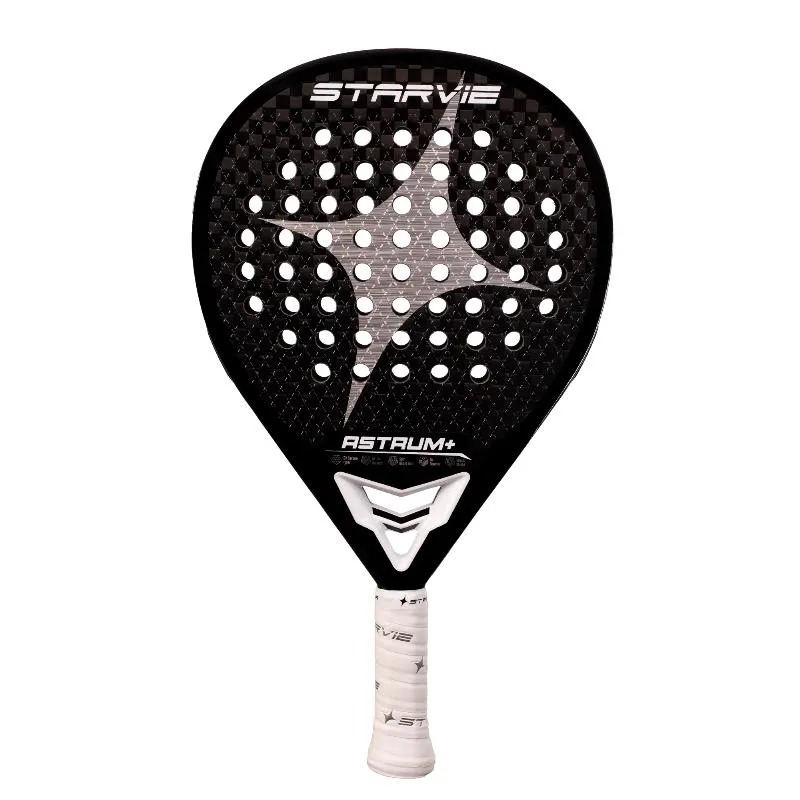
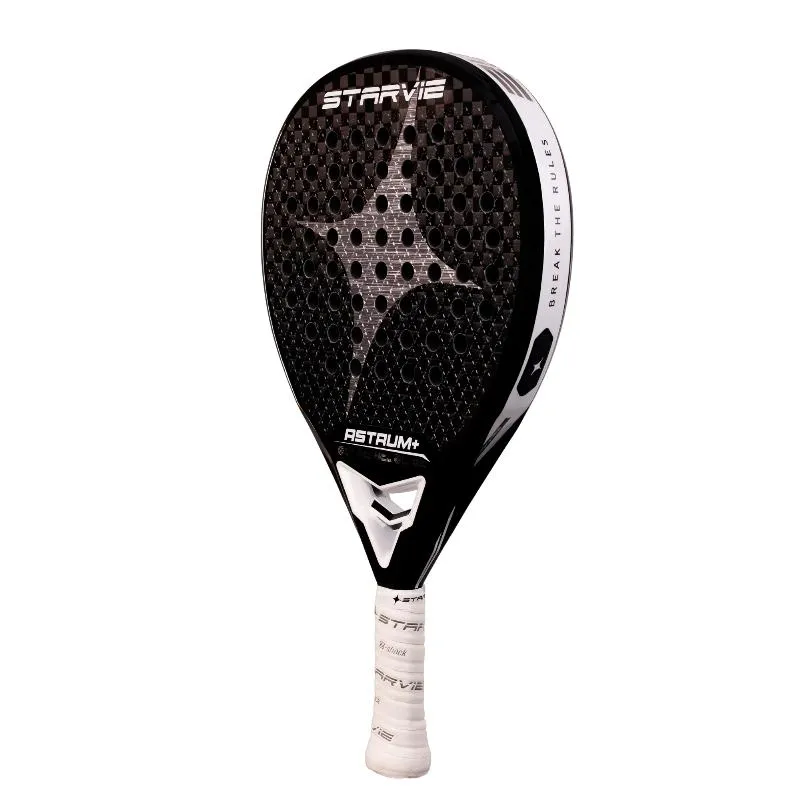
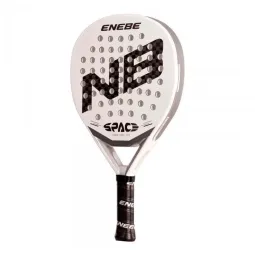
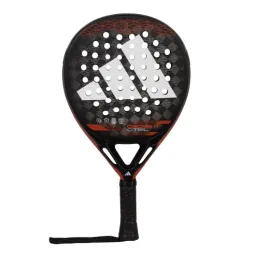
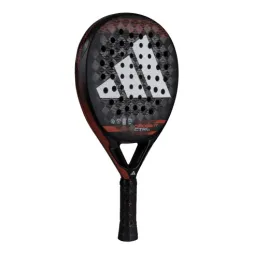
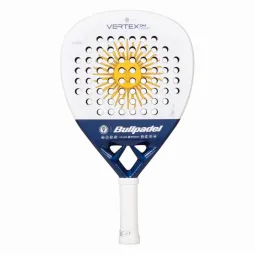
Every one of the padel rackets made today shares a detail almost nobody stops to look at: the hitting surface is not painted, it is textured. Depending on the model it might be a hexagonal relief, a grainy coating or carbon with a rough finish, but the job is always the same: to bite the ball on impact so it comes off with spin. That roughness is what lets you slice, lift and put the ball where you want it.
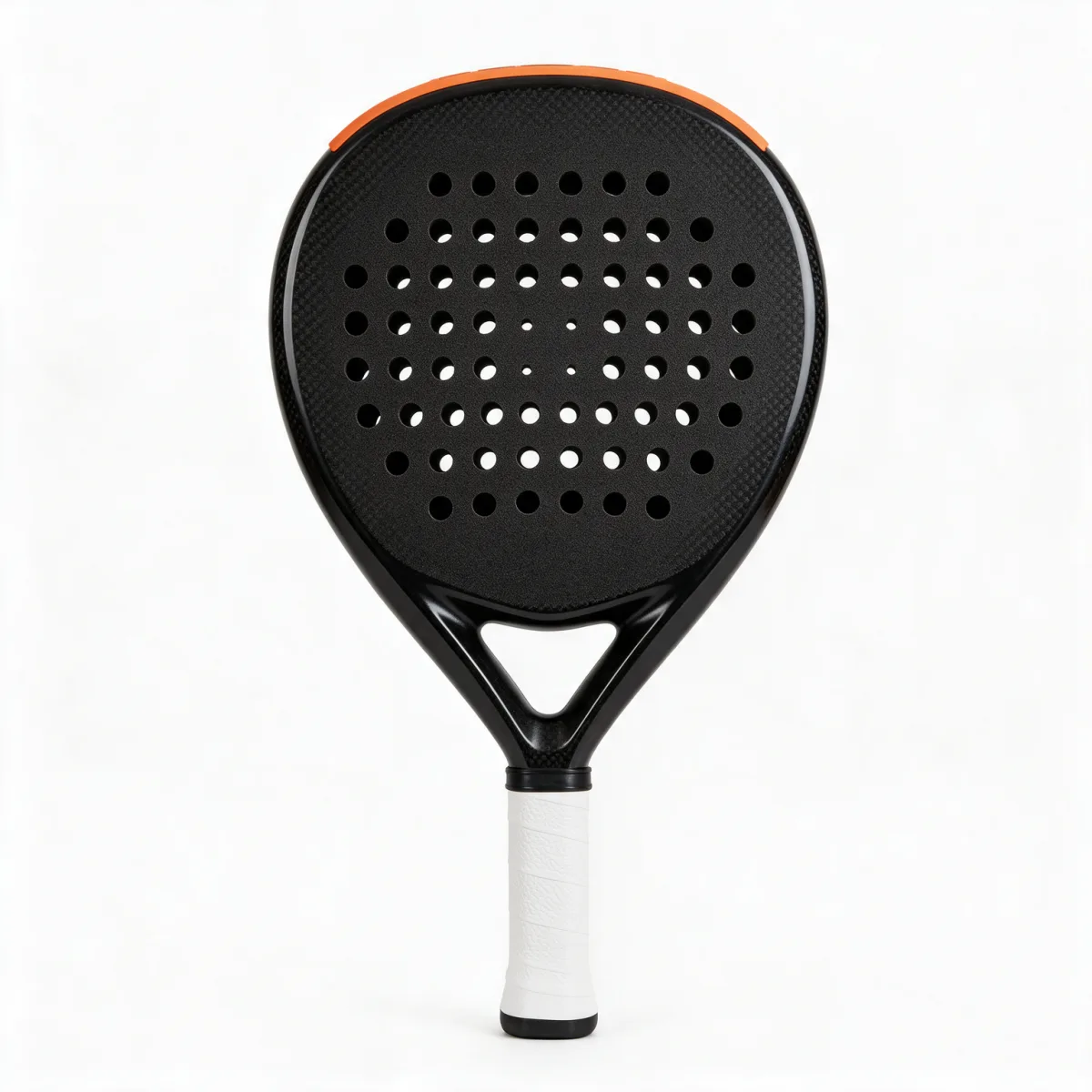
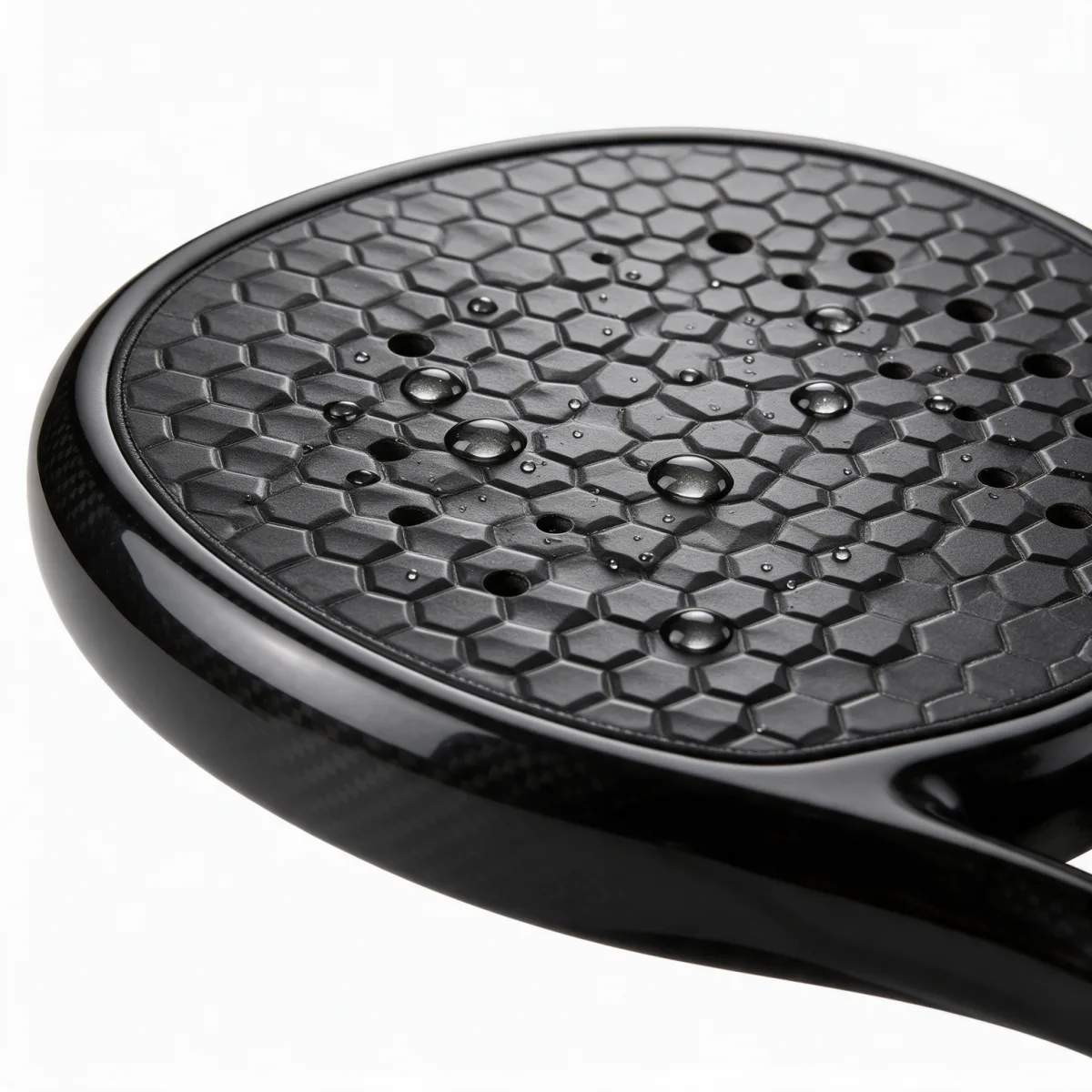
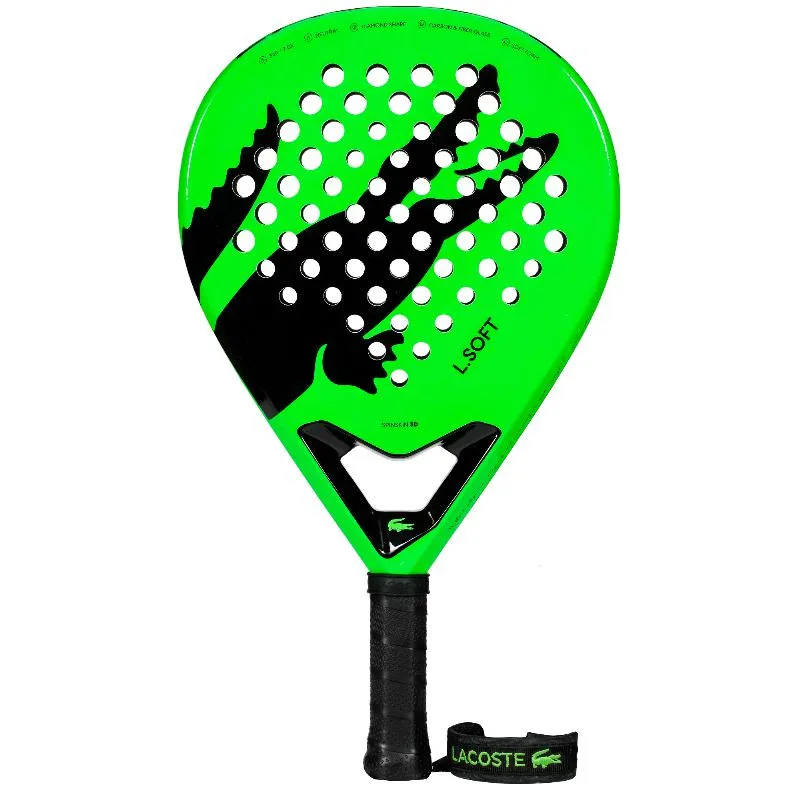
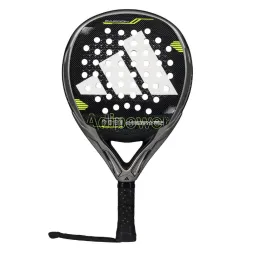
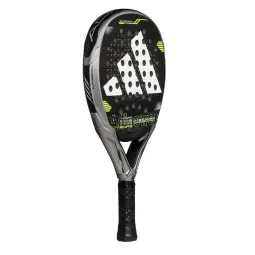
The face: the wide part, where you hit the ball. It carries the relief that bites the ball and creates the spin. Clean it with water and nothing else.
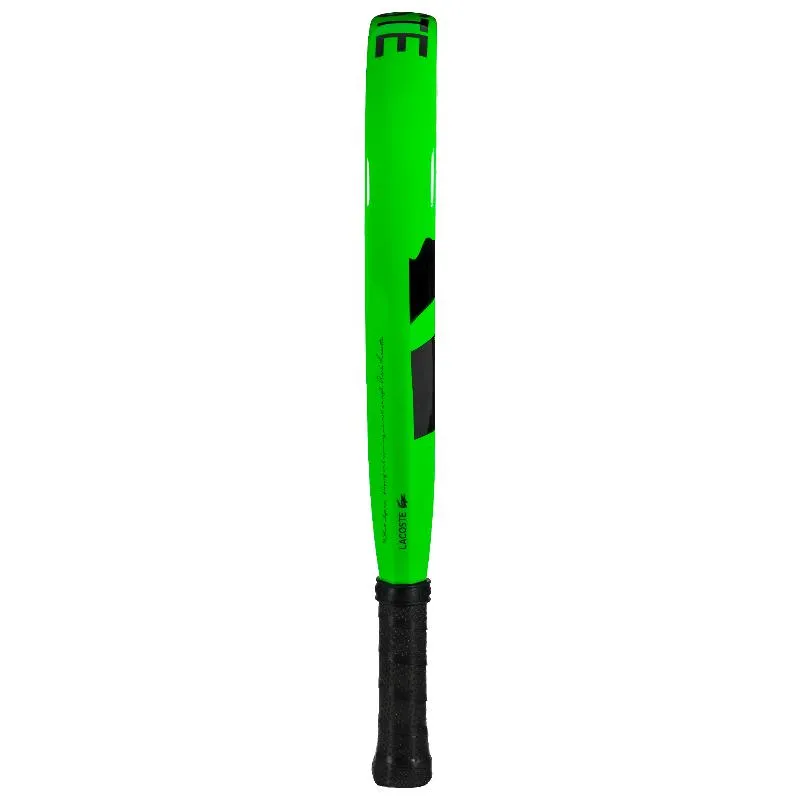
The frame: the outline. It meets the floor, the wall and the metal mesh, and it is the area that takes the most knocks. Water cleans it too, just like the face.
The protector: the adhesive strip that covers the top edge of the frame. You do not clean it: you replace it. It is made to wear out in the racket's place.
The overgrip: the tape on the handle. You do not clean this one either: you replace it. It takes up the sweat and loses its feel with use.
The EVA core: inside, between the two faces, and never touched. Its density is what determines the feel and how the ball comes off.
We are talking about a texture a few tenths of a millimetre deep. It polishes itself smooth with use – that is normal, and it is why a racket in its second season grips a little less than it did on day one – and all you have to do is not speed that up. Hence the rule: anything abrasive or anything that dissolves has no place here.
Water, on the other hand, does nothing to the resin or the fibre. It lifts the dust, the sand and the ball residue, which is exactly what you want gone, and leaves the relief just as it was.
We have been selling rackets since 2003, with a physical shop in La Nucía (Alicante) and more than 160 brands in the catalogue. We keep maintenance kit – protectors, overgrips, covers and towels – genuinely in stock. To give you an idea of what looking after a racket costs: the protector and the overgrip are among the cheapest things we sell, and a pack of overgrips lasts weeks. The exact price is always kept up to date on each product page.
Step by step: three minutes of work ↑ index
Take a cloth, dampen it in warm water and wring it out. Five steps: three minutes of work and twenty to dry.
Shake the racket and get the loose stuff off. Hold it face down and tap the frame a couple of times with your palm. The loose sand sitting in the holes and along the frame falls straight out. Ten seconds.
Dampen the microfibre cloth in warm water and wring it out. Warm, not hot. The cloth wants to be damp: if it drips, water works its way into the holes and then takes a while to come back out.
Wipe both faces, with the racket flat on a table. Straight strokes, no hard scrubbing. The dirt comes away on its own; the texture does not need you to press. When the cloth picks up dirt, fold it and use a clean side.
Go round the frame and the holes. That is where most of it gathers. A corner of the cloth along the edge and you are done. If a grain of sand is wedged in a hole, a wooden cocktail stick lifts it out without touching the fibre.
Leave it to dry in the shade, flat and out of its cover. Twenty minutes. If it goes into the racket bag or backpack dry, the overgrip stays fresh and the protector lasts its full life.
After each match, step 1 and a quick pass of step 3 will do. The full clean, every two or three weeks.
What to use and what to leave in the cupboard ↑ index
Water and microfibre. You already have what you need at home.
| Use this | Why |
|---|---|
| Warm water | Lifts dust, sand and ball residue while leaving the resin and the relief untouched. |
| A microfibre cloth | Picks the dirt up rather than spreading it around, and leaves no lint in the holes. |
| Very dilute neutral soap | Only for sand that has dried on hard, and always followed by a rinse. |
| A wooden cocktail stick | For sand wedged in a hole. Wood, because it will not scratch. |
And here is the other half of the answer, the half almost nobody writes out in full: what each of those tempting products does to the face.
| Best left alone | What it does to the face |
|---|---|
| Alcohol or acetone | Made to dissolve: they gradually smooth out the relief that creates the spin. |
| Glass cleaner | Leaves a film over the texture and works on the finish. |
| Degreaser | Made for grease, and what is on a racket is sand and dust. |
| Scouring pad or stiff brush | Polish the face flat and fray the edges of the holes. |
| Pressure washer | Drives water through the holes into the core, and from there it takes a long time to come out. |
| Dishwasher or washing machine | Sustained heat and detergent: the protector ends up lifting. |
You do not need a special product "for rackets" either. There is nothing out there that water does not do better and for less.
What really makes a racket last ↑ index
Cleaning keeps a racket looking the part. What keeps it in one piece is two consumable parts that cost less than a tube of balls: the protector and the overgrip.
The protector is the strip that runs along the top edge of the frame. That is the point where the racket meets the floor, the wall and the metal mesh, and the protector is there for exactly that: to take the wear in the frame's place. When it starts to look worn or lifts at one end, you swap it and the racket is back to new.
The overgrip is the tape on the handle. As well as giving you grip, it takes up the sweat that would otherwise end up inside the handle. You change it when it starts to feel slippery or when it no longer comes back to its original tack once dry. If you play two or three times a week, every three or four weeks is about right.
Both take two minutes to change and no tools at all. And both do more for a racket than any amount of cleaning.
Rox Onice protector
REF 187634 · EAN 8445090058050- Type: Racket protector
- Brand: Rox
- Model: Onice
- Colour: Black · white · yellow

The most affordable protector in our catalogue and the one we recommend most often in the shop. It sticks along the top of the frame, which is exactly where a racket meets the floor and the wall, and it wears out in place of the fibre. When it looks worn or lifts at one end, you peel it off and fit another.
Enebe Carbon Redondo protector
REF 215773 · EAN 8445090185251- Type: Racket protector
- Brand: Enebe
- Model: Carbon Redondo
- Shape: Round

A round-profile protector, made for round-shaped rackets and for anyone who wants a slightly thicker strip on the frame. Same job as any protector – taking the knocks the frame would otherwise take— with a little more body to it.
Babolat Comfort Padel overgrips
REF 222193 · EAN 3324922385418- Type: Overgrip
- Brand: Babolat
- Model: Comfort Padel
- Units: 3 per pack
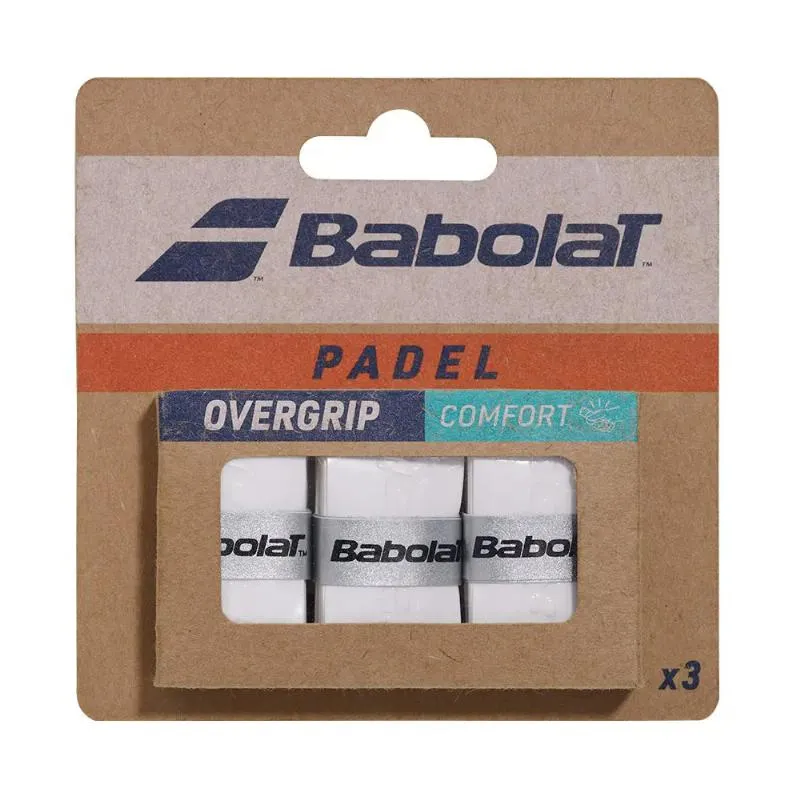
The pack of three is the format for trying one out. The Babolat Comfort overgrip is one of those that give you dry grip without feeling sticky, and it takes up sweat well, which is what really punishes the handle from the inside. You change it when it starts to slip or when it no longer comes back to its original feel once dry.
Tecnifibre Players ProFeel overgrips
REF 226662 · EAN 3490150200356- Type: Overgrip
- Brand: Tecnifibre
- Model: Players ProFeel
- Units: 12 per pack
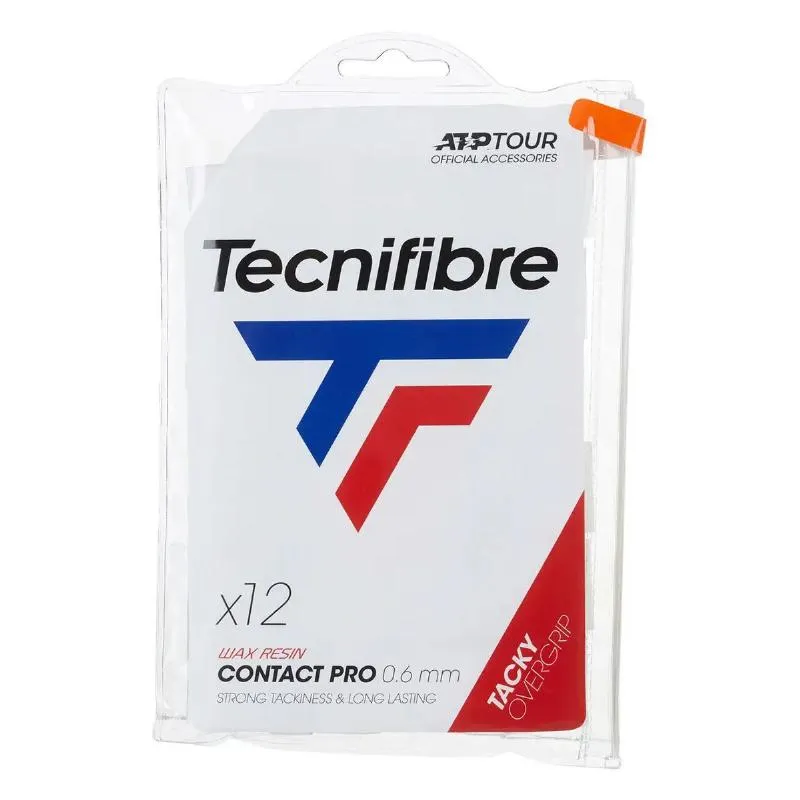
The pack of twelve is the option for anyone who plays two or three times a week and changes the overgrip every three or four weeks. The Players ProFeel is a thin overgrip, one of those that let you feel the racket in your hand, with good grip when dry.
Where to keep it between matches ↑ index
A racket spends far more hours put away than it does on court. Where you leave it counts.
Where a racket spends the other twenty-three hours of the day does more for it than any amount of cleaning. Three things, and that is it:
In its cover, racket bag or backpack: always at room temperature. The cover stops the racket taking knocks from the rest of your kit and keeps it out of direct sun.
Never in the boot of the car: a closed boot in summer sun goes past 60 °C. The EVA core is sensitive to sustained heat: a racket responds at its best when it lives at room temperature. If you are on your way back from playing, take it indoors with you.
Put it away dry: this is the one that gets forgotten most. If it has rained or you have sweated a lot, leave the racket out of its cover until it is completely dry.
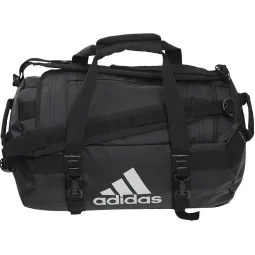
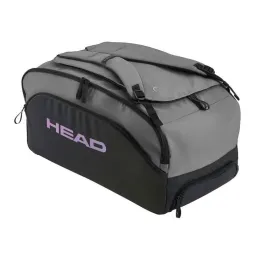
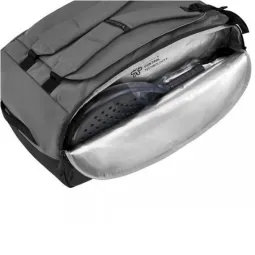
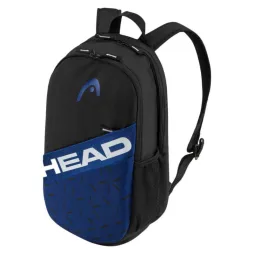
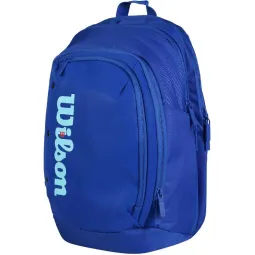
The fabric cover many rackets come with from the factory is there for dust, not for knocks. What really stops two rackets marking each other is a racket bag with a separate, padded racket compartment. These two are in stock today:
Babolat Court S racket bag
REF 222187 · EAN 3324922251706- Type: Racket bag
- Brand: Babolat
- Model: Court S
- Colour: Burgundy
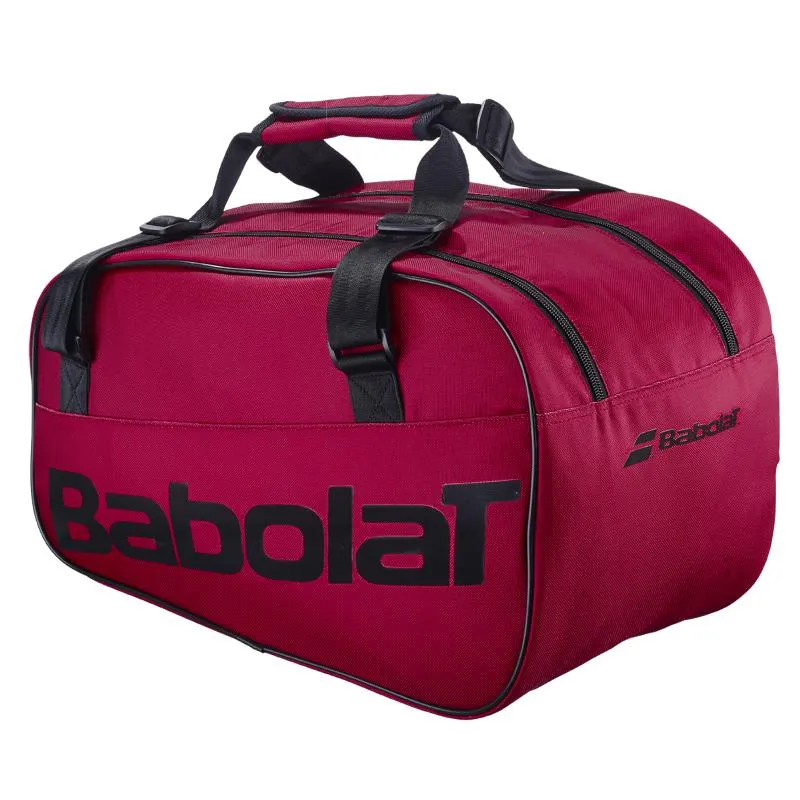
A compact racket bag, the size most people go for: it fits in the boot without a fight and has room to spare for two rackets, your kit and your shoes. With the racket compartment kept separate, which is what stops rackets rubbing against each other inside the bag.
Adidas Ari Sánchez Promatch 3.5 racket bag
REF 215975 · EAN 8435739409756- Type: Racket bag
- Brand: Adidas
- Model: Ari Sánchez Promatch 3.5
- Colour: Blue · white
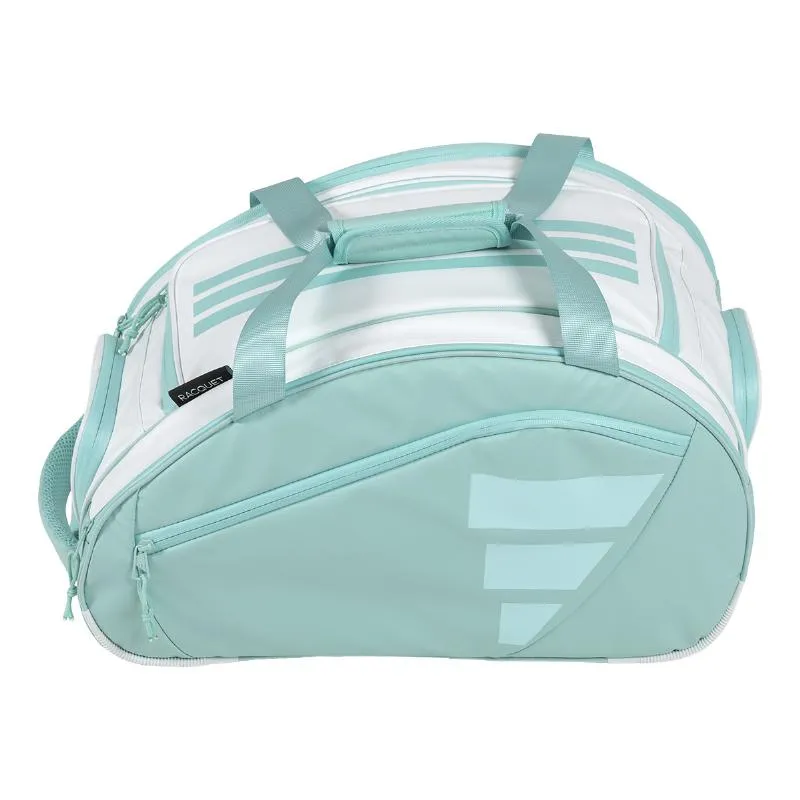
Ari Sánchez's racket bag, top of the range and with more capacity. Made for anyone carrying three rackets and playing several times a week: separate compartments for rackets, kit and footwear, and padding in the racket section.
If you change only one thing about your routine after reading this, make it this one: the racket goes into the bag dry. It costs nothing, it takes twenty easy minutes and it is the difference between an overgrip that holds up for a month and one that holds up for a week.
Frequently asked questions ↑ index
Can a padel racket get wet?
Yes. Water now and then is no problem at all: the surface is resin and fibre, and neither absorbs water. What is worth avoiding is leaving it wet, especially once it is put away. Dry it with a cloth and give it some air before it goes back in the cover.
How often should you clean a padel racket?
A wipe with the cloth after each match and a full clean every two or three weeks if you play several days a week. If you play once a week, once a month is plenty.
Can I use glass cleaner or alcohol to clean the racket?
Better not. Both are formulated to dissolve, and on a textured face that gradually flattens the relief that creates the spin. Water deals just as well with the dirt that is actually there: dust, sand and ball residue.
How do I get packed-in sand out of the holes in a padel racket?
A wooden cocktail stick lifts it out without touching the fibre. Nothing metal and nothing with a hard point. If there is residue dried onto the face as well, use very dilute neutral soap and then rinse with the cloth and water only.
Does water do anything to the grip on a padel racket?
An overgrip gets wet and dries out every single day with sweat, so a little water makes no odds to it. What lengthens its life is putting it away dry. If it has taken on a lot of water, leave it to air; when it stops coming back to its original tack, it is time for a fresh one.
How do I get the black ball and wall marks off a padel racket?
The damp cloth and a bit of persistence take off nearly all of them: the rubber of the ball and scuffs from the wall leave their mark on top of the texture, not inside it. Anything water does not lift is no longer dirt, it is a little transferred rubber: it sits there, it never reaches the fibre and the racket plays exactly the same. It is the mark of a racket that gets used.
Does cleaning a padel racket bring back the grip it has lost?
It brings back the grip the dirt was covering up, which is usually more than you would think: a racket with dust and sand stuck to it bites a good deal less than it can. The relief that use has already polished smooth stays as it is, and that is normal on any racket. So the more often you clean it, the more you notice it.
Should I clean the protector on the racket too?
Just give it a wipe with the same cloth. The protector is a consumable part: wearing down is its job. When it looks worn or lifts at one end, you swap it, and it is among the cheapest things in the catalogue: two minutes of work.
Quick glossary ↑ index
The Tienda Padelpoint verdict ↑ index
If you take one thing from all this, make it this one: a racket is looked after with water, a cloth and a dry place. Everything else is complicating something that is simple.
And if you take two, the second is that the best money you can spend on maintenance does not go on cleaning products: it goes on a protector fitted in good time and fresh overgrips. A protector fitted in good time saves the frame the wear, and a good overgrip changes how the racket feels in your hand.
We have been doing this since 2003 and the conclusion has not changed: rackets go the distance when you treat them normally and replace, in good time, the parts that are made to be replaced.
If you want to go deeper ↑ index
For each specific point we have a guide of its own:
How to fit an overgrip, step by step — Two minutes and no tools. The part that changes how a racket feels more than any other.
How often to change the protector and the overgrip — The two parts that genuinely make a racket last.
Humidity and temperature: how they affect durability — The full story on the car boot, with the numbers.
When it is time to change your racket — The day maintenance is no longer enough.